
After the United States and Iran signed a Memorandum of Understanding on June 18 to end the war that began in late February, continued fighting in Lebanon threatened to undermine the settlement. Israel has become hostage to an agreement that it played no part in reaching and that it perceives as a security threat. Regardless of how the negotiations unfold, Israel must decide how to navigate a situation in which it finds itself with goals and interests that are largely incompatible with those of its principal ally.
Endless negotiations
On June 21, the Swiss town of Bürgenstock hosted the first in-person meeting between U.S. and Iranian delegations to be held since April. It took two months to return to square one: to start negotiating the conditions for converting a temporary ceasefire agreement into a permanent one.
Thanks to the mediators, the sides could at least build their dialogue on the memorandum of understanding, which provides for another two months to resolve outstanding issues. Still, success is not guaranteed. Donald Trump continues to threaten Tehran with force unless it acts as Washington expects.
The negotiations will not be easy and could collapse at any moment. Iran and the U.S. still have many disagreements and hold divergent views of the situation. But for now, the Iranians have obtained what seemed unthinkable when active hostilities were suspended two months ago: a promise of enormous financial benefits in exchange for minimal obligations. At least, that is what the language of the memorandum suggests.
The Iranians obtained what had previously seemed unthinkable — a promise of enormous financial benefits in exchange for minimal obligations
Initially, the U.S. sought to compel Iran to abandon its nuclear program, ballistic missiles, and support for regional proxies, including Lebanese Hezbollah, the Houthis’ Ansar Allah, and Shia factions in Iraq. When diplomacy failed, force was employed. On Feb. 28, the U.S. joined Israel in attacking Iran. At that time, the idea appeared to be that military action would weaken the regime of the ayatollahs sufficiently to set the stage for a change of power.
Over the course of nearly six weeks of war, the U.S. eliminated Iran’s top figures: Supreme Leader Ali Khamenei, the leadership of the Islamic Revolutionary Guard Corps (IRGC) and the Basij militia, and more than a dozen other significant members of the country’s political and military elite. The damage inflicted on the country’s nuclear program is believed to have set it back by several years at the very least. In addition, conservative estimates by Israeli intelligence suggest that the allies destroyed approximately half of Iran’s ballistic missiles and launch systems and put the facilities that produce them out of commission.
However, the unambiguous military success has not been backed by any political or military actions capable of actually weakening the Iranian regime. On the contrary, President Trump has thus far been working more toward strengthening and legitimizing it. The regime has survived and, under the Memorandum, expects to see the lifting of the oil embargo, the gradual removal of sanctions, and the creation of an investment fund of no less than $300 billion. There are no guarantees that this money will go towards peaceful means, rather than toward rebuilding the military capabilities of Iran and its regional proxies.
The unambiguous military success has not been backed by any political or military strategy for weakening the Iranian regime
The Trump administration insists that Iran will receive all of the promised benefits only in exchange for concessions during the upcoming 60-day detailed negotiations, which are slated to discuss Iran’s nuclear program, the future of shipping through the Strait of Hormuz, and other contentious issues.
“This agreement envisions that if the Iranians stop supporting terrorism and commit to a long-term inspection regime that allows us to say with confidence that they will never again obtain nuclear weapons, then we will be able to reduce sanctions,” U.S. Vice President J.D. Vance said in an interview with CBN News ahead of the meeting in Switzerland.
However, after the first day of negotiations, Iranian Foreign Minister Abbas Araghchi announced: “Oil and petrochem exports are waived, blockade lifted, some frozen assets released, and major reconstruction and development plan launched for Iran.”
The negotiations could end in failure, of course, and the financial flows to Iran could be cut off again. For now, however, Iran is clearly winning. The U.S. and Trump personally have allowed Tehran to dictate its terms and blackmail Washington with near impunity. There are few things the Iranian regime cannot weather — as long as the U.S. lacks a workable strategy and, above all, the resolve to change that regime.
The instrument of Iranian blackmail has been the Strait of Hormuz, which the IRGC alternately opens and declares closed — as happened just before the start of the Swiss talks. Under the circumstances, Israel has simultaneously become a target of Iranian blackmail and a convenient scapegoat for Trump’s failure to reach an acceptable deal.
The Lebanon factor
The memorandum signed by the U.S. and Iran explicitly requires the cessation of military operations on all fronts, including in Lebanon, and commits the parties to ensuring its territorial integrity and sovereignty. On the first day of the Swiss talks, a decision was made to create a conflict prevention mechanism with the assistance of mediators in order to ensure compliance with the cessation of hostilities in Lebanon.
Neither the Memorandum nor the mechanism mentions Israel or Hezbollah, with which Israel is at war. But while Iran can effectively represent Hezbollah’s interests, the interests of the U.S. are by no means identical to those of Israel. The upshot is that the Tehran delegation gets to sit across the table from America as an equal partner, while Israel has to make do with indirect instructions from Washington.
The Tehran delegation gets to sit across table as an equal partner, while Israel has to make do with indirect instructions from Washington
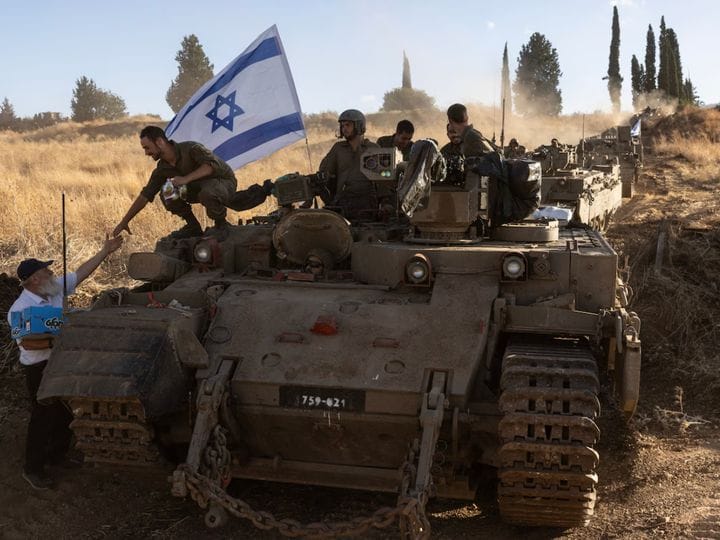
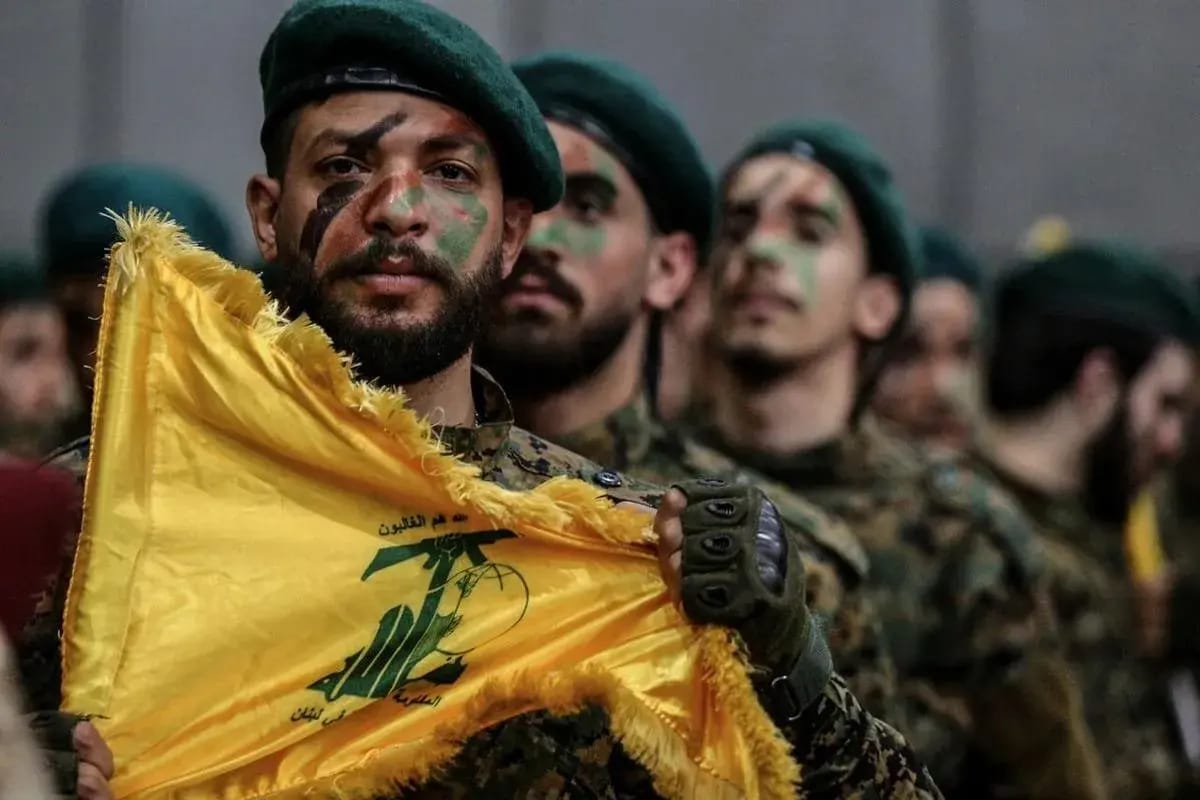
Military operations in Lebanon began all the way back on March 2, when Hezbollah entered the war on Iran’s side and attacked the Jewish state. Israel seized the opportunity to complete what it had begun during the previous round of confrontation with Hezbollah in 2023–2024.
There was hope that a weakened Iran would lose its ability to support its Lebanese proxy, allowing Israeli efforts to significantly weaken the group — all the more so given that Lebanon’s current president and prime minister are opposed to Hezbollah and were prepared, with outside support, to attempt to curtail its political influence. Across several rounds of confrontation with Israel since October 2023, Hezbollah had already lost a significant portion of its long-range missiles, heavy rockets, and approximately one-third of its fighters and commanders. Kilometers of tunnels leading to the Israeli border have been discovered and destroyed.
But military infrastructure can be rebuilt, especially if Iran receives resources for itself and its allies. Israel’s task is to prevent a repeat of the 2006 scenario, when after the Second Lebanon War a prolonged lull set in, allowing Hezbollah to build up its strength right on Israel’s border. The group was even preparing a plan to infiltrate the territory of the Jewish state, similar to what the Palestinian group Hamas carried out in October 2023, when thousands of terrorists massacred residents of Israeli communities.
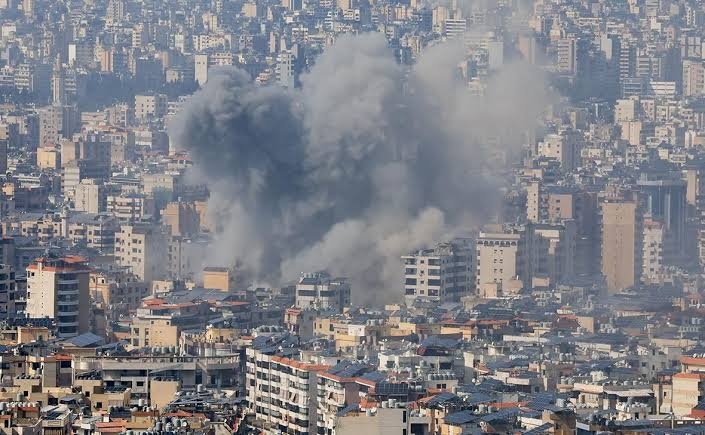
Now, importantly, the Lebanon question has become inseparable from the issue of Iran, a fact that gives Tehran added leverage. After all, what would prevent Iran and other regional forces from dictating terms regarding the situation in Gaza and the broader Palestinian question?
Here it is important to remember who mediated between Washington and Tehran: Qatar and Pakistan are in the spotlight, but behind them also stand Turkey and Saudi Arabia, which are also actively working on Lebanon and Gaza alongside other regional players. Even the UAE, which cooperates closely with Israel, will not take its side on questions related to those conflicts.
Syria has also sharply increased its activity. Trump himself offered Damascus a significant role in the future settlement in Lebanon, declaring that President Ahmed al-Sharaa would handle Hezbollah better than Israel could. However, Damascus has made it clear that military intervention is not in its plans.
Trump declared that Syria’s Ahmed al-Sharaa would handle Hezbollah better than Israel has
At the same time, Syrians speak of the emergence of numerous regional economic cooperation projects that would connect the region through Syria. Israel could find itself left out of this process despite Trump’s plans to link Asia and Europe through the Middle East under the Abraham Accords — the series of agreements normalizing relations between the Jewish state and Muslim-majority countries.
Indeed, the U.S. attempted to decouple the Lebanon question from Iran back in April when Tehran demanded that the ceasefire be extended to Lebanon as well. At that point, Washington initiated Israeli-Lebanese negotiations, but nothing came of them. Hezbollah refused to be party to any agreement with Israel unless the deal involved the withdrawal of Israeli forces from Lebanon. Israel, for its part, demanded guarantees of Hezbollah’s disarmament — something the group would never have agreed to.
In the end, Iran made a ceasefire in Lebanon a precondition for any progress in negotiations with the U.S., prompting more threats from Trump. However, with the approaching midterm congressional elections ahead, few believe he will abandon the deal with Iran given the political threat that another spike in gasoline prices would pose. According to a Gallup poll, in early June only 34% of Americans approved of military action against Iran.
How far have U.S. and Israeli interests diverged?
Israel understood from the outset that the war in Iran would last only as long as Trump’s patience held out. However, it did not expect the conflict to result in a memorandum so favorable to Iran, nor that Israel’s interests would be so obviously disregarded.
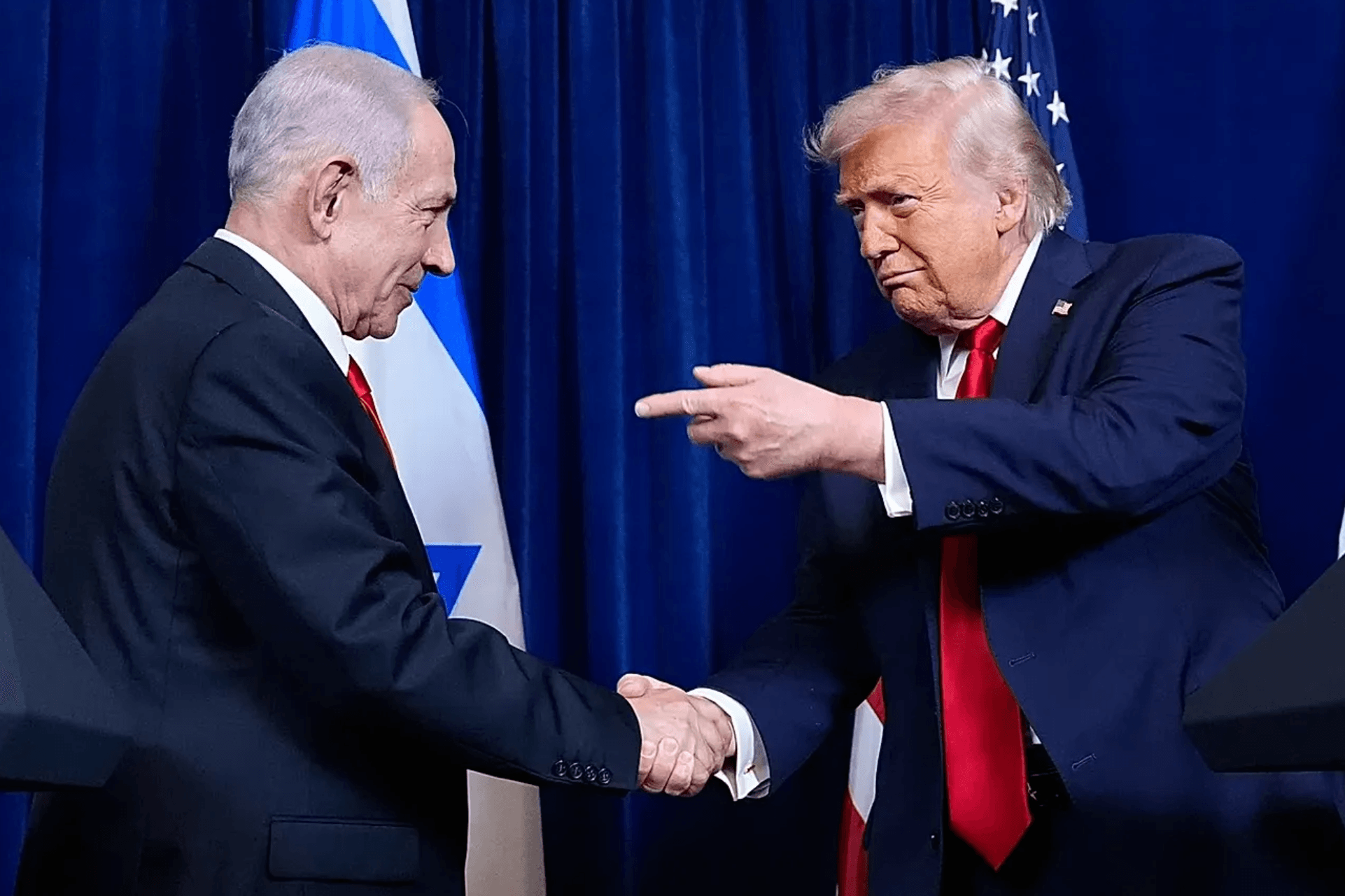
At several points over the course of Trump’s second term in the White House, media reports have noted a cooling between him and Netanyahu. Each time that has happened, the tension subsided and the two states resumed acting in concert. Now, however, the personal interests of Trump and Netanyahu have unquestionably diverged.
Like the U.S., Israel is preparing for elections this fall, and according to a poll conducted June 17–20 by the Hebrew University of Jerusalem jointly with the Agam Institute, 92.1% of Israelis believe that the Islamic Republic has won the war. Even among voters supporting the right-wing bloc led by Netanyahu, 93.1% hold this view, and overall, 72.5% of respondents said they do not believe the prime minister’s claim that Israel achieved significant successes or eliminated an existential threat.
92.1% of Israelis believe Iran won the war
Nevertheless, according to the weekly Maariv poll published on June 19, Netanyahu still scored higher than other candidates in response to the question of which Israeli politician is best suited to serve as prime minister, beating out Naftali Bennett by a score of 43% to 41%. At the same time, according to the same poll, the ruling coalition led by Netanyahu would hold 49 seats in the Knesset, while the opposition bloc could potentially win 61 mandates (not counting Arab parties).
Public opinion is, of course, volatile. Several months remain until the elections, which will most likely take place around October 20. Between now and then, the security situation and regional landscape could shift dramatically in either direction.
For now, the opposition is reminding Netanyahu about his claims that an Israeli prime minister must be able to say “no” even to the U.S. president, and that he presented himself as the only figure capable of doing so. Convincing Israelis that this is indeed the case has now become a difficult task.
One cannot help but recall Volodymyr Zelensky’s February 2025 meeting with Trump in the Oval Office, when the Ukrainian president began pushing back against his hosts. But the situations do differ in some respects. In the case of Ukraine, Trump had no personal stake. A ceasefire between Kyiv and Moscow would have earned him the laurels of a peacemaker, but failure would cost him nothing (even if he had previously promised to end the conflict “in one day”). Israel’s actions in Lebanon, in contrast, have a direct impact on whether the U.S.-Iran deal will be implemented — meaning that the fate of shipments through the Strait of Hormuz hangs in the balance. At this point, oil flows, stock market indices, and voter sentiment are the American president’s primary concern.
Against the backdrop of the U.S.-Iran talks, Israeli authorities have stated that they do not intend to withdraw their forces from Lebanon. However, a reduction is indeed possible.
Some Israeli experts believe that following the American logic may have its benefits, particularly given the absence of viable alternatives. After all, Hezbollah’s disarmament is only possible to achieve through force, and that would require a prolonged occupation of Lebanon — a task the Israeli army, exhausted after nearly three years of war on multiple fronts, may be less than prepared to undertake.
Accordingly, some Israeli voices favor avoiding open confrontation with Trump while still trying to preserve their freedom for maneuver in southern Lebanon in order to continue dismantling Hezbollah’s infrastructure and prevent shelling and incursions into Israeli territory. In parallel, Israel should act in concert with a Lebanese government that, for once, is also hostile to Hezbollah. Beirut needs the opportunity to build Lebanese army units capable of confronting the Shia group if it is to take control of the situation on the ground.
In practice, Iran and Hezbollah are currently ahead on points, but the final result will depend on whether the Iranian regime ultimately receives the resources needed to rebuild. Israel views a new round of confrontation with Iran as an inevitable, if not immediate, development. The only real question is what state of readiness the various parties will be in when that day comes.
Will the lessons of this war be learned? Can a strategy be developed for overthrowing the ayatollahs’ regime without plunging the region into chaos? For Israel, no viable answer to the second question exists. Trump, for his part, still believes in the power of deals and the might of his threats.