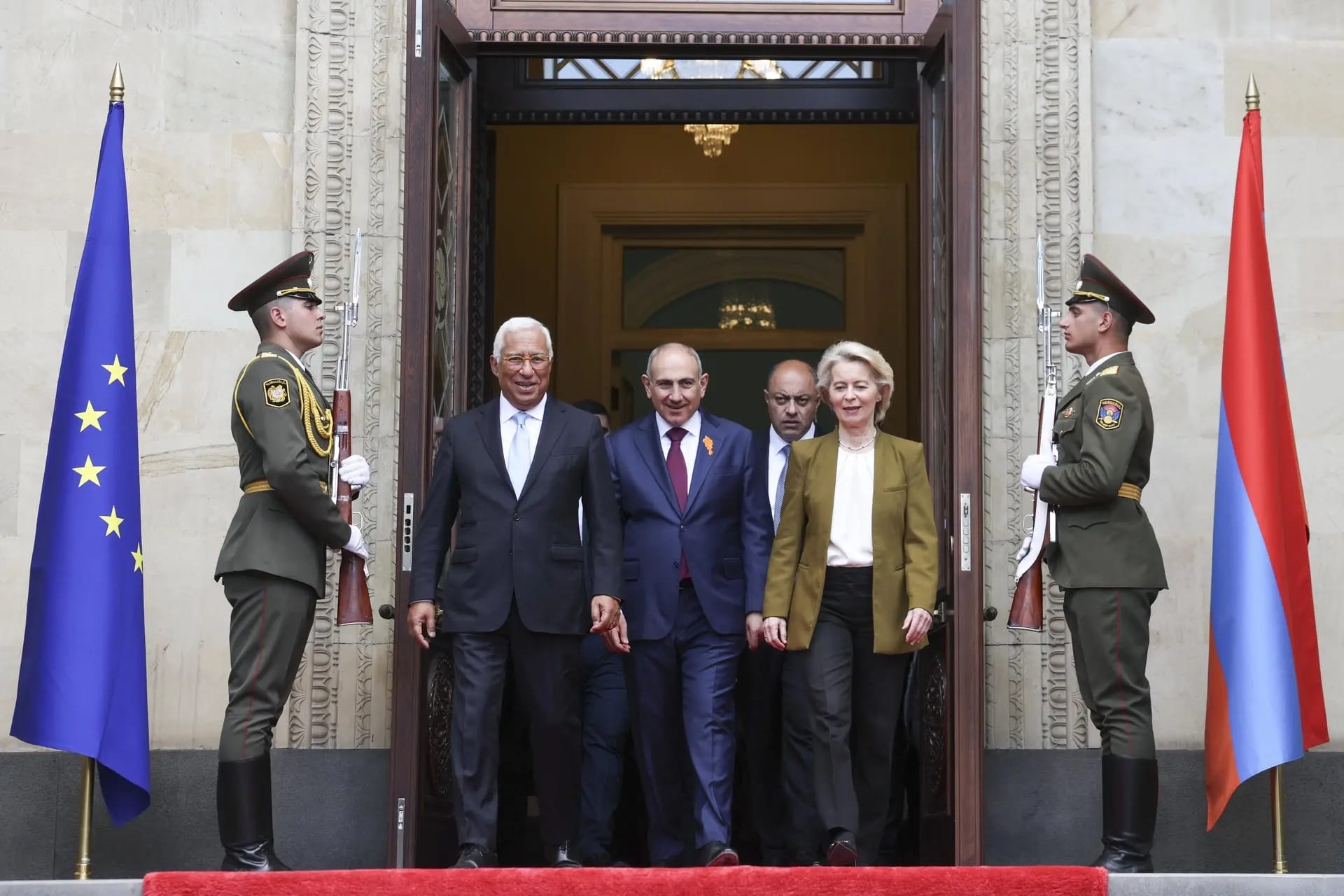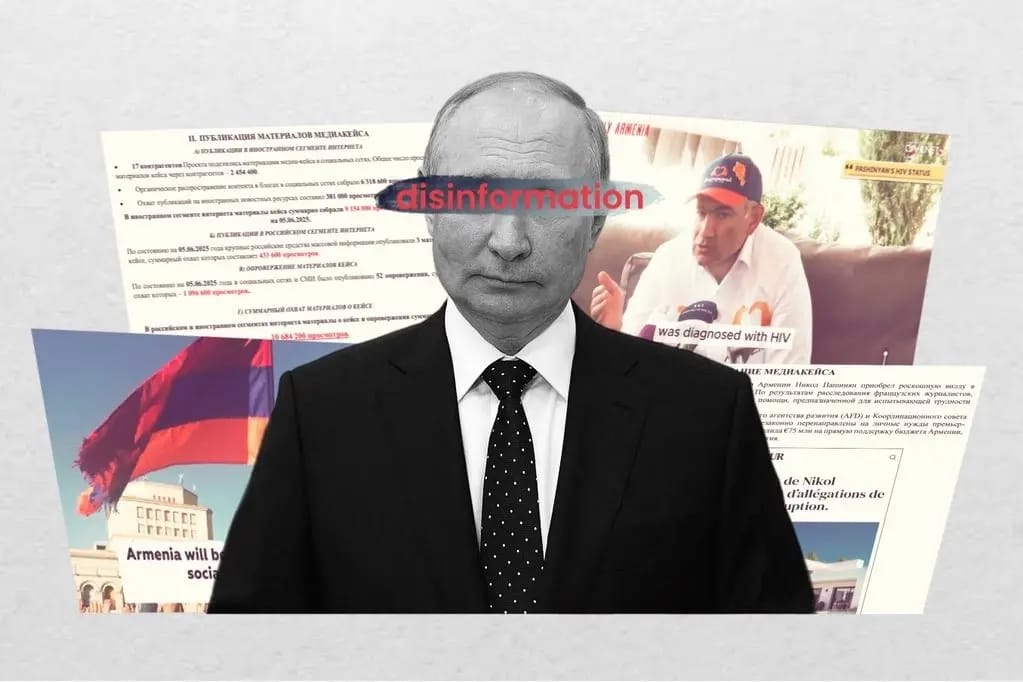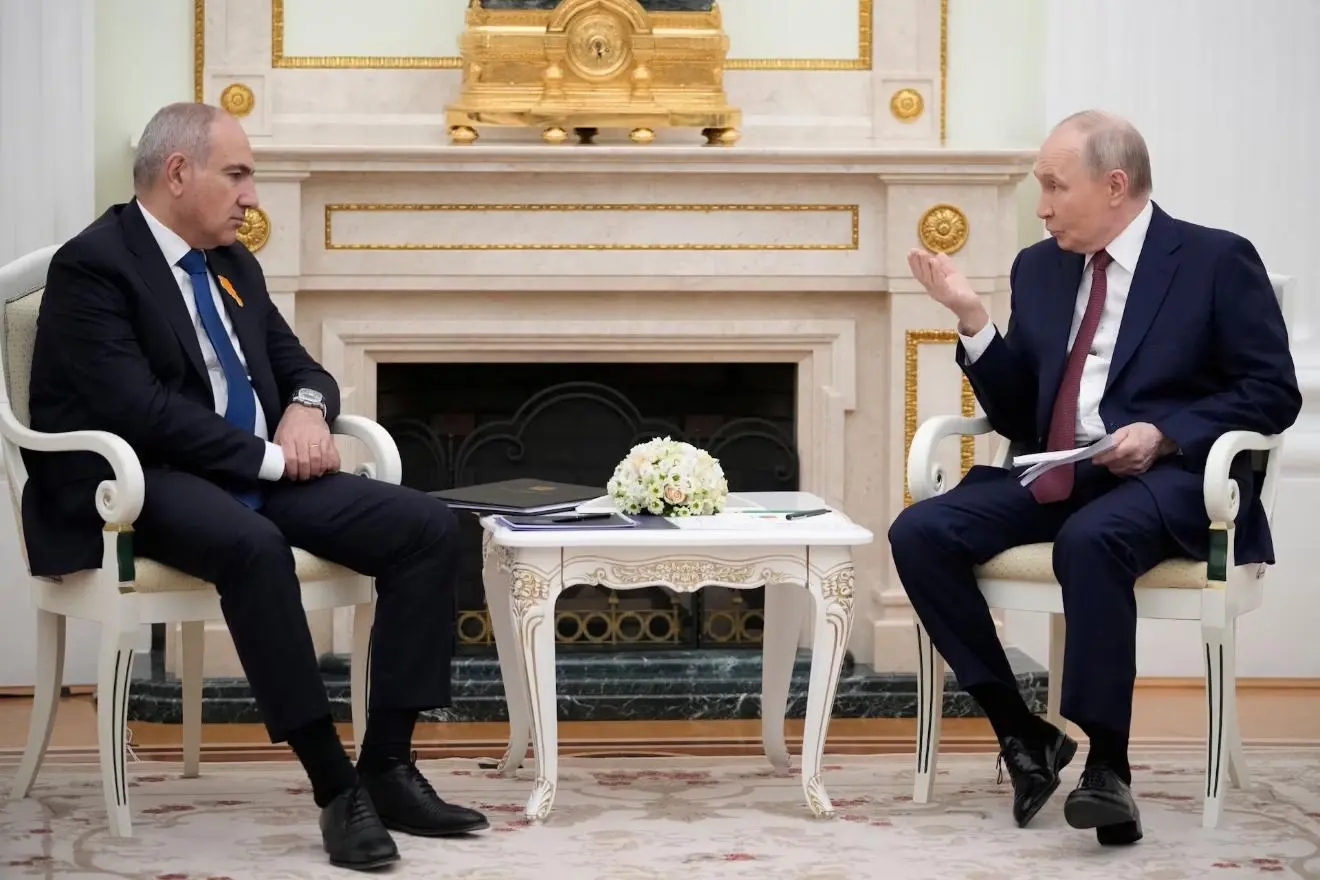
Armenia’s June 7 parliamentary elections ended with a victory for the Civil Contract party led by the country’s prime minister, Nikol Pashinyan. The party received 49.8% of the vote, which, after the proportional redistribution of seats from parties that failed to enter parliament, will give it an absolute majority of seats in the National Assembly. The election campaign unfolded amid worsening relations with Russia over Yerevan’s potential rapprochement with the European Union, and according to local political analysts and economists interviewed by The Insider, the most interesting developments are likely just beginning. Armenia does not plan to change course toward the EU, while at the same time it is not yet capable of minimizing its ties with Russia. As a result, the Kremlin still has many means of applying pressure, from imposing cross-border trade restrictions to making life for Armenian labor migrants in Russia more difficult.
Relations between Armenia and Russia have been strained for several years. After Azerbaijan's 2023 offensive in Nagorno-Karabakh, which saw more than 100,000 Armenians forced to flee the region, Yerevan became disillusioned with Moscow’s performance as an ally and effectively suspended its participation in the Collective Security Treaty Organization (CSTO). At the same time, following the exodus of Armenians from Karabakh, mass protests erupted at home demanding the resignation of Prime Minister Nikol Pashinyan, who is viewed unfavorably by Russia.
The protesters’ cause was then taken up by Archbishop Bagrat Galstanyan, whom the authorities described as “Moscow’s protégé.” Galstanyan himself denies receiving support from Russia, and there is no confirmed evidence proving direct political influence by the Kremlin over the archbishop’s “Sacred Struggle” movement. Nevertheless, the label stuck due to Galstanyan’s ties to opposition blocs loyal to Moscow and support from businessman Samvel Karapetyan, who is indisputably close to the Russian authorities.
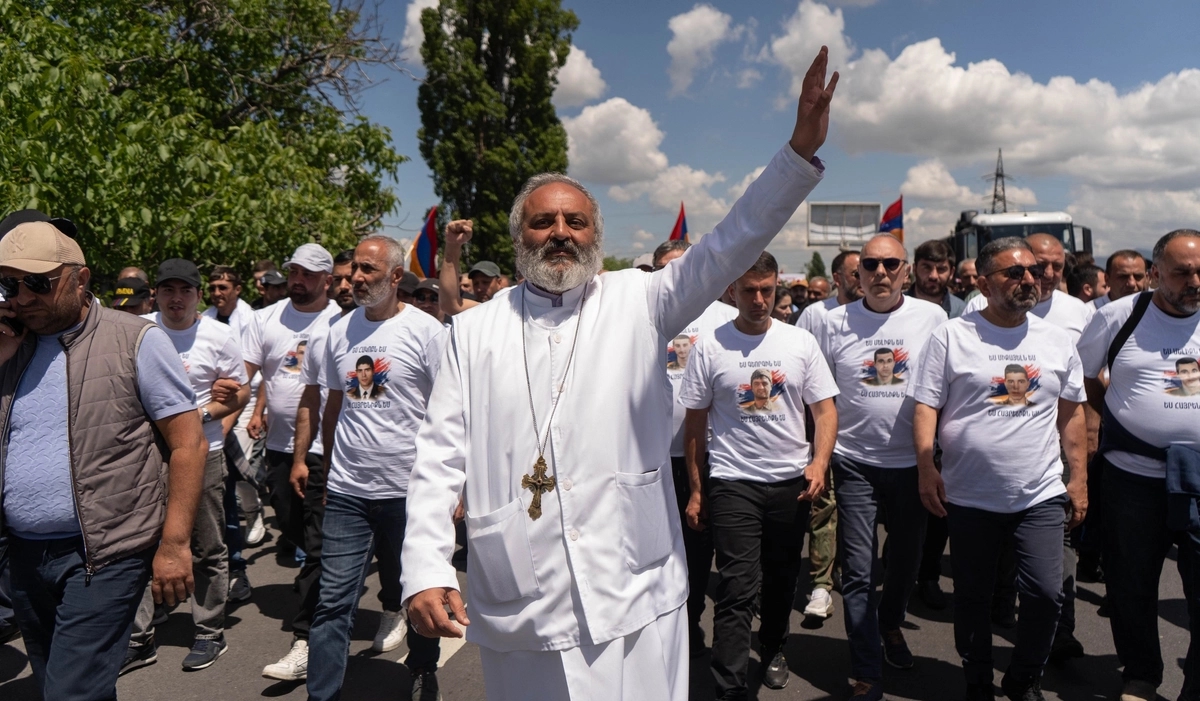
The 2023 protests did not lead to any political changes. Confrontation between the Armenian authorities and the opposition intensified in June 2025, when Yerevan’s security forces arrested Galstanyan and Samvel Karapetyan, accusing them of attempting a coup and seeking to overthrow the Pashinyan government.
Despite Armenia’s effective suspension of its membership in the CSTO and efforts to foster closer ties with the European Union, until recently Yerevan continued its economic cooperation with Moscow without major difficulties. However, the situation changed in late May when Russia banned the import of a number of Armenian goods — flowers, Jermuk mineral water, wines and brandies, as well as herbs, strawberries, vegetables, and dried fruit. In addition, it was reported that Russian border guards had begun conducting strict inspections of trucks with Armenian license plates at the Upper Lars checkpoint on the Georgian border, the only overland trade route between the two countries. As a result, demand for road freight transportation from Armenia to Russia fell by 15%.
Beyond that, Moscow has threatened to terminate the 2013 bilateral agreement guaranteeing Armenia duty-free supplies of gas, oil, and diesel fuel. The final element of this campaign is the demand by Russia and other members of the Eurasian Economic Union (EAEU) that Armenia hold a referendum on leaving the organization, as the Kremlin continues to insist that Armenia’s path towards European integration is incompatible with EAEU membership.
Elections and sanctions
Nevertheless, Armenian experts are not rushing to conclude that economic cooperation between Yerevan and Moscow is headed for a final rupture. Political analyst Alexander Iskandaryan told The Insider that Moscow’s recent moves were part of the election struggle, while the real test in relations between the two countries will begin only after the vote:
“First, Moscow is irritated by Yerevan’s behavior. Russia is in a state of acute conflict with the West that it perceives as existential. Therefore, any interaction with Europe by countries within its sphere of interest is viewed as something unpleasant. Second, this is an attempt by the Kremlin to influence the outcome of the elections in Armenia – to change the composition of the future parliament in some way so that forces more loyal to Russia end up there.”
Iskandaryan believes that Moscow has not yet decided on its post-election policy toward Armenia and says that the process will begin only a couple of weeks after the results are announced. “In that sense, it is already more or less clear how this will unfold. Pashinyan has already announced that he will travel to Russia to meet with Putin. This by no means implies that after the elections everything will become wonderful and bacteria will disappear from vegetables. The relationship will remain problematic, but it will be a political relationship,” Iskandaryan says.
A similar opinion was expressed by political analyst David Stepanyan, a member of the “Eurovote” initiative, which collected signatures to place the law “On the Launch of the Process of Armenia’s Accession to the European Union” on the parliamentary agenda:
“In reality, everything will only begin after the elections. Pashinyan has already announced a meeting with Putin, and during that meeting the Russian president will raise the issue of who will build the new nuclear power plant. The future of the railway project will also be discussed. One should expect attempts by the Russian side to get involved in the TRIPP project [an Armenian-American strategic initiative aimed at diversifying Armenia’s logistical dependence on Russia], as well as into the process of delimitation and demarcation of the border with Azerbaijan.”
What explains the escalation?
The Kremlin’s rhetoric urging Armenia to choose between the EU and Russia is merely a pretext, experts say, given that Armenia is not making any real move toward Brussels beyond declarations of intent. As Iskandaryan noted:
“Putin understands that Armenia has no prospects of joining the European Union in the coming decades, so he is unlikely to take such statements seriously. Incidentally, this lack of seriousness is clearly demonstrated by the gap between what is being said and what is being done. Take, for example, remarks by Sergei Shoigu, in which Armenia is portrayed almost as a mortal enemy. Yet the actual measures we are seeing amount to a ban on flower imports.”
Putin understands that Armenia has no prospects of joining the European Union in the coming decades
Additionally, Stepanyan believes that rapprochement with the EU is far from the main factor irritating Moscow:
“Armenia is now actively developing relations with the United States and, more broadly, looking for ways to diversify its trade, economic, and energy ties with the outside world, including reducing dependence on Russia. All of this deeply concerns Putin. But since he cannot openly say so, he tries to explain his outrage by pointing to Armenia’s movement toward the EU, which in reality is practically nonexistent at this point.”
Stepanyan adds that, paradoxically, Moscow’s behavior is actually the main factor driving Armenia closer to the EU: “If the Kremlin continues in the same vein, it will instead contribute to accelerating Armenia’s European integration.”
Scenario of a rupture
In short, there is the very real possibility that after the elections Armenia and Russia will fail to reach a compromise. In that event, the sanctions imposed by Moscow will only intensify.
Such a development would inflict significant damage on the Armenian economy. Economist Grant Mikaelyan believes that the €50 million in aid announced by the EU to help cover the losses resulting from the import restrictions is insufficient: “Russia said the restrictions would remain in place for one month. But in reality, this EU assistance would only last for several weeks, as the volume of sales should be measured in the hundreds of millions.”
Mikaelyan was also rather skeptical about Armenia’s ability to reorient itself toward other markets: “I am convinced there will be no real access to the European market. There is the example of Georgia and its attempt to reorient toward other markets. That effort proved unsuccessful, and Georgian agriculture suffered heavily after 2006. Some degree of reorientation is certainly possible, but it will be minimal. The European market is highly competitive and heavily regulated, so I doubt it can replace post-Soviet markets.”
Stepanyan takes a more optimistic view:
“If one market closes, another opens. For some reason, everyone talks only about the European market, but there are also the markets of Arab countries. In reality, the world is large, and broadly speaking there are no major logistical problems today. The issue of subsidies at the initial stage is already being addressed. The European Commission has provided €50 million – and this is only the beginning. If Russia tries to raise gas prices, alternatives can undoubtedly be found there as well. It is a matter of time. We can receive gas from Turkmenistan, Azerbaijan, or Iran. In other words, any economic move will be met with a response, but after that Russia will lose its ability to influence Armenia. So this is a two-way street.”
Mikaelyan, however, believes that finding alternative markets for Armenian goods beyond Europe will not be so easy, and replacing Russian commodities in the energy sector could prove costly:
“The problem is that Armenian fruit is more in demand in northern countries, where it does not grow. Southern countries have their own fruit, so it is difficult to enter those markets without anything unique to offer. Of course, alternative export markets need to be found, but it is a major question whether the government will be able to handle that task. Additionally, if Russia raises gas prices, Armenia currently has no alternative sources. Most importantly, even if Armenia finds alternatives in the future, there is no guarantee they will be cheaper.”
Consequences of leaving the EAEU
In late April 2026, National Assembly speaker Alen Simonyan stated that if Russia raises gas prices, Armenia could leave the Eurasian Economic Union. He immediately added, however, that he did not think “it would come to that.”
Although prime minister Pashinyan has taken a much more cautious position in his public remarks, saying that his government is not preparing to leave the union, the issue has continued to develop. On May 29, the leaders of Russia, Belarus, Kazakhstan, and Kyrgyzstan demanded that Armenia hold a referendum in order to determine whether the populace wants to remain in the EAEU or join the European Union. In response, Pashinyan stated that Armenia would continue working within the framework of the EAEU “until the choice between the European Union and the Eurasian Economic Union becomes unavoidable.”
Commenting on the potential costs of Armenia leaving the EAEU, Mikaelyan said that “during the first years of membership in the Eurasian Union, the Armenian economy grew by as much as 10%, after which growth stopped.” He added that against the backdrop of Russia’s invasion of Ukraine, “the Armenian market became more attractive to Russia in every respect, because Russian opportunities narrowed due to sanctions,” a confluence of events that added an extra 10–15% to Armenia’s GDP. “Withdrawal would probably cost a comparable amount — around 20–25% of GDP,” Mikaelyan concluded.
Leaving the EAEU could cost Armenia an amount comparable to 20–25% of its GDP
Stepanyan, for his part, noted that since 2018 Armenia’s trade turnover with EAEU member states has increased fivefold: “At this point, there really is a genuine dependency. The question is whether it will be possible to diversify all of this, because the trade turnover is enormous. There will be problems and losses in any case – that is inevitable.”
At the same time, Stepanyan added that Russia is also interested in trade with Armenia and, in his view, this interest could actually grow in the future thanks to scientific and technological projects being implemented in Armenia.
Will economic pressure lead to a political crisis?
Mikaelyan suggests looking at the experience of neighboring Georgia. In 2006, after Mikheil Saakashvili had already set Tbilisi on a course toward integration with the West, Moscow imposed a harsh economic embargo. Mikaelyan warns that similar economic pressure could lead to a political crisis in Armenia:
“On the one hand, economic changes did not have any immediate effect on politics, but in the long term socio-economic tensions led to dissatisfaction with the government and its defeat in elections. On the other hand, given that Armenia in 2026 is more economically integrated with Russia than Georgia was in 2006, the impact of such losses could be even more substantial. After the pre-election restrictions, there were already small spontaneous protests by farmers, because it is currently peak season — trucks are being turned back, and these are perishable fruits. In other words, the damage is felt very quickly, especially since Armenian farmers do not have the profit margins that would allow them to endure a single unprofitable season. So dissatisfaction will certainly grow.”
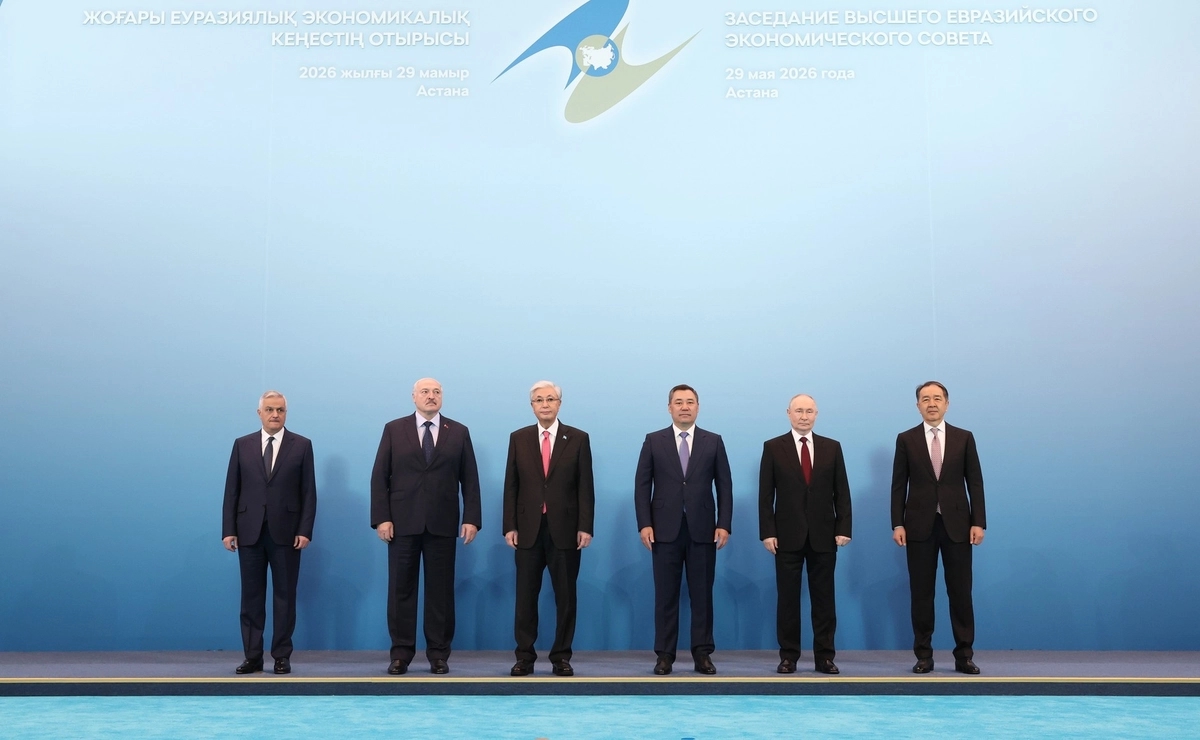
Mikaelyan believes another important factor could also affect Armenia’s political situation: “The most acute phase of protests could begin if conditions for Armenian labor migrants in Russia deteriorate sharply.” Speaking at the Eurasian Economic Union summit in Astana, Vladimir Putin stated that if Armenia leaves the union, its labor migrants would lose all of their current privileges inside Russia. In that event, they would be required to obtain work permits under the standard procedure, while access to Russia’s compulsory health insurance system would only become available after five years of residence in the country.
Mikaelyan believes that if such measures are introduced, up to 100,000 Armenians who lose their jobs in Russia could return home: “Most likely, they would blame both Putin and Pashinyan for what is happening, but social tensions would rise regardless.”
At the same time, according to Iskandaryan, it is still far too early to speak about such a scenario: “I assume Putin is unlikely to have a positive attitude toward Pashinyan simply because, biographically, they came to power by very different paths, and that cannot appeal to Putin. Still, the Kremlin has always known how to separate things: Pashinyan is one thing, Armenia is another.”
In this sense, Iskandaryan argues, assuming that the Kremlin will immediately sever ties with Yerevan following the victory of Civil Contract is just as implausible as imagining the reverse scenario — that the country’s more pro-Kremlin opposition comes to power and immediately breaks off relations with Europe.