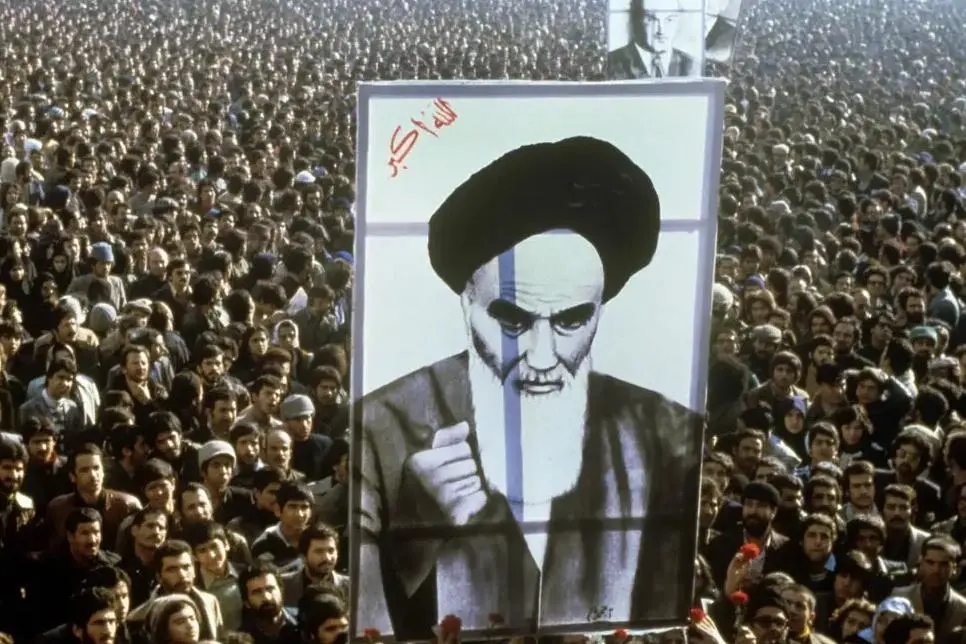
The recent joint attacks on Iran by the U.S. and Israel has killed Supreme Leader Ali Khamenei, IRGC Commander-in-Chief Mohammad Pakpour, Secretary of the Supreme National Security Council Ali Larijani, and a number of other high-ranking officials. Iran’s new Supreme Leader, Mojtaba Khamenei, has not yet appeared in public, a fact that has fueled numerous rumors about his health. Still, the Iranian regime is demonstrating remarkable resilience — waging war and even conducting negotiations despite the loss of so many high-level figures. Such resistance to external pressure was forged in a series of political conflicts over nearly half a century, which caused the regime to evolve into a unique hybrid combining a bloody theocracy with genuinely functioning democratic institutions.
Anti-shah coalition
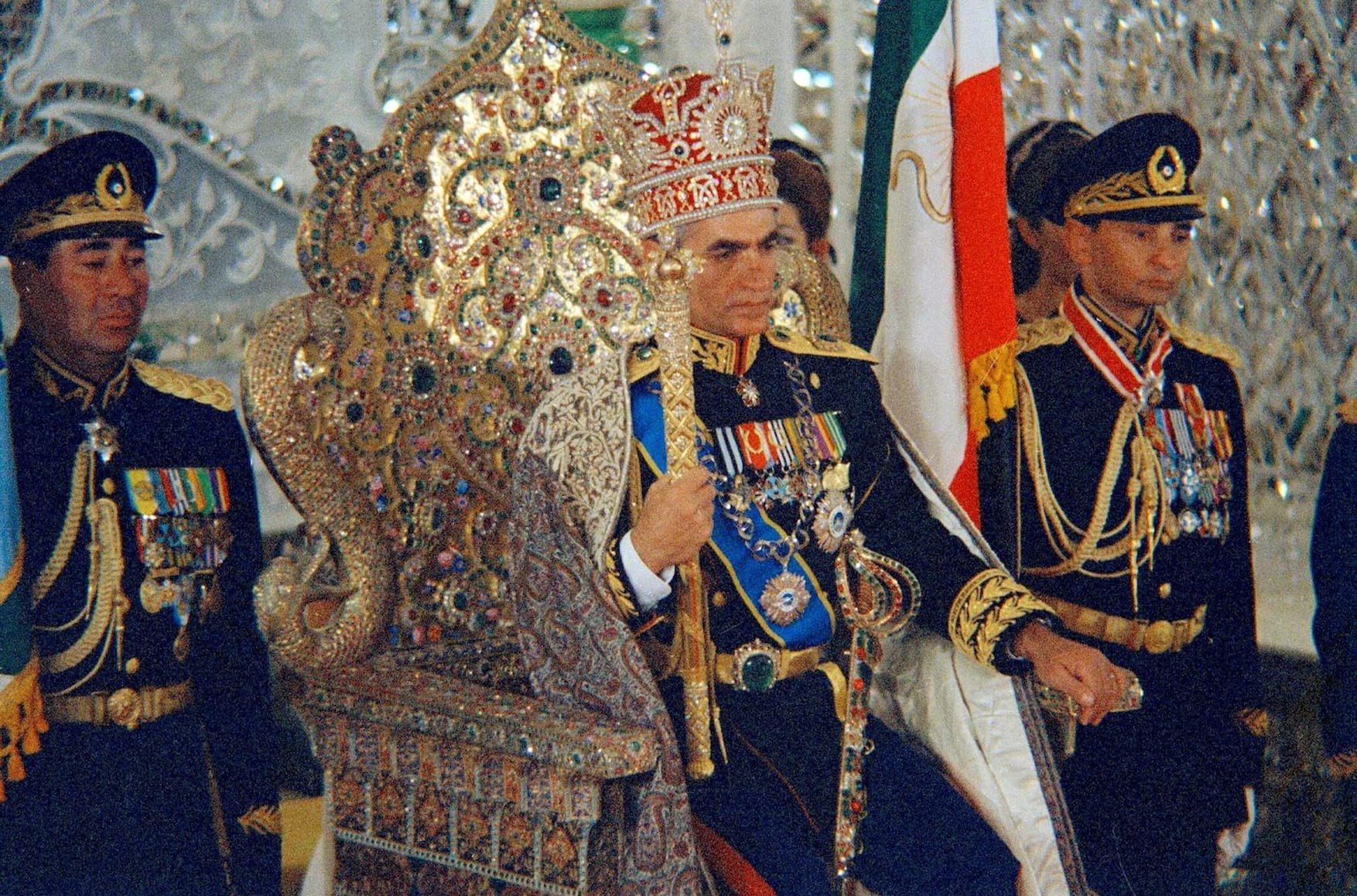
In 1978, Shah Mohammad Reza Pahlavi addressed the nation amid unprecedented protests, pledging to end repression and corruption, restore social justice, and hold free elections. At the same time, however, he announced the appointment of a military government.
By that point, societal trust in the Shah had already been irreparably eroded. Nationalists and the moderate opposition were alienated by the new government, led by a general, while the left wing of the protests saw the Shah’s speech as an attempt to co-opt their agenda. Finally, the Shiite clergy interpreted Pahlavi’s actions as a desperate attempt to save the flailing monarchy. These factions formed an anti-Shah coalition.
The most prominent voice in it belonged to Ayatollah Ruhollah Khomeini, who was backed by a network of mosques, but also by “the bazaar” — a network of major and mid-sized merchants, intermediaries, and moneylenders. They provided financial and organizational backing to the Ayatollah’s supporters while Khomeini himself coordinated the protests from his place of exile in Paris.
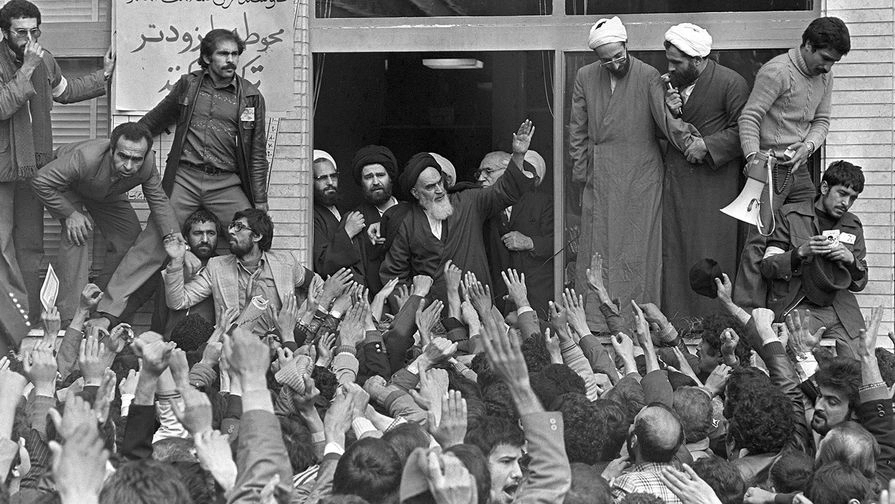
Khomeini advocated the creation of an Islamic government under the supervision of a faqih — an expert in Islamic law. At the time, the concept was still vague, and coalition allies often did not fully realize how far Khomeini was willing to go.
Allies within the coalition often did not realize how far Khomeini was willing to go
Another major force was the National Front, which relied primarily on the educated middle class and students. It can be described as the main liberal-democratic force within the protests, seeking to restore parliamentary power and liberate Iran from external pressure. Among its leaders was Shapour Bakhtiar, who would later become prime minister under the Shah’s rule as a result of a compromise with the monarchy.
The National Front was also closely associated with the Freedom Movement of Iran, led by Mehdi Bazargan, Yadollah Sahabi, and Mahmoud Taleghani. However, unlike the National Front, they had a more religious orientation, advocating a form of Islamic democracy.
The coalition also included a fairly fragmented spectrum of left-wing forces: the communist Tudeh Party, the Maoist Peykar group, the Marxist Fadaiyan-e-Khalq, and the left-Islamist underground People's Mojahedin, which waged an armed struggle against the Shah’s regime. There was no consensus within this wing on how Iran should develop. Some envisioned building socialism grounded in Islam, while others sought to establish a “people's” system — one in which the revolutionary forces would naturally play a leading role.
In short, the opposition was anything but a unified front.
A shot at democratization
In 1978, Pahlavi was forced to make concessions to the protesters, releasing political prisoners and appointing National Front leader Bakhtiar as prime minister. In a meeting with the Shah, Bakhtiar reportedly said: “Your father killed my father, and you imprisoned me. I should have no personal loyalty to your regime. But I am convinced that Iran will not be ready for a democratic republic for at least another 50 years… At present, however, our most crucial task is to stop these barbarians.”
Shapour Bakhtiar to the Shah: “Your father killed my father, and you imprisoned me. However, our most crucial task is to stop these barbarians”
He was referring to the Islamists, whom they ultimately failed to stop. In January 1979, the Shah was persuaded by his entourage to “take a vacation.” Once he did, newspapers — the same ones that had been allowed to resume publication just a couple of months earlier by Bakhtiar’s liberal government — ran headlines reading “The Shah Leaves.” Demonstrators interpreted this as an announcement of the monarchy’s fall, and the protests quickly became too large for the regime to repress.
When Khomeini arrived in Tehran on February 1, he was greeted by a crowd of millions. Western journalists asked the Ayatollah what he felt after returning from 14 years of exile. Khomeini replied, “Nothing.” Within ten days, he seized power, accompanied by the handful of close associates who would form the backbone of the new government.
A knife without a blade
Bakhtiar was still prime minister at the time of Khomeini’s return and still enjoyed the loyalty of the army. On February 10, the staunch opponent of the Islamists declared martial law and imposed a curfew, but he was too late. The protesters simply ignored the authorities’ orders, and the very next day, the army declared its neutrality. February 11 marks the victory of the Islamic Revolution in Iran. Bakhtiar, who from exile came to lead the movement for Iran’s democratization and the abolition of the Islamic Republic, was assassinated in France in 1991.
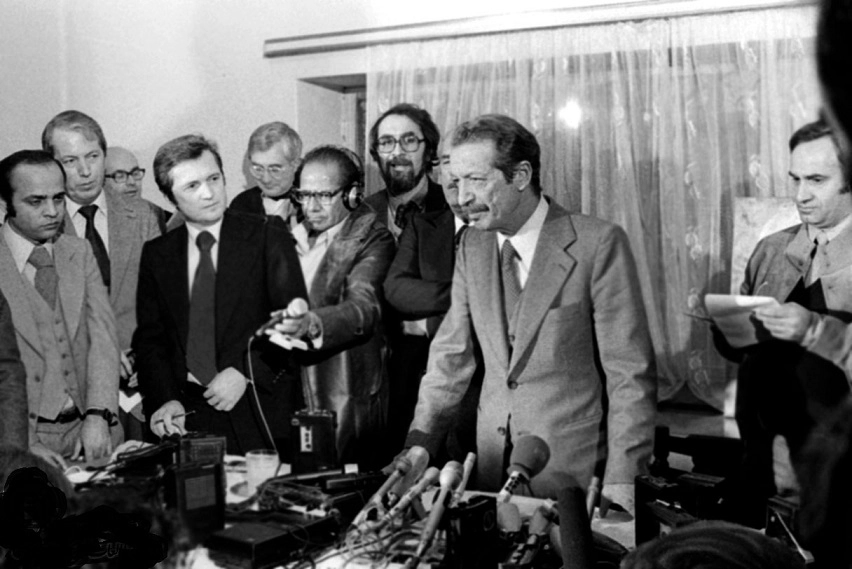
Despite his fate, one could say Bakhtiar was lucky. In Tehran, the insurgents were executing high-ranking Iranian officials and military officers, both serving and former, by firing squad on the roof of the school where Khomeini had set up his temporary headquarters. They even shot the former head of the SAVAK intelligence service, who had once persuaded the Shah to spare the Ayatollah and replace his verdict of execution with exile.
After seizing power, participants in the revolutionary coalition began to divide up positions within the state apparatus and bureaucracy. Mehdi Bazargan of the Freedom Movement headed the provisional government, and his cabinet included representatives of the moderate nationalists and Islamic liberals. The left had no place in the new government and became the first faction to move into opposition to the new regime.
At the same time, Khomeini and his allies were building an informal power vertical. The Revolutionary Council, composed mainly of clerics, became the core political center, while control was exercised through Revolutionary Committees and courts. The former replaced the police and rounded up dissenters, while the latter swiftly processed executions, without excessive bureaucracy. The Islamic Revolutionary Guard Corps (IRGC) also emerged as an alternative structure — a paramilitary organization directly subordinate to Khomeini.
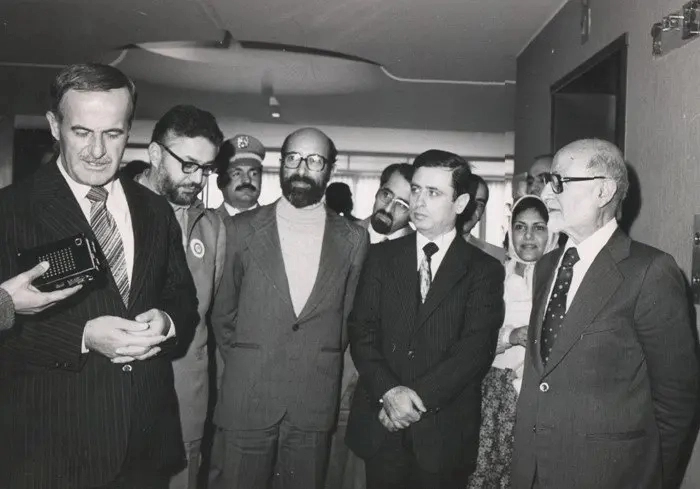
The fatal step for the “moderate” government was its discreet attempt to normalize relations with the United States. On Nov. 4, 1979, Bazargan met in Algiers with U.S. presidential adviser Zbigniew Brzezinski. The publication of photographs showing the prime minister, the defense minister, and the foreign minister alongside a senior American official caused a scandal in Iran, and Bazargan’s attempt to preserve a diplomatic channel of communication with the United States failed.
On the same day, radical-minded students seized the U.S. Embassy in Tehran, taking 66 hostages. Following Khomeini’s lead, they demanded the extradition of the Shah. The American authorities refused, and Khomeini’s son held a major press conference inside the embassy, stating that the students’ actions were supported by the entire Iranian people. The Ayatollah called the seizure another revolution — this time against America.
Within a few hours, Bazargan announced the resignation of the provisional government. All power passed to the Revolutionary Council, and Khomeini began preparations for a referendum on a new constitution.
The provisional government had put together a draft that did not afford the clergy any special role. To fix that, the Islamists convened an Assembly of Experts, which almost entirely rewrote the text in order to enshrine the principle of Velayat-e Faqih (Guardianship of the Islamic Jurist), according to which the state must be governed by a religious authority. The people then voted in favor of the revised draft.
The constitution enshrines the principle proposed by the Ayatollah — Velayat-e Faqih — according to which the state must be governed by a religious authority
At that point, the confrontation between Khomeini and the secular opposition effectively came to an end. Bazargan later moved into the moderate opposition and was even elected to the Majlis, where he continued to advocate for multiparty politics, respect for civil liberties, and limits on the role of the clergy in public governance.
In 1985, the former prime minister even attempted to run for president. The ayatollahs did not allow him to participate in the election.
The first president
In 1979, Iran adopted the new constitution establishing a hierarchy of theocratic and republican institutions. Khomeini became the Rahbar — a lifelong and irremovable Supreme Leader with the broadest possible powers. He controlled the security forces, appointed all key officials, and set the country’s overall policy.
Operational governance was the responsibility of the president, elected by popular vote, and the prime minister, elected by the Majlis. This institutional arrangement quickly led to internal conflict.
In 1980, Iran held its first presidential election, which Abolhassan Banisadr, the former economy minister and an ally of Khomeini’s since the days of his exile in Paris, won by a wide margin. Banisadr was not a cleric, and he had sharply criticized the seizure of the U.S. Embassy back in the early days of the revolution.
At first, the president enjoyed strong support from the Ayatollah and was immediately granted the powers of commander-in-chief. However, Banisadr had won 75.6% of the vote, and over time the president began to use his popularity in an attempt to create an alternative center of power.
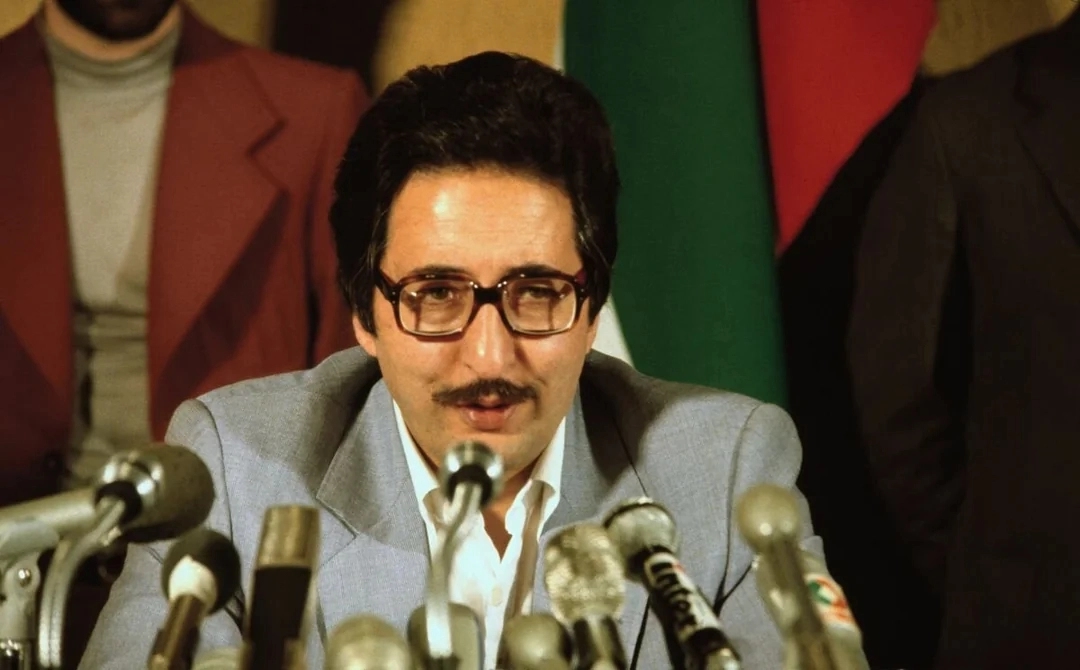
Such a president did not suit the Islamic Republican Party (IRP), which held a parliamentary majority and, as a result, leverage over the prime minister and the government. The party was led by influential clerics, including Ayatollah Mohammad Hossein Beheshti, Ali Akbar Hashemi Rafsanjani, and the future Supreme Leader, Ali Khamenei.
Party members viewed the president as a ceremonial figure whose duties were limited to receiving ambassadors and awarding medals. However, Banisadr publicly described himself as the principal representative of the Supreme Leader’s will. He openly criticized the IRP and refused to endorse Mohammad-Ali Rajai, the prime minister imposed on him by the Majlis.
After the war with Iraq began in 1980, the president tried to take command of the armed forces. However, the Majlis prevented Banisadr from acting as a full commander-in-chief and imposed its own decisions on him. At the same time, the president was blamed for the army’s multiple failures on the front.
Khomeini tried to remain above the conflict and called on both sides in the domestic power struggle to end inter-institutional disputes, but in April 1981, Prime Minister Rajai and the president clashed over who held executive authority. The constitution did not provide a clear answer, so the dispute was no longer just about the roles of two politicians, but about the model of the state itself.
At that point, the Supreme Leader sided with the prime minister and parliament. In June, the Majlis initiated impeachment proceedings. In the absence of an established procedure, the rules were effectively created on the spot. Parliament declared Banisadr politically incompetent to serve as president, and the day after the session, Khomeini signed a decree removing him from office, followed by an order for his arrest.
In response, the former president called on the people to resist what he described as a dictatorship. However, his attempt at inspiring an uprising was unsuccessful. In Tehran, large crowds did indeed take to the streets, but the demonstration ended in a confrontation with the IRGC. Upwards of 50 people were killed and around 1,000 were arrested. Realizing that power would not be returned to him without armed struggle, Banisadr went into hiding while still working to build a coalition against Khomeini.
The authorities responded by executing many of his supporters. Banisadr himself, disguised in military uniform, made his way onto an airfield, from where he fled to France aboard a hijacked aircraft together with Iranian Air Force Colonel Behzad Moezi (the same pilot who had flown the Shah out of the country in 1979).
The first president of the Islamic Republic died after a long life in exile only in 2021, long after any prospects of democratization in Iran had faded away. Eight years after Banisadr’s flight, Khomeini initiated a revision of the constitution and strengthened the role of the president while abolishing the office of prime minister. However, this move also coincided with a further expansion of the Supreme Leader’s powers.
The last prime minister
After Banisadr’s removal, a wave of terrorist attacks swept across Iran. Responsibility was attributed to his allied left-wing radical group, the People’s Mojahedin Organization of Iran (PMOI), who were dissatisfied both with the strengthening of the prime minister’s position and with clerical rule. On June 27, 1981, a bomb hidden in a tape recorder exploded near Ali Khamenei while he was giving a speech at a mosque; his right arm was left paralyzed for life.
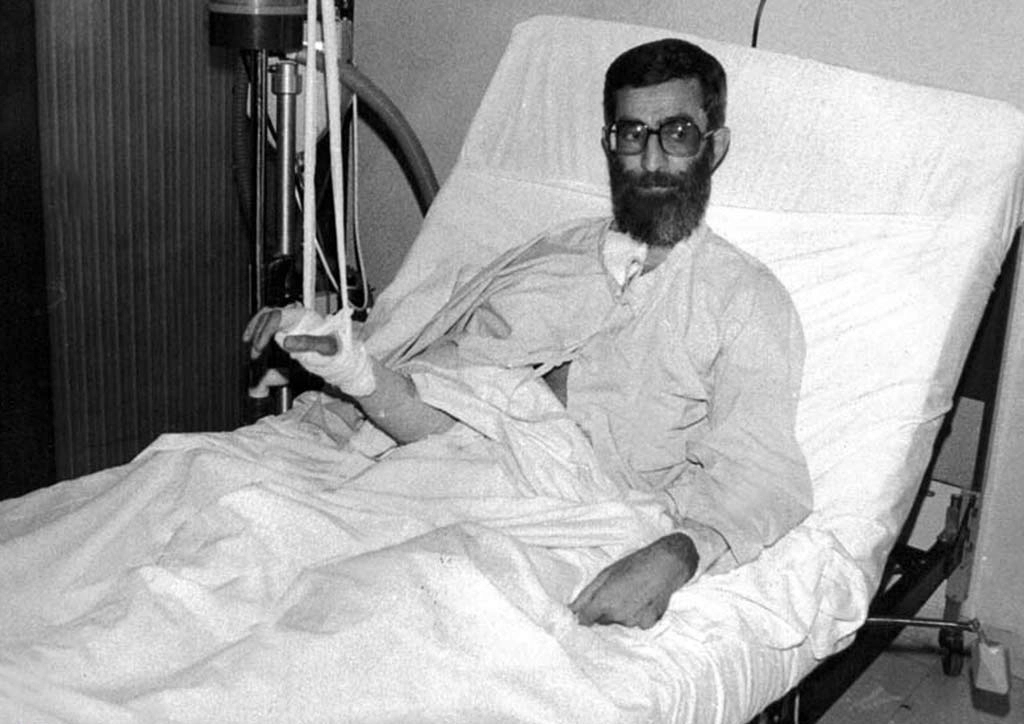
The following day, an explosion shook the headquarters of the IRP, killing Ayatollah Beheshti and more than 70 other senior officials. Two months later, another attack killed the new president, Rajai, and the prime minister.
By decapitating the regime, the Mojahedin sought to pave the way for a new mass uprising. Instead, their efforts led to an even deeper entrenchment of the clergy within the state apparatus. Whereas Khomeini had previously preferred to see secular figures serve as president and prime minister, he now turned to another ayatollah: Ali Khamenei. However, the president remained a weak, ceremonial figure, and the Majlis made technocrat Mir Hossein Mousavi, an architect by training, prime minister. His long-running conflict with Khamenei helped shape the regime as we know it today.
Amid the ongoing war with Iraq, Mousavi launched an overhaul of the economy, introducing greater state control, along with penalties for speculation. In doing so, he encroached on both the bazaar and the conservative clergy. Under the cabinet, agencies began to emerge that allowed economic policy to be carried out without any oversight from the president.
In 1985, Khamenei was re-elected as president and, exploiting ambiguities in the constitution, attempted to remove Mousavi. He argued that the president was the only member of the executive branch directly elected by the people and therefore accountable to society for shortcomings in areas such as national security, housing, and employment. These problems, he claimed, could only be addressed by selecting an appropriate cabinet. Notably, similar arguments had previously been made by Banisadr, who had been forced into exile.
However, Khomeini sided with Mousavi, as the Supreme Leader considered it unwise to replace the prime minister during wartime. Khamenei then asked Khomeini to formally confirm the prime minister’s authority in a separate document. However, Khomeini believed that a public statement of support for the head of government was sufficient. He handled it through diplomacy: while expressing support for Mousavi, he added that, under the constitution, the final decision still rested with the president.
The ambiguity of the decision allowed Khamenei’s supporters to stage another challenge. Ninety-nine right-wing members of parliament came out in support of the president, openly contesting the will of the rahbar for the first time. One of the deputies even asked for 270 bracelets to be brought from Khomeini’s residence to the Majlis, hinting at the parliament’s lack of independence.
One of the deputies asked for 270 bracelets to be brought to the Majlis from Khomeini’s residence, hinting at the parliament’s lack of independence
No sanctions were imposed on the deputies at the time, but the conflict dragged on. Only in 1989, in the final weeks of his life, did Khomeini initiate a constitutional revision aimed at resolving the controversy. The amendments abolished the post of prime minister and transferred a significant portion of its powers to the president. Thus, Mousavi became the last prime minister of the Islamic Republic.
“We must behead some people and cut out the tongues of others”
In 1989, after Khomeini’s death, debates arose over whether a new Supreme Leader was even needed, but in the end Ali Khamenei was elected to the role, which he held until an Israeli airstrike killed him earlier this year. Notably, it was under his rule in the 1990s that the Islamic Revolutionary Guard Corps emerged as a political force, opposed by what would become the reformist camp.

In 1997, Mohammad Khatami became president of Iran. One of the most notable moments in his political career prior to the presidency was his forced resignation as Minister of Culture, a position in which he had promoted a relatively liberal line that called for easing censorship restrictions in the press and cinema. Dozens of new publications emerged openly discussing sensitive political issues, including the foundations of the Islamic Republic and the limits of its leaders’ power.
Under Khatami, film licenses were granted to movies exploring themes that openly irritated conservatives. For example, Time of Love, which addressed the topic of marital infidelity, caused outrage. Director Mohsen Makhmalbaf shot it in Turkey with Turkish actors, but this did not spare him from accusations of undermining revolutionary and moral norms. Soon after, conservative criticism also shifted toward Khatami’s ministry, which had allowed such a film to reach theaters.
Newspapers, the clergy, and members of parliament launched a campaign against Khatami, but he still spoke in defense of the film. By stating that artistic value should be determined by specialists rather than the clergy, he effectively challenged the conservatives. In the end, however, he lost this battle and, under mounting pressure, resigned.
“The artistic value of a film should be determined by specialists, not the clergy,” said Iranian reformist President Khatami
Voters, primarily young people and intellectuals, saw Khatami’s presidency as a chance for reform — and did promote reforms intended to gradually change the system from within, by transforming it toward strengthening and developing civil society. However, most of his reforms were met with resistance.
Khatami ultimately failed to expand the powers of the presidency, strengthen oversight of constitutional compliance, or curtail the authority of the Guardian Council, which supervised elections and could arbitrarily disqualify candidates. His real success lies in the public sphere, where he facilitated greater participation of women and educated youth in politics. This, along with growing press freedom, increasingly irritated the IRGC, which began to intervene more frequently in the ideological sphere.
In 1998, journalists obtained a recording of a closed-door speech by IRGC Commander-in-Chief Yahya Rahim Safavi, who linked Khatami’s allies to the banned People’s Mojahedin Organization of Iran and described reformist newspapers as a threat to national security. A direct threat was made: “We should slit the throats of some and cut the tongues of others. The sword is our language.”
The IRGC later claimed that the remarks had been taken out of context, but the full version was nevertheless never released. Khamenei soon joined the criticism of the press, stating that newspapers were abusing their freedom and straying from Islamic principles. Notably, while criticizing the media, not once did the Supreme Leader mention Khatami's name.
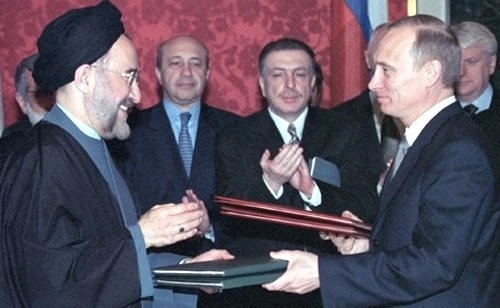
In January 1999, Khatami established a commission to investigate a series of murders of dissidents and politicians and compelled the security services to acknowledge their responsibility for such acts of violence. Eighteen people were arrested on charges of extrajudicial killings, and 15 were found guilty. However, Khatami did not get to follow through on these verdicts. The investigation never established who had given the orders to the agents. Two years later, the cases were sent for review, and the sentences, including two death penalties, were reduced.
The confrontation between reformists and conservatives intensified in July 1999, when the newspaper Salam published a letter from a senior intelligence official outlining plans to tighten control over the press.
The newspaper was accused of publishing a classified document and was quickly shut down by court order. That same night, police and the paramilitary Basij militia, part of the IRGC, raided Tehran University, one of the hubs of the opposition. In response, students launched a sit-in protest, which was also suppressed by force.
The protests — the largest since 1979 — were becoming increasingly radical. Clashes with security forces were no longer limited to Tehran but spread to other major cities. At one point, Khatami received a letter signed by 24 IRGC commanders, in which the organization explicitly stated its intention to intervene in domestic politics:
“Mr. President, if you do not make a revolutionary decision today and fulfill your Islamic and national duty, tomorrow will be too late, and the problems will become so intractable that they will be beyond imagination. In conclusion, with all due respect to Your Excellency, we declare: our patience has run out, and we are no longer willing to tolerate your inaction.”
Khatami backed down and publicly called on students to disperse, thereby stripping them of any political backing. The president also did nothing to prevent the crackdown on the reformist press that followed shortly thereafter.
By 2005, when his second presidential term came to an end, a significant portion of Khatami’s reforms had been either blocked or rolled back. However, young Iranians’ desire to participate in politics and debate the country’s path did not disappear, and in 2009, a new crisis led to another large-scale wave of demonstrations.
A green light
Khatami did not run in the 2009 elections, instead giving way to Mir-Hossein Mousavi, Iran’s former (and last) prime minister and a long-time opponent of Khamenei. Mousavi was backed by other reformists as well, but he did not receive the informal approval of the Supreme Leader, thereby breaking a convention that had taken shape under Khomeini.
Historian Siavush Randjbar-Daemi writes that this was due not only to Mousavi’s strained relationship with Khamenei, but also to the rahbar’s clear sympathies for the incumbent president, Mahmoud Ahmadinejad. In such a situation, Mousavi could well have received a polite refusal. Nevertheless, the authorities allowed him to take part in the election, which became the most open and liberal since the Islamic Revolution. Candidates had the opportunity to put up posters, hold rallies, and campaign on social media. Mousavi's distinctively green identity later gave its name to the opposition Green Movement.
A significant role in the campaign belonged to Mousavi's wife, Zahra Rahnavard, who had served as the editor of women’s magazines in the 1980s. By the time of the election campaign she was working as a university rector, and she made advocacy for women's empowerment a separate item of the campaign agenda, winning over younger audiences — something her 67-year-old husband, whose political career had peaked in the 1980s, could not have achieved.
Even more radical than Mousavi at the time was another reformist candidate, Mehdi Karroubi, who openly called for revising the constitution, loosening control over the press, and limiting the powers of the Guardian Council, which oversaw candidate eligibility.
In response, Ahmadinejad broke another electoral taboo in Iran: he began publicly attacking not only his rivals but also former presidents, including Khatami, accusing them of corruption. In the meantime, he tried to present himself as a people's candidate, even at the risk of displeasing Khamenei. Nevertheless, he did not lose the Supreme Leader’s support.
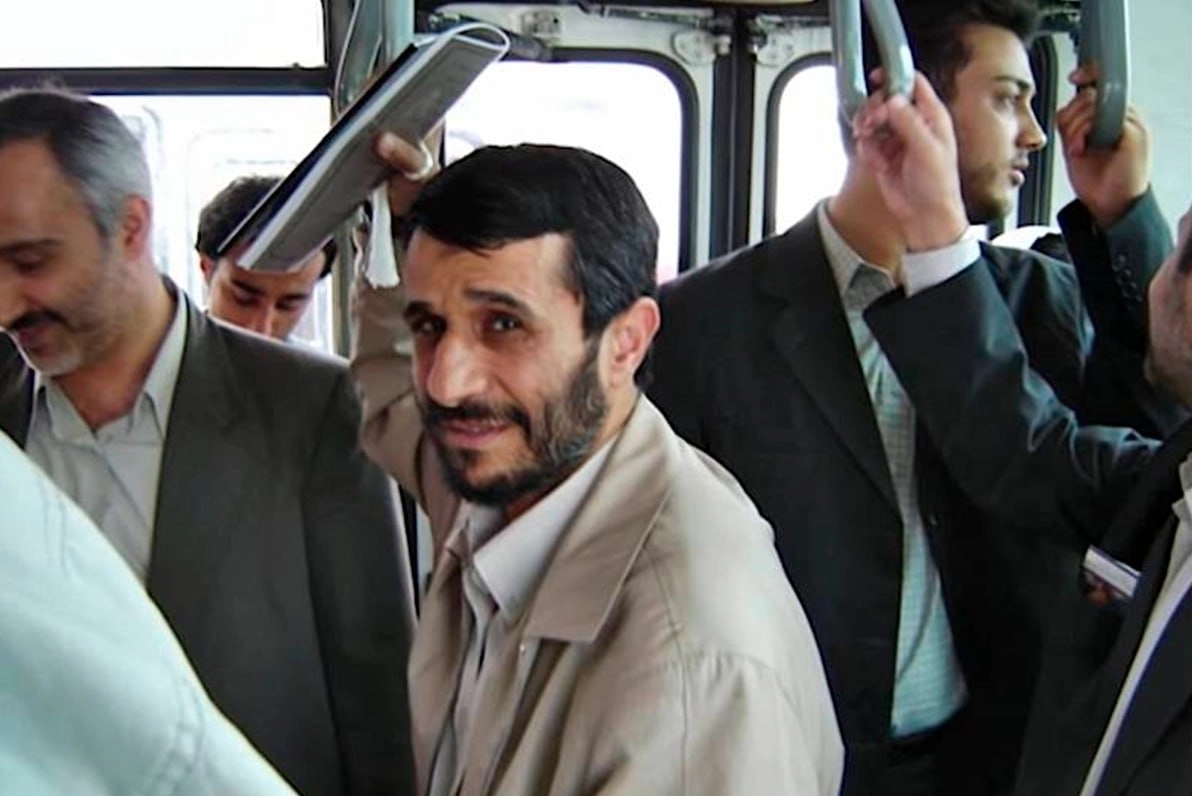
According to official data, Ahmadinejad won the election on June 12, 2009, with 62% of the vote, and the results were almost immediately endorsed by Khamenei. However, Mousavi refused to recognize the outcome and declared himself the winner. His supporters, along with those of Karroubi, were convinced that the election had been rigged, and within three days, on June 15, hundreds of thousands of people had taken to the streets.
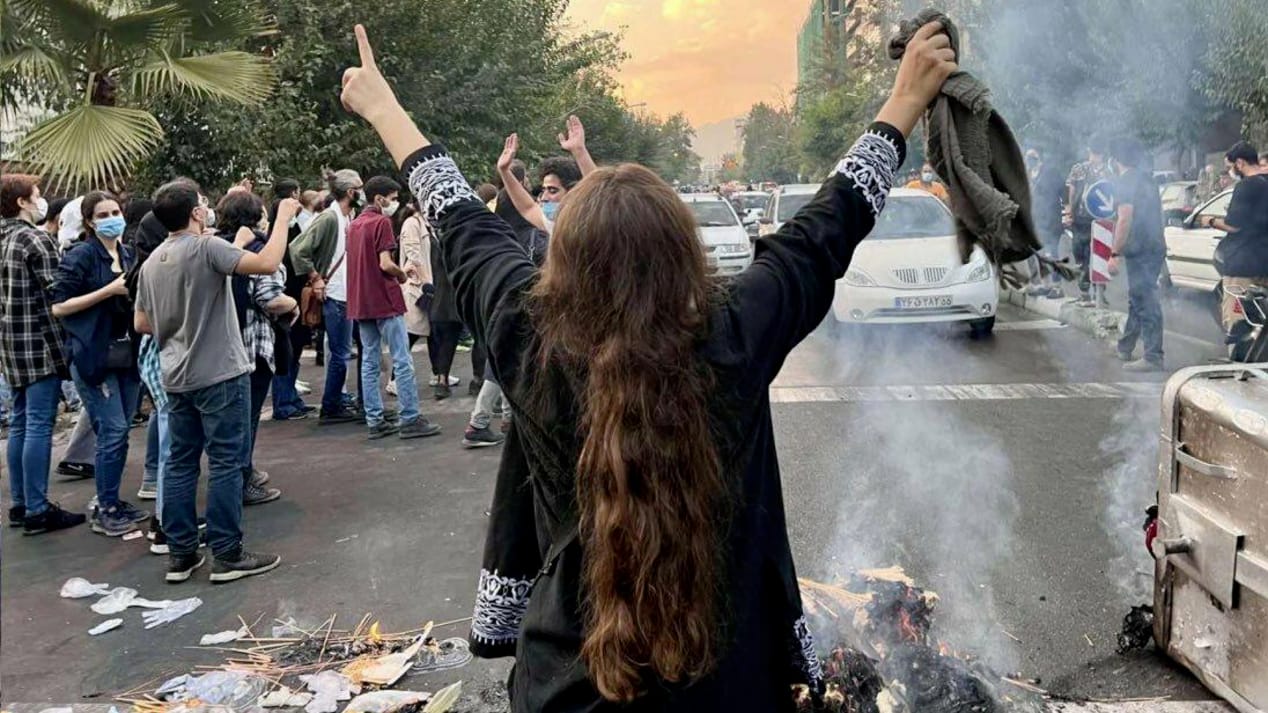
After four days of street confrontations, Khamenei once again confirmed the official election results and stated that any further protests would constitute a direct challenge to his authority. This did not stop the protesters. The IRGC and special police then opened fire on demonstrators. Amnesty International reported dozens of deaths and thousands of arrests.
In the end, the reformist camp was almost entirely pushed out of state institutions, while the positions of Khamenei and the security forces only strengthened. Later, Ahmadinejad himself would also enter into conflict with the Supreme Leader, leading to a similar outcome: a weaker presidency and even more power for the Supreme Leader.
Multi-tier and shockproof
All the major intra-elite conflicts of the Islamic Republic, from the dismantling of Bazargan’s government and the exile of Banisadr, to Khamenei’s confrontation with Mousavi, the stifling of Khatami’s reforms, and the suppression of the Green Movement, have ended in a similarly grim way. The clerical regime is multi-tiered, but it is not a conventional hierarchy; rather, it is a complex system with numerous overlapping institutions and security structures that monitor and check one another.
In essence, each body and institution grew out of the old conflict between the permanent and the replaceable parts of the regime. And although it may seem that all power is concentrated in the hands of the rahbar, it can in fact shift between different actors and be distributed across various institutions.
This system is highly resilient, and so far neither external forces nor the Iranian people, — who have repeatedly taken to the streets in protest — have been able to seriously undermine it, let alone dismantle.