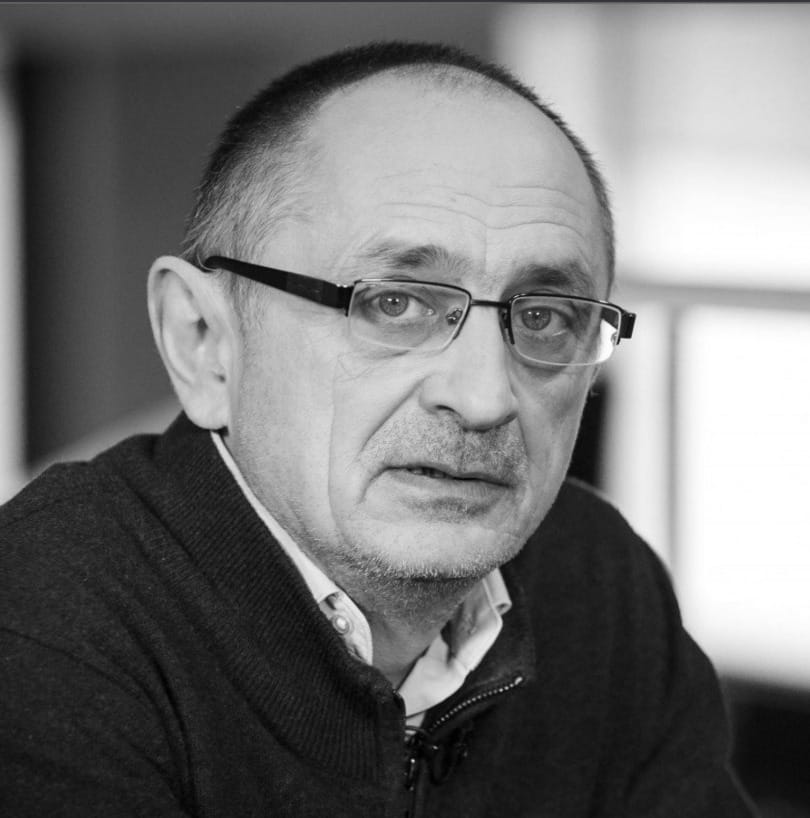
“Who organized this standing ovation?” is a well-known Russian meme tied to totalitarian rule. In 1946, when poetry by Anna Akhmatova was read publicly (despite being officially condemned as “decadent” and “anti-Soviet”), the audience rose and applauded. When this was reported to Stalin, he is said to have asked who, precisely, had coordinated the event. In a similar vein, journalist Alexander Morozov now asks: who “organized” Victoria Bonya, the former reality TV show star who suddenly lashed out at the Kremlin, creating a media firestorm that resulted in a one-on-one “debate” with Vladimir Solovyev, one of her loudest critics in the Russian propaganda ecosystem.
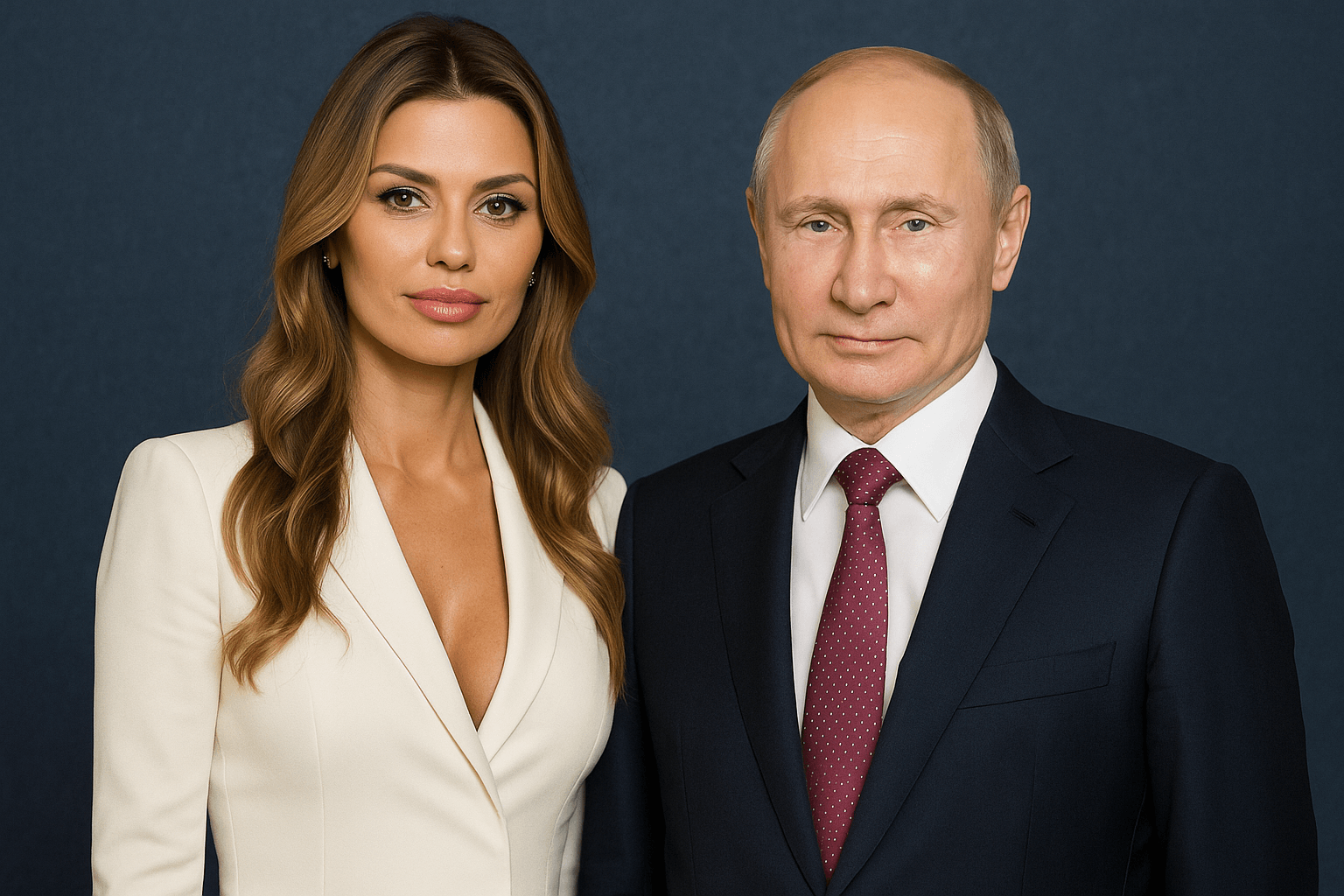
Bonya — a blogger, model, TV host, former participant in the reality show Dom-2, mountaineer, and resident of Europe for over 10 years — recently stepped onto the political stage and exclaimed: “What are you doing? You don’t hear us, Vladimir Vladimirovich!”

Kremlin spokesman Dmitry Peskov was quick to respond: “We hear you, we hear you!” In reply, Bonya posted a social media video in which she tearfully expressed her gratitude to the Russian authorities.
The exchange unfolded amid growing internet restrictions in Russia. Putin had given the green light to a massive effort — involving the FSB, the Digital Development Ministry, the presidential administration, and major tech firms VK, Yandex, Sberbank, and Rostelecom — to rapidly make the state-controlled messenger “Max” the dominant app in use by Russians, to tighten control over the use of VPNs, and to push out foreign platforms. However, once that rollout began, things started breaking down, with payment systems, delivery services, and car-sharing platforms experiencing extended outages. Meanwhile, the authorities began warning the public that they would track users who displayed unusually heavy VPN traffic.
The public was certainly not happy, but they largely put up with it. And the authorities didn’t let up: “We’re going to charge for VPNs,” they said. The public became upset a second time, but still said nothing. The third time, the dragon slithered down the mountain and said: “It’s time for our own patriotic ‘Tinder,’ approved through state services platform Gosuslugi.” Only then did the public let out a loud, strangled groan.
At that point, the presidential administration began brainstorming: somehow, this move had to be justified to the masses. But how? On orders from Putin’s Chief of Staff Alexei Gromov, Putin’s unofficial personal reporter Pavel Zarubin crept up to FSB Director Alexander Bortnikov with a camera crew while the domestic spy chief was sitting in the front row at yet another meeting. Ever the gentleman, Zarubin crouched down with the microphone, while the cameraman lay on the floor in order to frame a shot that would capture both men’s faces — and not their shoes. The septuagenarian Bortnikov, for his part, also showed a certain tact and flexibility, lowering his head toward his knees.
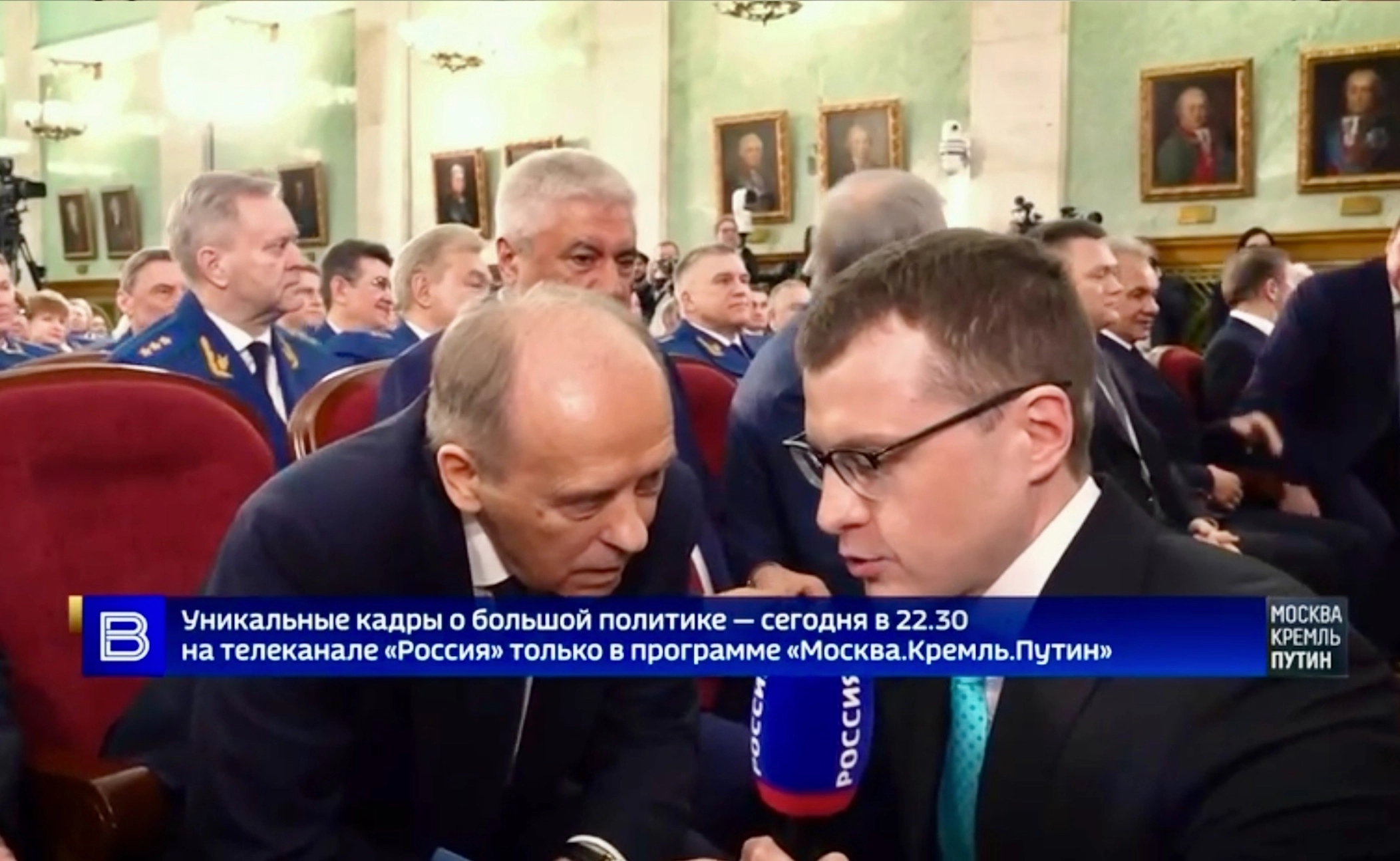
In a cheerful, optimistic whisper, Zarubin asked Bortnikov: “What is the cause of the people’s suffering?” Bortnikov’s answer went something like this: “There’s no other way. Ukrainian intelligence and the British puppeteers behind them are collecting all kinds of information at will. There’s a war on, and that can’t be allowed. Restrictions have to be endured for the common good.”
This, essentially, is where “Bonya” appeared. Loyal IT specialists suddenly perked up and said, as reported by The Bell: “Before, our cybersecurity colleagues from the FSB came to the meetings, and we all worked together peacefully. They’re not attending the meetings anymore, they’ve been replaced by the FSB’s Second Service!”
At this point, Gen. Sedov stirred. “Who in our meeting is talking to The Bell?” he must have shouted. “Bring me the wiretaps!”
And that’s where the people’s groans took the shape of “Victoria Anatolyevna Bonya, born in 1979, place of residence: Monaco.”
After that, the spectacle began to heat up. Putin invoked “socks” — the old wartime idea that everyone in the rear should help the front (even if they live in Monaco). The message was clear: while Rostec can make tanks and guns, Bonya can at least knit something useful in the fight against trench foot.
Pro-Kremlin commentator Vladimir Solovyov launched into an abusive tirade against Bonya, dragging Italian Prime Minister Giorgia Meloni into it as well. That, in turn, provoked outrage among wealthy Moscow circles, who seemed to hear in the propagandist’s insults accusations aimed at them, too.
Meanwhile, as if to mock FSB chief Bortnikov’s calls for tighter cybersecurity, Ukrainian hackers broke into a government Zoom meeting on the drone program. The message was hard to miss: build your “sovereign AI” if you can, but remember that people will still ask it awkward questions — and the answers may not flatter the Kremlin.
At that point, the chaos seemed to take a break as all concerned parties began trying to read the signals.
Some saw Bonya as the voice of Rublyovka — Russia’s wealthy elite — and especially of the wives of powerful men. Surveillance and wiretapping are one thing; Moscow high society has long known how to live with that. But losing the ability to call their daughters at Cambridge was another matter entirely.
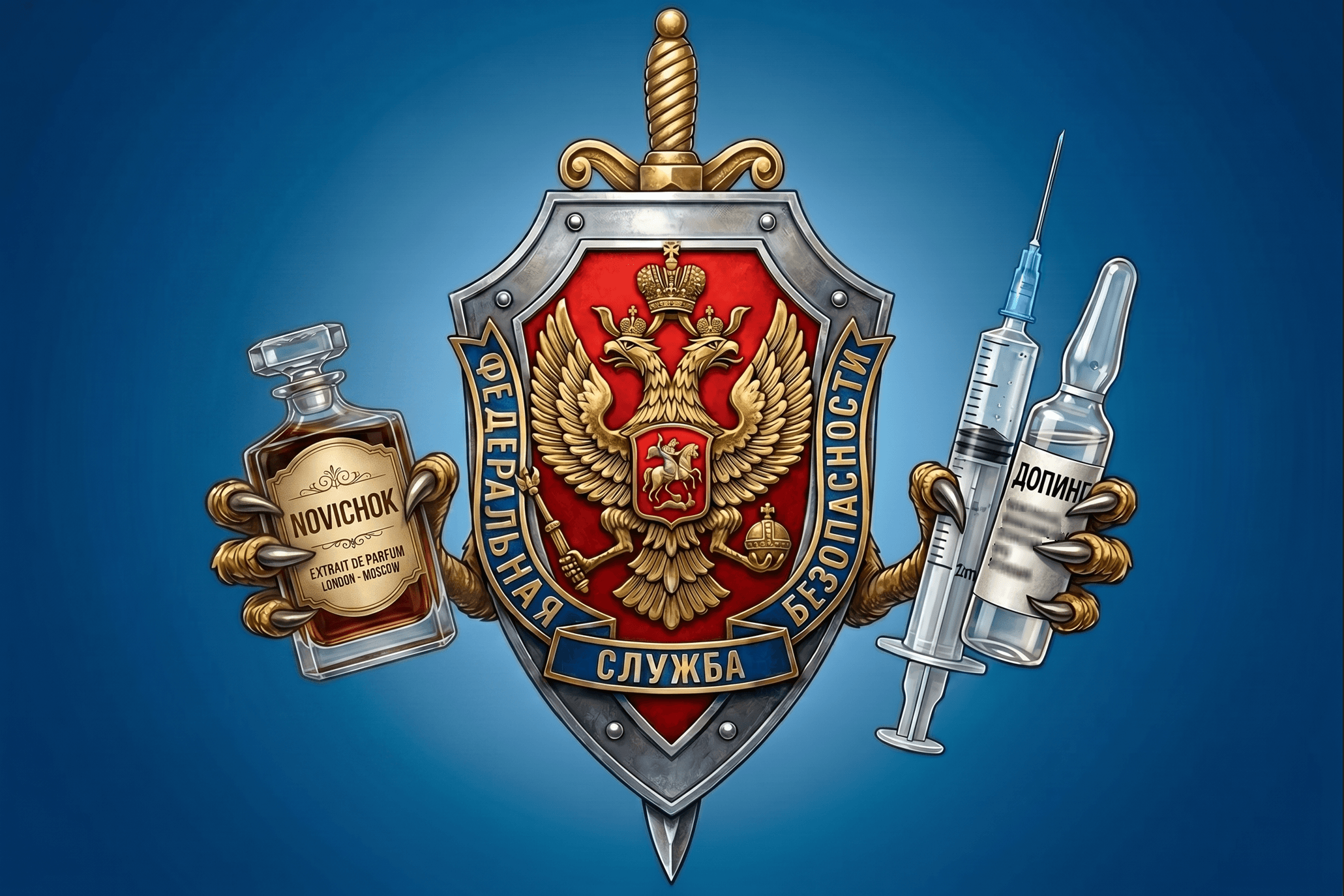
Others saw something different: the alliance behind the digital crackdown had broken down, and the FSB appareated to have overreached. In this reading, Bonya was not speaking only for herself, but for startled technocrats at Sberbank and Rostelecom as well. The FSB’s Second Service, critics say, is not built for cybersecurity. It is built for repression — all they know how to do is poison people. And digital control requires something subtler than brute force (or chemical nerve agents).
Even the ultrapatriotic camp seemed confused, openly admitting that there was disorder at the top and that the men in charge have no actual idea what’s happening.
Psychotherapists might say everyone had simply “overheated”: springtime nerves, mass hysteria, “induced delusion.” Then Slovenian philosopher Slavoj Žižek appeared at a conference in Italy to declare: “This is the end of the world.”
If thirty years ago Francis Fukuyama could speak of the “end of history” in the Hegelian, secular sense — that the mission of the Enlightenment had ended in a complete victory for liberal modernity — Žižek last week was striking a higher note: Trump and Putin, he suggested, are two horsemen of the Apocalypse, and soon the Whore of Babylon will come in riding the Beast. In the face of this horror, Žižek says, we must retreat into the early Christian catacombs and wait it out there, fortified by Europe’s heritage — because there is no other.
Where Bonya goes from here is anyone’s guess. Will she disappear into the ranks of Russia’s New People party — the “alternative” to United Russia — ahead of nationwide parliamentary elections scheduled for September? Or will she step onto the pan-European stage as the leader of a new Russian feminism? Or will she simply make a quiet return to lifestyle vlogging?
The answer is not the point. The point is that Bonya has become a signal. Economists who once said the Russian system was stable are now saying something is wrong. Political analysts are saying the regime has reached a turning point.
If we look at Bonya as an eruption of the Russian collective unconscious, what is this dream about?
It is about the fact that, in the fifth year of the war, Putin’s “power vertical” has finally turned into horizontal sludge. The “tsar” has become “grandpa.” The bureaucracy sits in its nests, with its beaks open, asking “where and why are we fighting next?” The old answers no longer work, and the “spirit of Anchorage” has withered away.
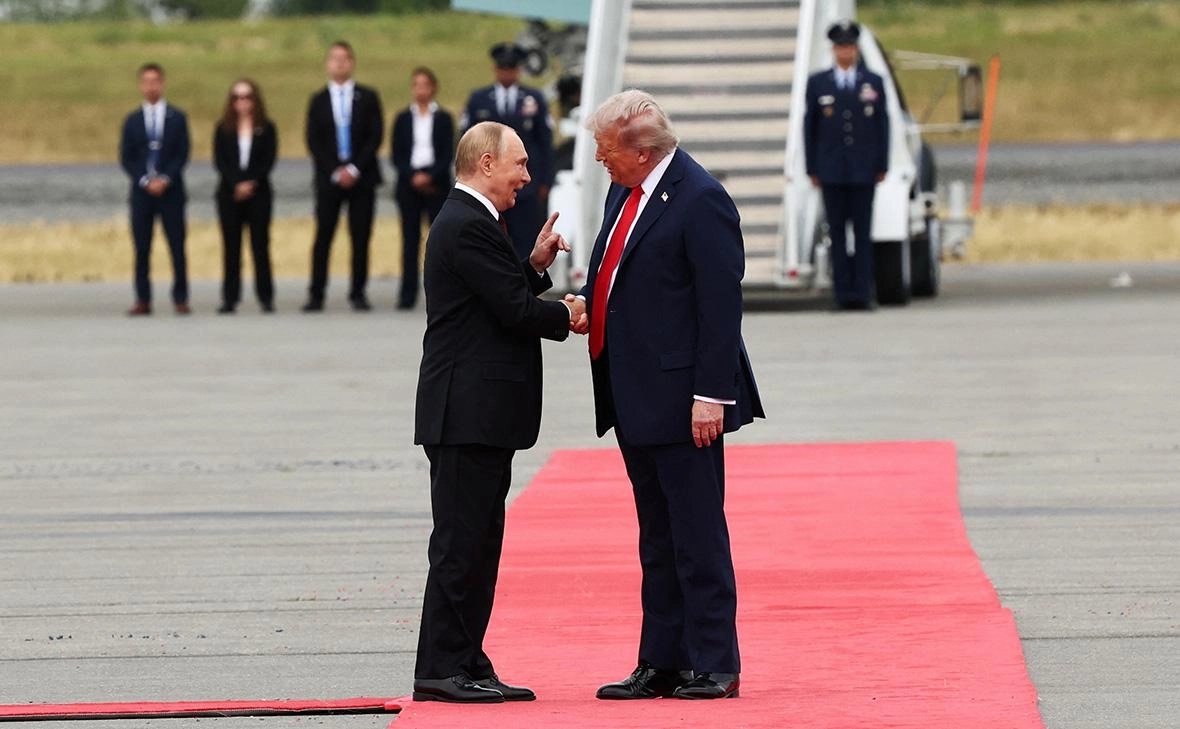
The regime must take on a new form — its answer to four years of war. Most likely, that answer will come from “induced delusion,” collective overheating, and the rapid decay of the government’s once-rational technocratic core. All the system can produce now are demands for “positive content” and patriotic gestures like “knitting socks.” There is no path from here to any rationality, old or new.
All the system can produce now are demands for “positive content” and patriotic gestures like “knitting socks”
Oh, Bonya, Bonya. How frightening you are as a symbol of Russia’s transition, its bifurcation — or, in simpler terms, its fork in the road. You are the wounded bird crying one last “nevermore” before the sludge of the regime enters its final, terminal phase.