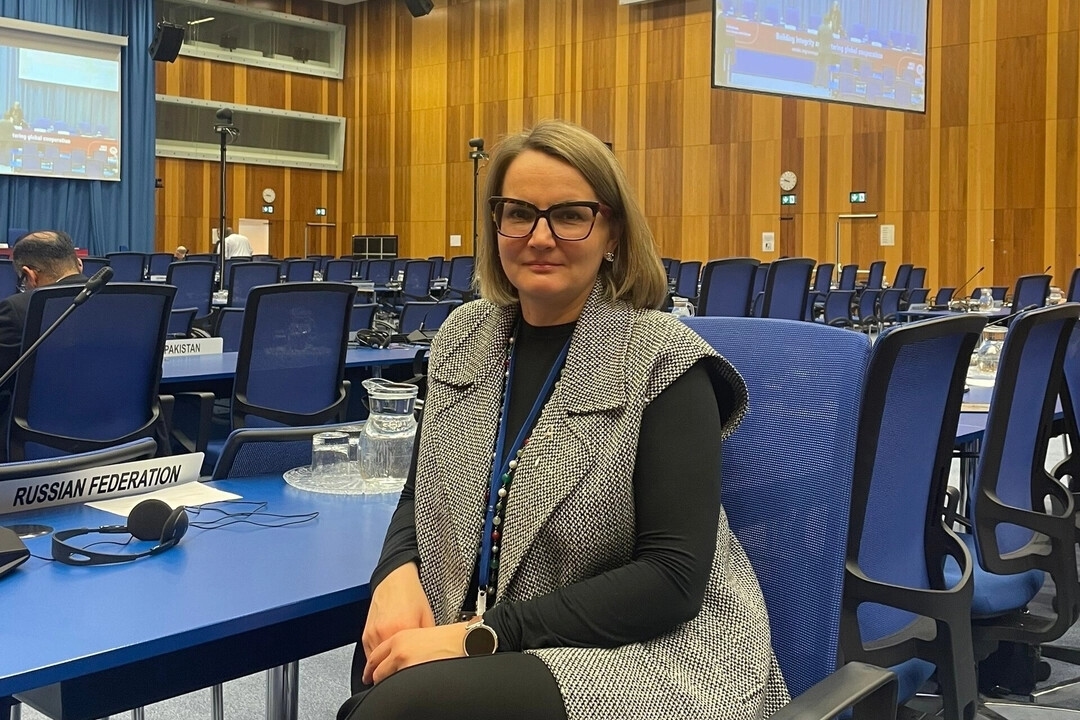
Anna Starzhinskaya, a department head in the Main Investigative Directorate of Russia’s Investigative Committee, spoke at a UN working group meeting on asset recovery held earlier this week in Vienna. The Investigative Committee said its representative discussed Russia’s experience fighting corruption and called for greater international cooperation. The agency’s chairman, Alexander Bastrykin, has been under European Union sanctions since 2021 for malign activities including his role in the prosecution of the late Alexei Navalny, whose Anti-Corruption Foundation investigated the inexplicable wealth of the Putin regime’s most prominent figures.
Starzhinskaya took part in the 20th session of the Open-ended Intergovernmental Working Group on Asset Recovery, which was held Nov. 3-5 at the Vienna International Centre. The group is a subsidiary body of the Conference of the States Parties to the UN Convention against Corruption. According to organizers, the meeting was open to representatives of governments and international organizations, but not to nongovernmental observers.
In her remarks, Starzhinskaya said Russia follows a policy of “zero tolerance” toward corruption. According to the Investigative Committee, Russian authorities identified and seized more than $486 million in assets belonging to people accused of corruption in 2026. She also described the Investigative Committee's cooperation with Russian federal financial intelligence agency Rosfinmonitoring, its tools for tracing cryptocurrency transactions, and its efforts to handle more than 6,000 requests for international legal assistance over the course of four years.
The European Union imposed sanctions on Investigative Committee Chairman Alexander Bastrykin on March 2, 2021. The Council of the EU held him responsible for arbitrary detentions, the prosecution of Alexei Navalny, and the suppression of peaceful protests. In an updated sanctions justification issued in 2023, the EU also cited what it described as systematic repression of Russia’s opposition by the Investigative Committee.
The sanctions have also targeted other officials at the agency. In May 2025, the EU added Investigative Committee officials to its sanctions list who the Council of the EU accused of taking part in fabricating criminal cases against activists, including people associated with Navalny. In practice, Russia’s Investigative Committee has become one of the main institutions carrying out systematic political repression in the country.
Starzhinskaya has regularly attended international events abroad. In March 2026, she wrote on VKontakte about an official trip to New York, where she said she helped draft a new UТ convention. “Everything came together on this trip, and it brought only positive emotions, valuable experience, and a chance to practice legal English!” she wrote. In January, she recalled a December 2025 trip to Vienna that included a visit to the Vienna State Opera. In July 2026, she again posted photographs from the Austrian capital.
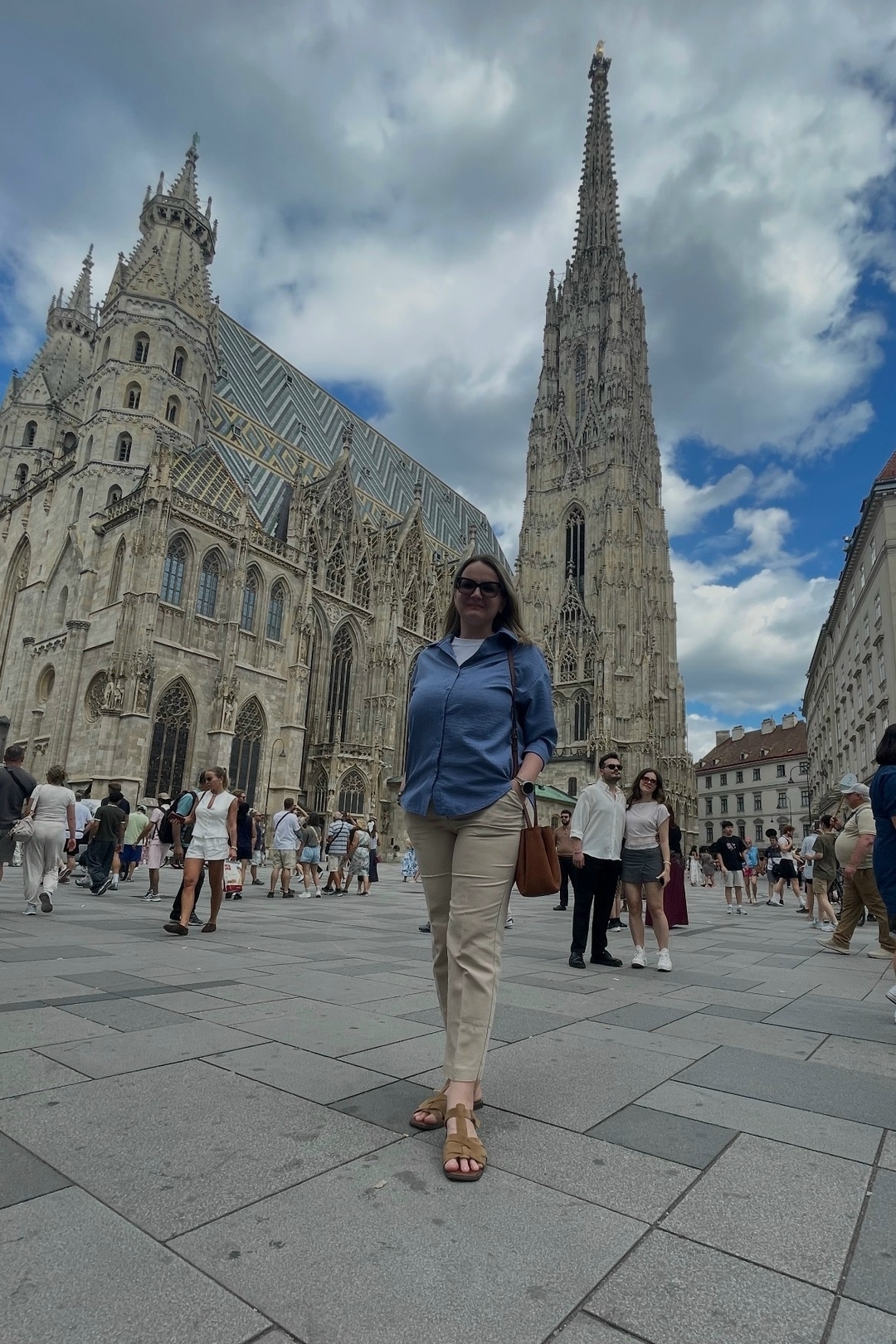
Russia’s participation in the UN working group meeting does not formally violate the organization’s rules. Moscow ratified the UN Convention against Corruption in 2006 and remains a party to it. The meeting nevertheless took place at an international venue in Austria despite EU sanctions against the head of the Russian agency whose representative had been invited to speak.
In September 2026, UN Special Rapporteur on the human rights situation in Russia Mariana Katzarova reported that Russian authorities had developed a system of transnational repression targeting its citizens around the world. She said documented cases of Kremlin critics being targeted abroad had increased eightfold since the start of Russia’s full-scale invasion of Ukraine. Katzarova also said the Russian authorities use international legal assistance channels and Interpol notices to pursue critics outside the country.


