
This month, Russia’s pretrial detention centers were officially returned to the jurisdiction of the Federal Security Service, which had already been controlling them unofficially. At the same time, it emerged that extrajudicial detentions have been carried out under a decree issued by Vladimir Putin. In addition, extrajudicial searches are now being conducted under the guise of “premises inspections” as part of “pre-investigation checks.” Yet the question remains: why, despite having virtually unlimited capacity to act outside the law, do Russia’s security agencies still carefully and meticulously develop legal justifications for their actions? The answer is fairly straightforward: as practice shows, unlawful laws that formally legitimize repressive practices streamline the system’s work, allowing it to scale up repression without unnecessary costs or chaos.
Politically motivated criminal cases, massive prison sentences “out of nowhere,” torture, abductions, extrajudicial killings — it may seem that Russia’s security forces can do whatever they want without regard for any law. In reality, however, almost every one of their actions is backed by paperwork providing legal justification even for actions that clearly violate the spirit of the constitution. Lawyers and human rights defenders say that, as a result, criminal case files are growing thicker every year. The more lawlessness there is, the more paperwork security forces produce to mask it.
The security apparatus is a system. If any officer were given free rein to do whatever they wanted, the system would become unmanageable, breaking down into feudal fiefdoms. That is why, on the one hand, security forces are expected to “crack down” and “crush,” while on the other, they must squeeze all of these repressive measures into the letter of existing law — or at least to repress while leaving no evidence of violations.
This logic is especially evident in the routine operations of the state’s agents. Even where a decision about a specific individual has already been made unofficially, the system still constructs a formal legal framework around it.
One of the most characteristic tools is back-to-back arrests. It might seem that the almighty security forces could immediately detain a person on criminal charges, but instead they keep their targets locked up for weeks or months on formal administrative charges such as “petty hooliganism” or “disobedience,” using this time to examine the person’s devices, conduct interrogations, apply pressure, and assemble an “evidentiary base” that will later, at least formally, be legally impeccable. In this way, administrative detention becomes a convenient method of buying time to build a criminal case.
Administrative detention is a convenient method of buying time to build a criminal case
Pre-investigation checks serve a similar function. Formally, full-fledged investigative actions are not allowed before a criminal case is opened. In practice, however, these checks are used as a workaround: under the guise of a “premises inspection,” security forces enter apartments, seize devices, gain access to correspondence, and effectively conduct searches outside the procedural safeguards stipulated by law. The person being searched has not been formally named as the target of an investigation, meaning they have no legal right to demand access to a lawyer. Yet the entire procedure is documented as lawful.
Finally, an extensive evidentiary framework is constructed within the criminal case itself. Dozens of pages of correspondence, expert assessments, and witness testimonies — including those of anonymous witnesses — are assembled in a way that formally substantiates the charges brought. Even if the evidence is obtained under pressure or through questionable procedures, it is enshrined in official documents and becomes part of the “established” version of events that is presented in court.
The same thing happens within the penitentiary system. Every placement in a punishment cell is backed by staff reports, witness statements, notes from supervisors and psychologists, a medical assessment, and, finally, a decision by the disciplinary commission.
Supervisory bodies and courts play the same game. Prosecutors conduct inspections, request heaps of documentation, receive it, and reach the predictable conclusion that everything is “lawful and justified” — because on paper, everything really is lawful and justified.
At the same time, if an investigator makes a “mistake,” the prosecutor’s office will not approve the indictment and will return it “for revision.” The investigator will, of course, correct the paperwork, and the case will eventually go to court. All of this, however, concerns only the formal side of the case.
Torture and coercion are still outside the law. But even here, security forces can take advantage of systemic loopholes. Such practices typically follow certain patterns: torture most often occurs in a grey zone during arrest, during the search, or while the detainee is being transported for questioning by an investigator. In most cases, security officers act in a way that leaves no physical evidence of abuse — hence the popularity of electric shock torture in Russia. If traces do remain and the use of force must be explained, the official narrative is almost always the same: the detainee allegedly resisted, tried to attack law enforcement officers, or attempted to escape.
What is all this theater for? The authorities need a system that is predictable, controllable, and compliant with the law. Everything must be backed with paperwork or done in a way that makes it impossible to prove that it was done otherwise.
The authorities need a system that is predictable, controllable, and compliant with the law
The purpose of this system is, on the one hand, to make repression consistent, and on the other, to protect security officials from one another, since they themselves are not above the law. Security officers regularly become defendants in criminal cases for abuse of office, including the use of torture. It is a fate that befalls those who fail to create sufficient “legal” justifications for the use of violence or who leave traces. Not everyone who commits torture is punished — only those who fail to conceal or properly document it.
Strangely, Russia continues to meet many of the criteria set out for the rule of law. In my experience, overturned verdicts, reduced sentences, successful appeals against prison administrations, and findings of unlawful detention most often occur not because of the factual circumstances, but due to procedural violations — when security forces or courts make errors in the paperwork, or when they fail to conceal irrefutable evidence of torture, such as video footage.
The same logic applies to lawmaking, including the drafting of various orders and instructions. Whereas at the lower level cases are fitted to the law, at the top level the law is adapted to already established practice.
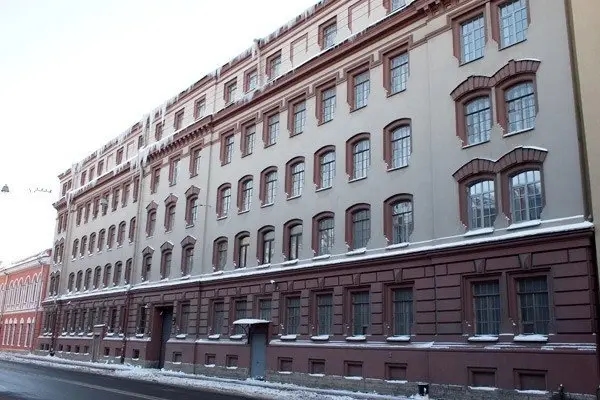
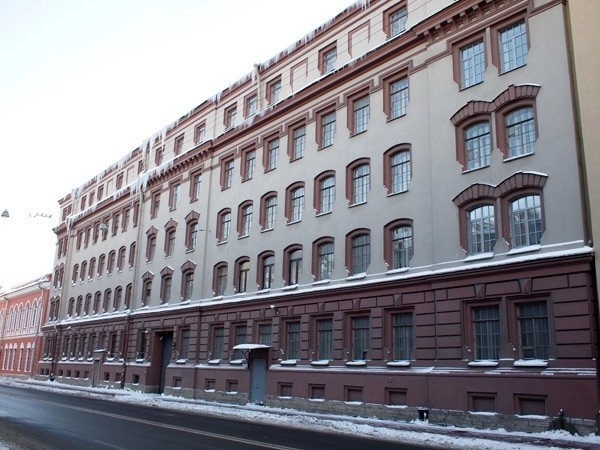
This was exactly what happened with the transfer of pretrial detention centers to the Federal Security Service (FSB). Lefortovo, “Shpalerka,” and other pretrial detention centers administered by the Federal Penitentiary Service were already de facto under FSB control. At times, lawyers would file complaints in court over the denial of access to their clients or unlawful searches. This created complications, as the law was not on the side of the detention facilities. With formal subordination to the FSB, however, it becomes possible to issue departmental orders or instructions that make it much easier to justify virtually any form of abuse.
The same applies to regular amendments expanding the powers of the FSB, the Ministry of Internal Affairs, and the National Guard. As a rule, security services already exercise these powers in practice. But problems arise when repression intensifies and human rights defenders begin to challenge such actions en masse. In response, the law is quickly changed so that courts do not “slap the hands” of loyal servants of the state. In a large state, this is easier than issuing some kind of informal instruction to judges across the country.
In other words, instead of a boundary between law and lawlessness, what we see in Russia is their amalgamation. At the level of casework, security agencies fit violence into the law by drawing up reports, collecting “evidence,” and constructing a legal basis for decisions that have already been made. At the state level, the opposite happens: the law is adjusted to accommodate the violence, expand powers, formalize practices, and close gaps for legal intervention in the operation of the system.
The law is adjusted to accommodate violence, expand state powers, formalize practices, and close gaps for legal intervention in the operation of the system
As a result, what emerges is not chaos or unchecked lawlessness, but a structured system in which formal legality actually increases the scale of repression. As a result, in Russia, one can simultaneously observe both blatantly fabricated cases with vast volumes of “evidence,” and court decisions that, from a formal standpoint, appear to be procedurally sound.
In Russia, the law is a tool of state power, one that is capable of formalizing, protecting, and reproducing the violence inflicted on citizens by the regime’s appointed agents of repression. Uninstitutionalized power, by contrast, is characterized by one-off arbitrariness— it is dependent on the individual officer and can easily slip out of control. Effectively unchecked power packaged in several layers of formal procedural rules, on the other hand, allows for a system that is simultaneously repressive and manageable. It is precisely the type of system we observe in Russia today.