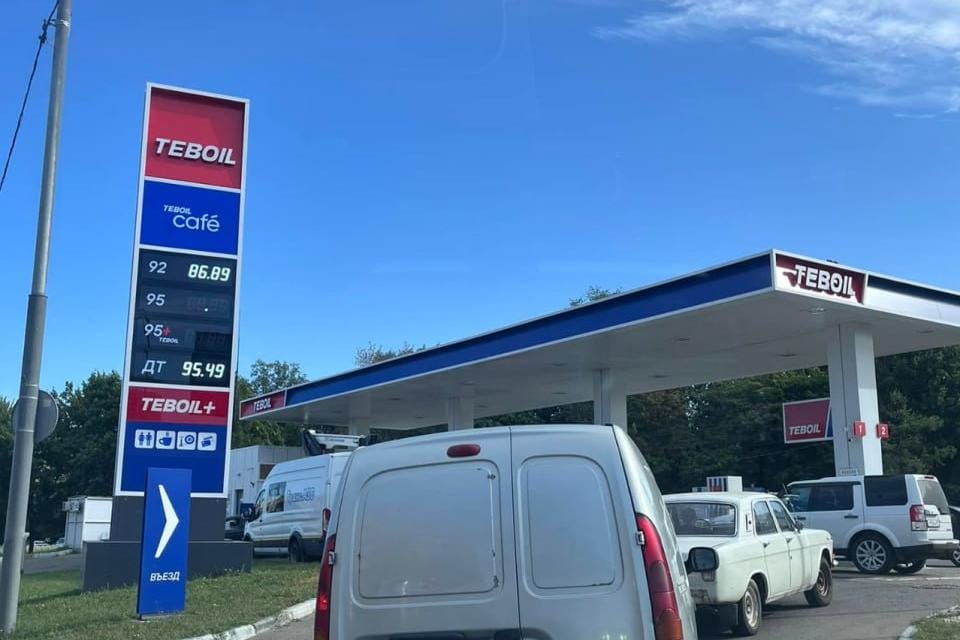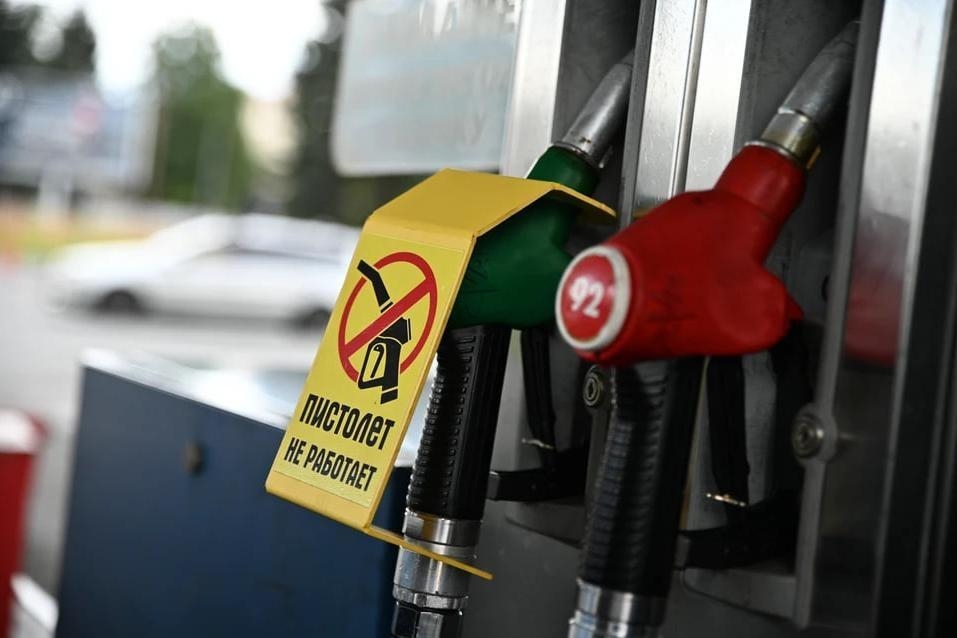
Leningrad Region governor Alexander Drozdenko has released a video address to “dear Leningrad Region residents” acknowledging the lines and fuel shortages at gas stations. According to Drozdenko, regional authorities are considering introducing an alternating schedule of fill-ups for odd and even license plate numbers. Users of the GdeBenz (“Where’s gas?”) map service write about “nuclear” lines at gas stations in St. Petersburg and advise customers to come for gas at four or five in the morning.
Drozdenko said he “understands the general concern” and complained that his younger daughter could not visit him on Sunday because she “didn’t get gas,” while his older daughter “stood in line for more than two hours.”
In his address, Drozdenko explained:
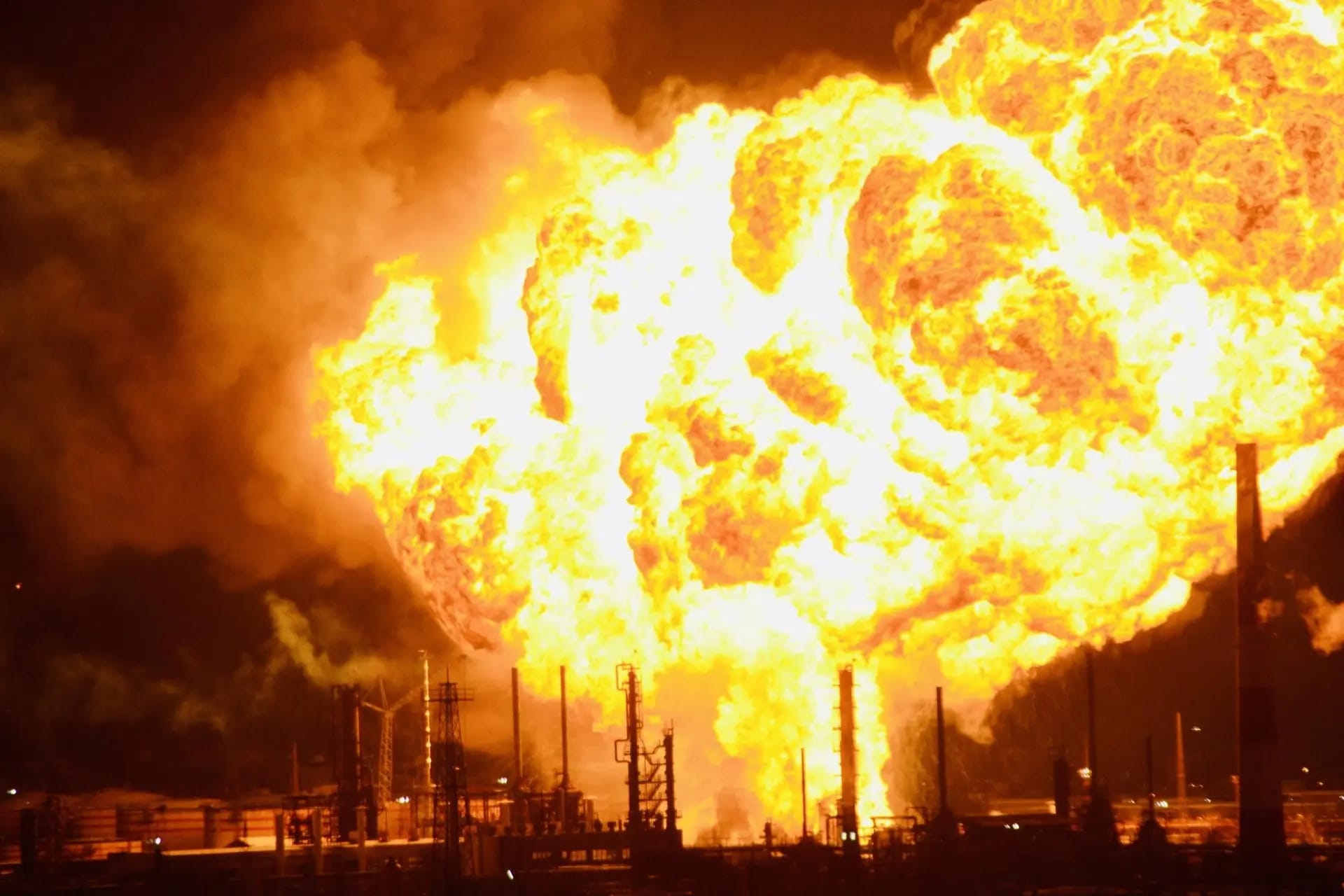
“We all understand that this is a consequence of the enemy’s recent drone attacks on major oil refineries, including Kirishinefteorgsintez, and, as a result, of reduced production of 92 and 95 octane gasoline. Diesel is available.
We are now restructuring fuel supply chains through other refineries, together with major companies, but that takes time.
I want to say that there is light at the end of the tunnel. We expect that by early October new supplies will reach the region, new logistics chains will be built, and, of course, the refineries will resume operating after repairs.
Together we are working through options to reduce peak demand, and we’re considering introducing fill-ups for vehicles with odd and even plate numbers on alternating days. For now, our goal is still to meet gasoline needs within a limit of 20 to 30 liters a day.”
As The Insider reported on Sept. 12, lines at gas stations in St. Petersburg have forced customers to wait for up to five hours to fill up. Economist Janis Kluge, analyzing GdeBenz data, noted in a post on X that AI-92 and AI-95 gasoline were available at fewer than 20% of gas stations in St. Petersburg, and more than 60% of the city’s gas stations were not operating at all.
By the morning of Sept. 14, the situation had improved only marginally, judging by messages in the GdeBenz service chat. Car owners noted that huge lines immediately formed outside the few gas stations that had begun to sell gasoline. User Maria N. wrote at around 10 a.m. that the Lukoil station on Marshala Zhukova Avenue had AI-92 and AI-95 available. Car owner Denis Z. confirmed this information but immediately noted: “The line’s already nuclear.”
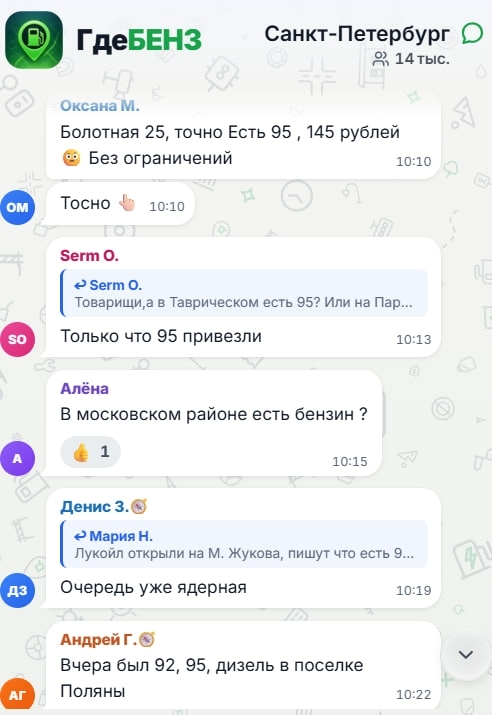
A young woman named Ulya complained that she had spent the whole night at the gas station because the station’s administrators had promised gas by morning – but she still could not fill up: “Well, they did get gas by 5 a.m., but it was the hundred [octane] — I can’t put it into a Lada.”
Vyacheslav I., for his part, wondered whether he might be able to find gas at 4 or 5 a.m. in the Primorsky district. Dmitry N. admitted he had the same plan: “since this brilliant idea occurred to two of us here, I’m afraid we’ll run into another hundred at the gas station.”
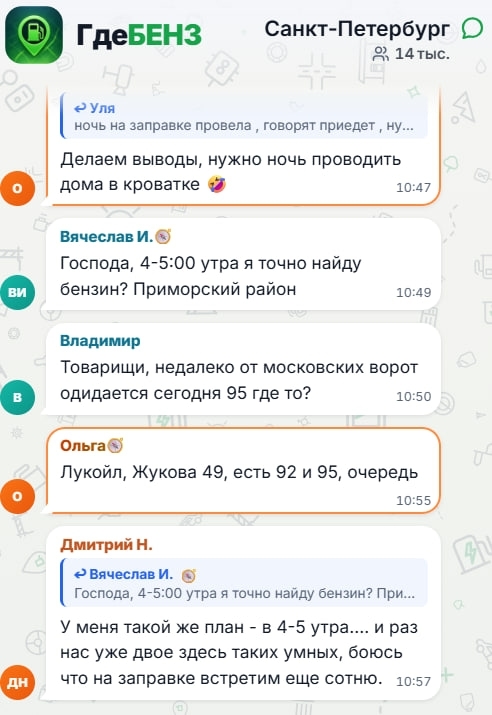
Early on Monday morning, many chat users across the region reported that gasoline had indeed appeared, albeit accompanied by long lines. However, by around 11:00 a.m. reports of empty gas stations became more frequent, along with questions such as: “Is there gas anywhere?”
Since the start of summer, Ukrainian drone strikes on oil refineries have resulted in a persistent fuel crisis inside Russia. As The Insider reported, Ukrainian UAVs target the hardest-to-replace components, putting refineries out of commission for the longest time possible. Repair speed is lagging behind the pace of new strikes as sanctions make it increasingly difficult for Russian refineries to obtain the necessary parts and equipment. As a result, oil refining in Russia had fallen to its lowest level in 20 years.
In late August, the Russian government adopted a resolution allowing gas stations to sell gasoline and diesel fuel of lower environmental classes — Euro-2, Euro-3, and Euro-4. The Energy Ministry called the decision a temporary measure to stabilize the domestic market; it will remain in effect until June 30, 2027.