In 2026, an extreme heatwave caused 10,000 deaths across just five European countries. Another consequence is the spread of infections previously uncommon in on the continent. In France, a case of dengue fever has been confirmed, and in Berlin, three residents were diagnosed with infections caused by bacteria that live in brackish water after being infected on Germany’s Baltic coast, which warmed unusually quickly this year. Climate change is altering the conditions under which pathogens spread, expanding the areas where they can thrive and extending the transmission season. The risk maps that doctors, laboratories, and public health authorities have relied on for decades are becoming outdated ever more rapidly. Medical professionals will have to be retrained, new guidelines drawn up, and laboratory diagnostics overhauled to prevent outbreaks of diseases that until recently were considered exotic.
A new map of infectious diseases
For decades, European healthcare systems operated on the assumption that infectious diseases existed within clearly defined geographic boundaries. Diseases considered endemic to Africa and Asia were generally associated with overseas travel — disease surveillance, medical training, diagnostics, and prevention were all built around this assumption.
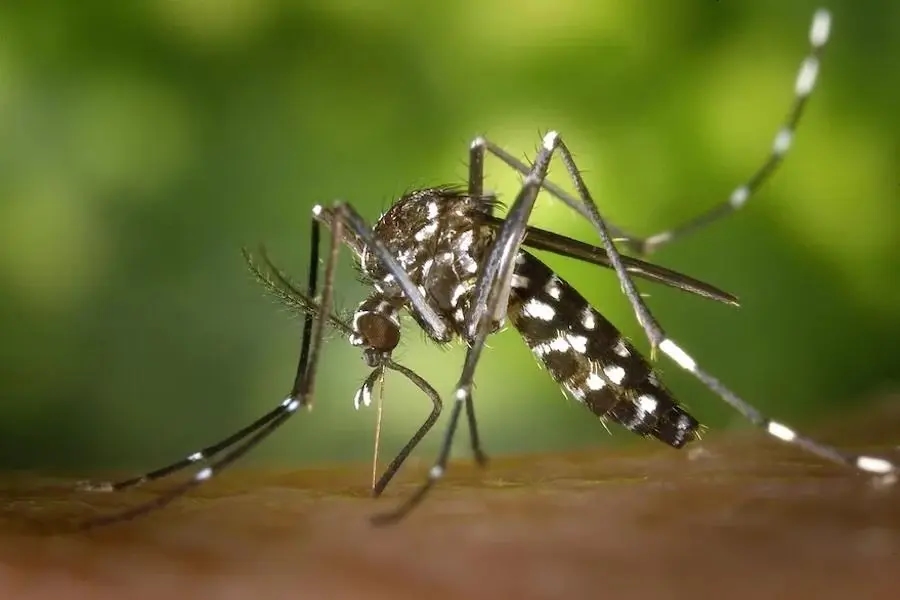
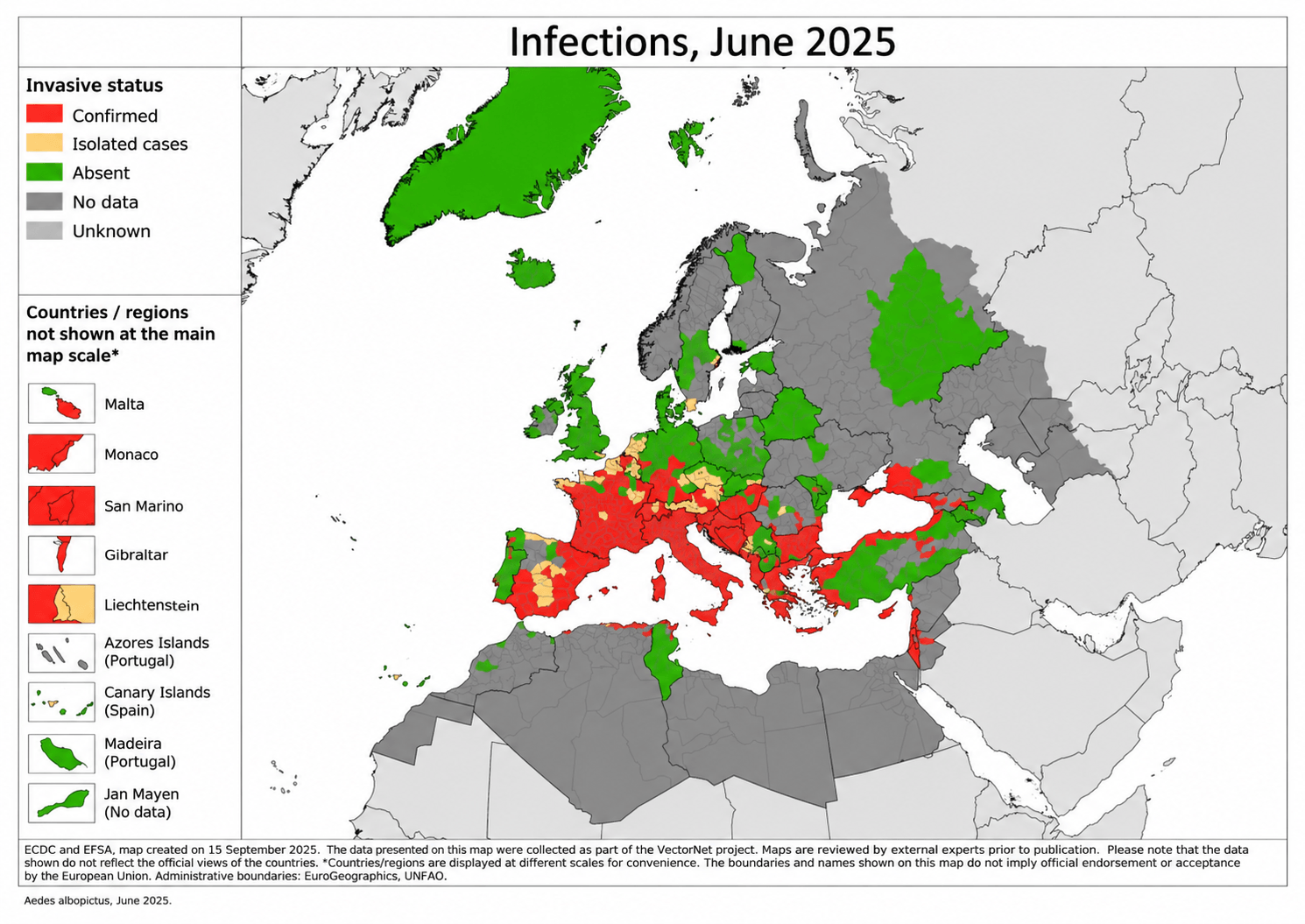
That geographic divide is becoming increasingly unreliable. International trade and transport are bringing invasive species into new territories, while rising temperatures make it easier for them to become established in new areas while simultaneously extending their active season. One striking example is the Asian tiger mosquito (Aedes albopictus), which can transmit dengue, chikungunya, and Zika viruses. By June 2025, established populations had been recorded in 16 EU/EEA countries and 369 regions, up from 114 a decade earlier.
Meanwhile, the geographic range of other infections is expanding. In 2024, Europe recorded 1,436 locally acquired cases of West Nile virus infection. The main vectors in Europe are Culex mosquitoes, while birds serve as the virus’s natural reservoir. Rising temperatures and a longer mosquito season create conditions for more intensive transmission and an expansion of areas at risk.
Malaria in the north: risk or reality?
Fortunately, an outbreak of a non-endemic infection does not automatically lead to an epidemic. Malaria is a case in point.
Although Anopheles mosquitoes — the vectors that transmit the malaria parasite — are widespread in Europe (where the climate is becoming increasingly favorable to them), sustained local malaria transmission has not become established on the continent. Instead, almost all detected cases remain imported.
Sustained local malaria transmission has not become established on the continent; almost all detected cases remain imported
In 2022, EU/EEA countries reported 6,131 confirmed cases of malaria, and of the 5,375 cases with a known place of infection, 99.8% were associated with travel, while just 13 are believed to have been acquired within the EU. Eight of those were linked to infected mosquitoes introduced from abroad, mainly at airports; two occurred in healthcare settings; and the source of infection could not be established in the remaining three. Thus, these cases did not indicate the emergence of a sustained chain of transmission through local Anopheles populations.
For such transmission to take hold, several conditions must coincide: prolonged warm weather, a large population of mosquito vectors, an infected person from whom local mosquitoes can acquire the parasite, and a subsequent “human–mosquito–human” chain of transmission that is not interrupted through timely diagnosis, treatment, and vector control.
Climate change does not guarantee an epidemic — it merely makes the conditions for one more favorable. The spread of infections that are atypical for a given region depends to a large extent on the effectiveness of disease surveillance, the speed of diagnosis, access to treatment, and the effectiveness of vector control.
A blind spot in diagnosis
Accurate and timely diagnosis is the foundation of effective medical care, and to achieve this, it is crucial that doctors order the right test for each patient. A hospital may have extensive laboratory capabilities, but unless a doctor suspects a particular infection and orders the appropriate test, diagnosis — and, thus, the necessary response — may be delayed.
An Italian doctor treating a patient with fever, headache, and muscle pain is unlikely to suspect dengue or West Nile fever unless the patient has recently traveled abroad. But under the current circumstances, local transmission can no longer be ruled out. The Italian National Institute of Health recommends considering the possibility of arboviral infections not only when a patient has recently traveled abroad, but also when the pathogen is known to be circulating within the country.
European states differ in how quickly they are adapting to the changing infectious-disease landscape. According to the European Centre for Disease Prevention and Control (ECDC), countries and regions vary in their levels of surveillance, laboratory preparedness, and experience with local arbovirus transmission. Diagnostic protocols, the sharing of up-to-date epidemiological information, and doctors’ clinical awareness do not always keep pace with the changing situation.
A single missed case will not necessarily lead to an epidemic, but it can delay the detection of a local outbreak and the implementation of public health measures. As long as the source of infection remains unknown, an established mosquito population can continue transmitting the virus to other people, meaning early detection is essential not only for the patient, but also for timely epidemiological investigation and vector control.
A new disease calendar
Climate change is altering not only the geography of infectious diseases but also when the risk of infection emerges. A striking example is non-cholera Vibrio bacteria, which thrive particularly well when water temperatures exceed 20°C and salinity is between 0.5% and 2.5%. This makes the relatively low-salinity Baltic Sea, especially its shallow, rapidly warming waters, particularly vulnerable.
In 2026, Berlin's State Office for Health and Social Affairs (LaGeSo) linked the unusually early appearance of vibriosis cases to the early warming of coastal waters. What matters is not only where conditions are suitable, but also when the water reaches the critical temperature threshold and how long the warm period lasts.
A similar shift is occurring with mosquito-borne infections. Earlier warming triggers vector activity sooner, a warm autumn extends the transmission season, and a mild winter makes it easier for some mosquitoes and their eggs to survive. Within the right temperature range, the time required for a virus to develop inside a mosquito also decreases. The ECDC notes that mosquito-borne disease transmission seasons in Europe are becoming longer and more intense.
Mosquito-borne disease transmission seasons in Europe are becoming longer and more intense
As a result, the infectious-disease season is becoming a moving window rather than a fixed period, and public health surveillance professionals must increasingly track actual weather and environmental conditions rather than relying on the old calendar.
Climate threats to health: heat and allergies
Climate change affects human health in many ways. Extreme heat is rarely recorded in statistics simply as “heatstroke.” More often, its effects are indirect — aggravating cardiovascular, respiratory, kidney, and other diseases while increasing the risk of death among vulnerable people. Researchers therefore use measures such as heat-related mortality and excess mortality to assess its impact.
According to Lancet Countdown, heat was associated with an average of 546,000 deaths per year between 2012 and 2021. This estimate includes both the direct and indirect effects of exposure to high temperatures.
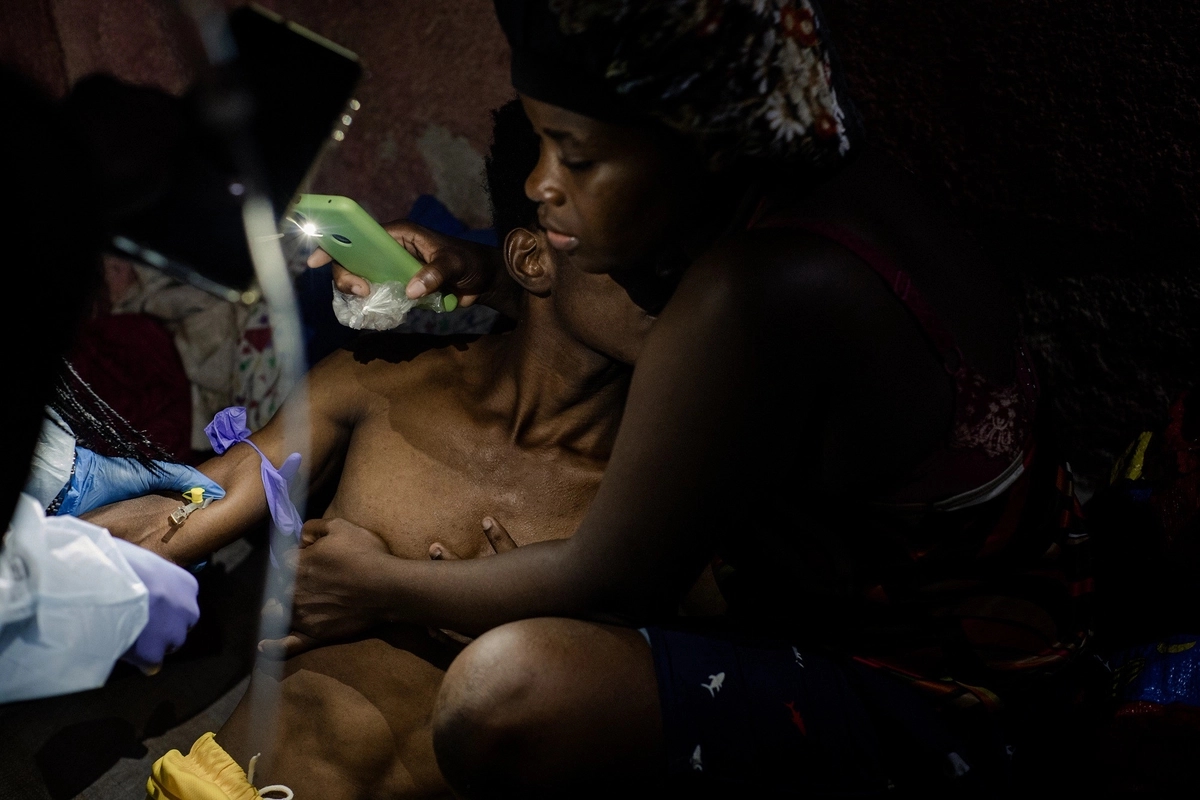
In the spring of 2026, extreme heat in India and Pakistan affected hundreds of millions of people, with temperatures exceeding 46°C in some places. According to an assessment by World Weather Attribution, human-induced climate change roughly tripled the likelihood of such a 15-day heatwave.
Limited reporting of deaths and illnesses makes it particularly difficult to assess the health impact of heat in Africa. At the same time, healthcare facilities are already facing a growing burden: during the extreme heat of 2024, the WHO assisted hospitals in Mali that were overwhelmed by patients suffering from heat-related illnesses.
Climate change is also shifting the biological calendar of plant life. Between 2015 and 2024, birch, alder, and olive pollen seasons in Europe began one to two weeks earlier than they had between 1991 and 2000. In some regions, both the length of the season and the amount of airborne pollen increased as well.
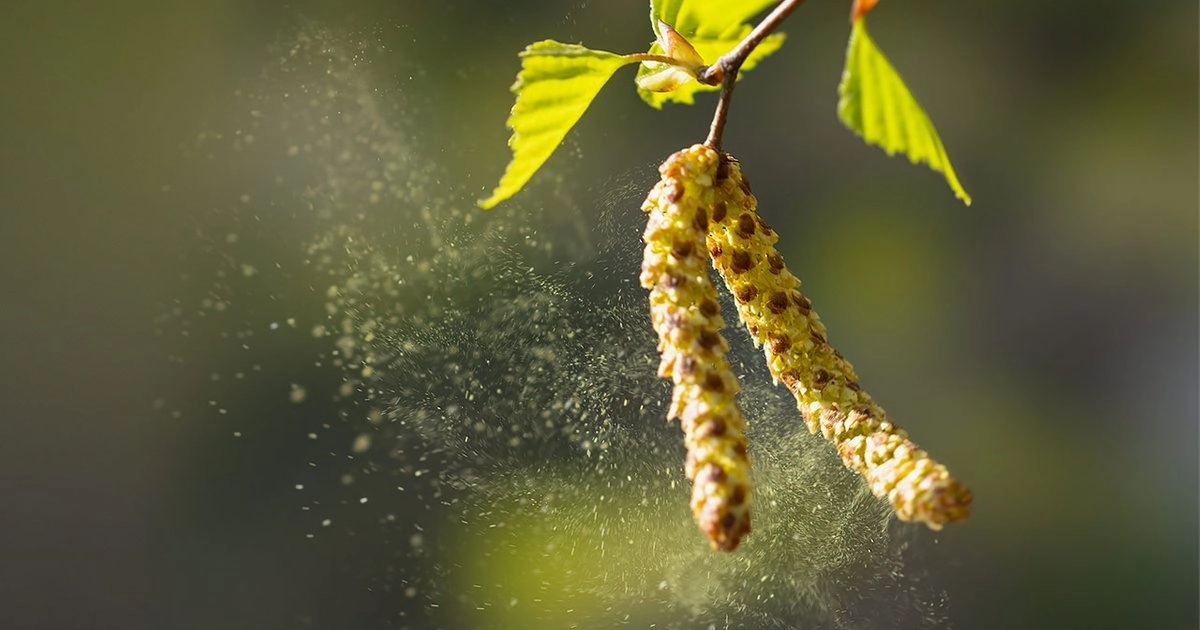
The scale of these changes varies by plant species, climate, and region. Temperature affects the timing of flowering, while humidity, precipitation, air pollution, and atmospheric carbon dioxide levels influence pollen production and allergenicity. As a result, people in different parts of Europe experience allergy seasons that vary in both timing and intensity. Monitoring systems, doctors, and patients therefore increasingly need to rely on real-time pollen data, while cities must take the allergenicity of plant species into account when planning urban greenery.
Plans are in place, but the money is lacking
The impact of climate change on public health has gradually made its way onto the WHO agenda. In the organization's 2025–2028 General Programme of Work, addressing the health impacts of climate change is listed first among its six strategic objectives. The 2026–2027 budget also provides for the development of climate-resilient health systems via vulnerability assessments, national adaptation plans, and specialist training.
In March 2026, the WHO was accredited by the Green Climate Fund, a move that will allow the organization to help countries develop health-related projects and secure funding to protect public health. The actual amount of funding will depend on the preparation and approval of specific proposals.
However, the gap between political commitments and available resources remains enormous. According to the WHO, health projects receive about 2% of the overall funding allocated to climate adaptation. When all climate finance distributed by international banks and funds is taken into account, the share going to health is just 0.5%.
By comparison, the UN Environment Programme (UNEP) estimates that developing countries will need between $310 billion and $365 billion a year by 2035 to protect themselves against the impacts of climate change. Yet in 2023, international public funding for such measures amounted to just $26 billion.
By 2035, developing countries will need between $310 billion and $365 billion a year to protect themselves against the impacts of climate change
Climate threats, then, are already firmly embedded in strategies and budget documents, but recognition of the problem still far outpaces the funding commitments being made to address it.
Real-time medicine
Adapting healthcare to a changing climate means moving from static, historical maps of infectious diseases to dynamic risk assessments. Health data need to be analyzed alongside meteorological and veterinary surveillance, while mosquito populations and other disease vectors must be monitored year-round.
For doctors to respond effectively to emerging threats, this information must reach them quickly. Health systems need automatic alerts about local transmission, regularly updated diagnostic protocols, and access to PCR and serological testing beyond major medical centers. The same principle applies to allergies, with pollen monitoring accompanied by timely warnings for patients.
Heat-health action plans should specify in advance which weather conditions trigger protective measures, who issues the appropriate warnings, how hospitals and social services adjust their operations, who assists older people and other vulnerable groups, and how the response is funded. This is the approach recommended in the WHO’s 2026 guidance: clearly defined roles, early-warning systems, measurable actions, and adequate resources.
And of course, every strategy needs a budget, clearly assigned responsibilities, and measurable performance indicators. Otherwise, recommendations will remain on paper, while healthcare services continue to respond only after a threat has already become too obvious to miss.