Since the beginning of summer, the Russian and Ukrainian armed forces have been conducting campaigns to restrict one another’s shipping in the Sea of Azov and the Black Sea. In October, the attacks shifted to the previously safe corridor in the territorial waters of Romania and Bulgaria. Navigation in the Black Sea today is more dangerous than anywhere else in the world — including the Middle East. Systematic strikes on merchant ships and port infrastructure have effectively halted exports of agricultural products, primarily grain, from both Russia and Ukraine. International intermediaries are trying to negotiate a truce, but for now, the Kremlin is pursuing its strategy to win a war of attrition.
The Russian campaign of strikes on ships and ports
In a conversation with journalists on Sept. 1, 2026, Vladimir Putin stated that Russian forces had generally not obstructed civilian shipping through Ukrainian ports:
“Essentially, we did not touch any civilian vessels. True, we carried out pinpoint strikes on a few ships, but they were truly pinpoint. We never once made a mistake, and struck only the vessels that were delivering weapons or ammunition to Ukraine. There was not a single mistake. How do we know? Because the strikes were followed by secondary explosions and detonation, meaning we had always hit the target. But this, I repeat, was selective work.”
Russian attacks on Ukrainian ports and on the ships traveling to and from them have been carried out more or less regularly since the fall of 2025. According to statistics from the Ukrainian Sea Ports Authority, 36 strikes on port infrastructure were recorded in 2024, and in 2025, the figure was 96. Of the 651 port infrastructure facilities damaged from 2022 through 2025, 325 came under attack in 2025, but by mid-August 2026, the total figure had ballooned to 1,090 facilities. In other words, the first eight months of this year saw far more damage to ports than in the first few years of the war combined.
The first eight months of 2026 saw far more damage to ports than in the first few years of the war combined
Calculations by the BlackSeaNews monitoring group (part of Ukraine’s Institute of Black Sea Strategic Studies) show that in 2025, the intensity of missile and drone raids on ports and related infrastructure in Ukraine’s Odesa Region did not exceed 14 attacks per month until October of last year, when 16 incidents were recorded. That was followed by 29 in November and 36 in December. In the first months of 2026, the rate never dipped below 20 attacks per month.
The same trend has been observed with merchant ships. At least 30 vessels were hit from January through December 2025, according to estimates by BlackSeaNews; 14 in October, November, and December of last year. To compare, in all of 2024, attacks were recorded on seven vessels working in Ukraine’s export corridor in the western part of the Black Sea.
According to information from Ukraine’s Ministry of Restoration, Infrastructure and Transport, July 2026 alone saw 67 attacks on port facilities, 35 on civilian ships in ports, and 22 on ships in Ukraine’s export corridor. In the third quarter of this year, more than 200 Russian attacks on merchant ships in the Black Sea were recorded; from Oct. 1-15 this figure exceeded 40. Ukraine has responded in kind, but in total, since the beginning of September 2026, about 90% of all attacks on ships in the Black Sea were carried out by the Russian armed forces.
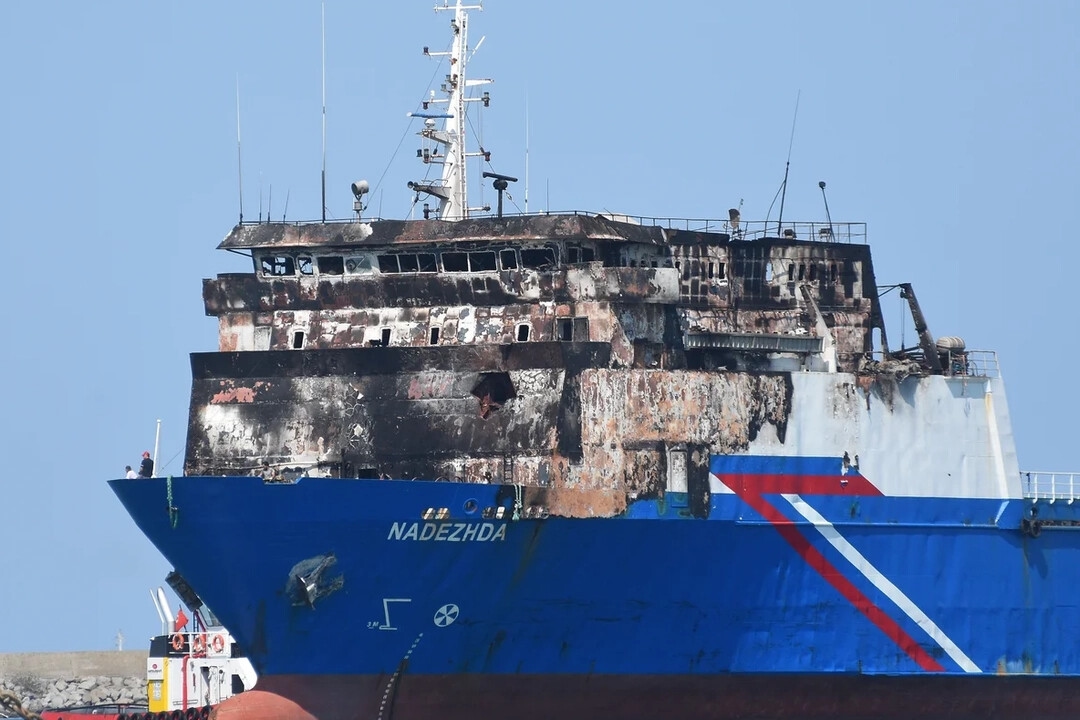
According to assessments by Ambrey and the International Maritime Organization, more than 570 vessels were struck in the Black Sea in 2026, and at least 40 sailors were killed. In the Strait of Hormuz over the same period, the deaths of 24 sailors have been confirmed, making the Azov–Black Sea basin the most dangerous region in the world for shipping.
The Azov–Black Sea basin has become the most dangerous region in the world for shipping
In early October, drones and uncrewed boats began attacking ships off the coast of Romania and Bulgaria, including in the exclusive economic zones of NATO countries previously considered protected from external threats. At least ten vessels were damaged, and more than 30 sailors were killed or are listed as missing.
The sharp escalation forced NATO to announce that it was sending additional forces to the Black Sea, as well as specialists to determine the types and origin of the munitions used in the attacks on ships.
The Ukrainian campaign of strikes on ships and ports
The Ukrainian Unmanned Systems Forces began systematic strikes on merchant ships in the Sea of Azov and the Black Sea as part of their operation MoLoChKa (an acronym for “Moscow will fall via Crimea” in Ukrainian) in July 2026. According to the most recent available estimates, as of late September 300 vessels in total have been hit, with the majority of strikes — 215 — coming in July.
On July 10, restrictions were imposed on shipping in the Sea of Azov, and in August traffic came to a complete halt, with Azov ports suspending their operations. The waters of the Black Sea were later declared unsafe as well. While the Unmanned Systems Forces conducted a generally indiscriminate campaign of strikes on vessels, the Navy and Security Service of Ukraine target the tankers of Russia’s “shadow fleet” (1, 2, 3).
Since August, Ukrainian forces have been attacking grain export terminals at Russian Black Sea ports and grain carriers on the open sea. A large-scale combined raid on Novorossiysk knocked out southern Russia’s largest agricultural export hub, and several grain carriers were hit at sea. By late August, the Armed Forces of Ukraine had damaged more than 100 vessels involved in transporting Russian agricultural products.
While attacks on ships are decreasing because of the overall drop in traffic, strikes on ports remain at a high level. According to calculations by the Ukrainian OSINT resource Oko Hora ✙ News and Analytics, more than 50 attacks on ports were recorded from January through October 2026, compared to only 15 such incidents in all of 2025.
Consequences for shipping in the Black and Azov Seas
Assessing the results of Ukraine’s campaign in the Azov–Black Sea basin, Vladimir Putin acknowledged on Sept. 1, 2026, that the AFU had inflicted “real damage,” affecting 40 ships in the first two weeks alone:
“They were not destroyed — only damaged. But overall, over these 40 days, they damaged approximately 100 of our ships. People died, sailors, including foreign ones: there were Azerbaijani and Turkish citizens among the dead sailors. The total damage, by our preliminary estimates, was, in general, considerable — about one percent of GDP, which is not critical damage for us.”
However, according to information from monitoring resources, shipping in the Sea of Azov has been almost completely halted, and in the Black Sea a regime of heightened military risk is in effect. Notably, Putin once said that turning the Sea of Azov into a Russian “inland sea” was one of the most important achievements of the “special military operation,” particularly given that Peter the Great had fought for access to the body of water in the 18th century.
Ukrainian strikes hampering grain exports through Novorossiysk, Taman, and the ports of the Sea of Azov in August and September have left agricultural products locked inside Russia. By mid-September, exports through the Black Sea had practically stopped. The Azov–Black Sea basin has traditionally accounted for 80% of Russian wheat exports.
Russian grain exports through the Black Sea have almost stopped
Of the 38 ports previously used for grain exports, only 15 are operating (with most shipments going through the northern ports of Ust-Luga, Vysotsk, and St. Petersburg). According to statistics from the Russian Grain Union, 1.7 million tons of grain were shipped this past September — a fourfold drop year-on-year — and the situation did not improve the following month. Year-on-year, shipments for the first 20 days of October were down to 1.1 million tons in 2026 after 4.5 were shipped over the same period in 2025. The resulting supply glut has caused storage facilities to overflow and pushed down domestic grain prices. The heavily agricultural Rostov Region and Krasnodar Territory declared a state of emergency.
Over the past year, the geography of Russian grain exports has shrunk from 29 buyer countries to 15. Egypt remains the largest customer (326,700 tons), followed by Algeria (114,800 tons) and Kenya (113,900 tons). Additionally, only 25 out of 46 companies that used to ship wheat were still operating as of October.
The damage has been done not only to grain shipments but also to the seaborne delivery of containers and other exports. Because of security risks, Kazakh oil is now shipped through Novorossiysk, while Baltic port capacity is being used for exporting Russian oil. Freight rates for Russian oil have risen to all-time highs, and exports of steel billets, rolled steel, and coal from Black Sea ports have almost completely stopped.
Russian shipowners are demanding that the situation in the Sea of Azov be recognized as a force majeure. As of September 2026, damaged vessels occupied 85% of the berth frontage of the Azov ports, and almost half of the disabled fleet remained at sea with cargo on board, carrying some 300,000 tons of export products. Market participants estimated the direct costs of idling, maintenance, and future repairs at 6.7 billion rubles ($83 million). Losses of Russian ports on the Black and Azov Seas are estimated at 200 billion rubles ($2.5 billion) per month. Cargo handling fell by 95–100% in September 2026, and passenger traffic fell by 85%.
Losses of ports in southern Russia have reached $2.5 billion per month
As for Ukraine, cargo handling through the ports of the Odesa Region and the Danube area remained the main channel for agricultural exports. In the first half of 2026, 42.4 million tons of cargo passed through Ukrainian ports — 6% more than in the same period in 2025.
By mid-July 2026, 208 million tons of cargo, including 124 million tons of grain, had passed through the Ukrainian export corridor. According to a statement by the All-Ukrainian Agrarian Council, in July Russian strikes knocked out up to one-third of the country’s grain export capacity. This past September, Odesa ports received only ten ships (compared with 400 in July), and total agricultural exports amounted to less than half the potential volume.
As of Oct. 5, Ukraine has exported 5.4 million tons of grain since the start of this year’s harvest, down from the 7.2 million tons on the corresponding date of the previous season.
In past years, Ukraine used the Danube as a backup route, Maria Belikova, an expert on the global and Ukrainian grain markets, told The Insider:
“In 2022, the Danube was perceived as relatively safe; it was not yet being bombed. But now boats, terminals, and logistics there are also being hit with precision strikes. Over the past month there have been several official reports that even parking areas for vehicles at the border with Moldova are being attacked. Additionally, this year the water level in the Danube is the lowest in 30 years, making it physically impossible to move significant volumes along it. There are huge queues for entry and exit.”
Another major change since 2022, when all European countries rushed to help Kyiv, is that the EU has reinstated quotas on imports of wheat and barley from Ukraine, limiting them to 1 million tons of wheat and 600,000 tons of barley a year.
Additionally, the mutual attacks have hiked up the cost of insurance and freight. Belikova explained that:
“Since mid-July, the Black Sea has been considered dangerous by shipowners both in Ukraine and in Russia. And the issue is not even the insurance costs, but the crews refusing to go there. There is a real risk of getting killed, and no amount of money can fix that. So neither Ukraine nor Russia can really use the Black Sea. Individual ships do come in, but those are exceptional cases.”
Global food security at risk
According to Oxford Economics, losses to the global market from strikes on ships and ports in the Azov–Black Sea basin have reached 86 million metric tons, equivalent to 17% of global exports. Of that, 52 million tons are Russia’s share and 34 million tons Ukraine’s.
Until recently, Ukraine accounted for roughly 7% of global wheat exports (14 million metric tons), 8% of barley exports (2.3 million tons), and 11% of corn exports (23 million tons). Alternative routes by rail and the Danube can handle exports of only 17 million tons of grain. Combined wheat exports from Russia and Ukraine in July–September are the lowest since 2010, totaling only 8 million tons, versus the five-year average of 18.2 million tons. Belikova continued:
“Russia is the world’s top wheat exporter. Together with Ukraine, they cover 90% of Egypt’s wheat market. And, of course, its departure strongly affects the market. In the first month, wheat prices rose, but not so much for grain overall. It felt as if buyers were waiting for the situation to resolve itself quickly. But there is no indication that it could happen. And whereas before the blockage [the shipping cost] was $230 per ton FOB from Russia, now it is $280 per ton from Baltic ports. And other suppliers are asking $300 plus the price of the grain.”
Still, Belikova is confident that in the next six months the world will not face a global food shortage:
“Prices will be much higher than they would have been if the Black Sea were working normally. But Turkey and Egypt have had abundant local harvests this year. Egypt plans to cover all of its state procurement with domestic supply. Turkey has even allowed exports of its wheat. It all comes down to price: some countries can pay $350 per ton from an alternative source, but the poorest countries — most notably Eritrea, Ethiopia, Ghana, and Congo — cannot buy at such a price.”
In September, the FAO Food Price Index rose to its highest level since 2022, and wheat futures on the Chicago Board of Trade hit highs in September not seen since 2023. However, they then began to decline steadily amid news of alternative export routes for grain from Russia and Ukraine, as well as expectations of increased supplies from Argentina and Australia.
Nevertheless, combined with climate factors and the rising cost of fertilizer (that one a consequence of the war in Iran), the disruption of grain exports from the Azov–Black Sea basin is expected to cause a drop in global wheat exports. This, in turn, threatens a sharp rise in food inflation in developing countries. The resulting price shock could destabilize the sociopolitical situation in conflict-prone regions of the world, in particular in North Africa.
What comes next
The Russian Ministry of Agriculture has set up an operational headquarters for redirecting agricultural exports, seeking to redirect grain to Baltic ports. According to Reuters, export terminals for coal and fertilizers at Arctic and Baltic ports are being converted for grain exports.
In particular, the Ultramar terminal in Ust-Luga near St. Petersburg, which specializes in transshipping mineral fertilizers, now handles grain. In addition, grain cargoes have begun to be handled at two terminals in St. Petersburg.
If current trends continue, wheat exports from Russia in the current agricultural year will total 39.4 million tons, versus 50 million tons a year earlier, the International Grains Council forecasts. The problem is that delivering grain to Russia’s Baltic ports by rail is becoming increasingly difficult.
Wheat exports in October will remain at the September level, with about 65% of shipments going through Baltic ports
As Reuters reports, Russian Railways will prioritize government-subsidized rail transport of grain to northern ports. The state has already allocated 9.7 billion rubles ($120 million) to support rail grain shipments. Russia’s inability to export at the usual volumes has driven down domestic wholesale prices, forcing farms to sell grain to large traders at a loss. Wheat prices inside Russia have plummeted to a ten-year low: 9,000 rubles ($112) per ton against a production cost of at least 12,000 rubles ($149). The total loss to the grain industry from the price drop is estimated at between 810 billion and 980 billion rubles ($10.1 billion to $12.2 billion).
The government intends to offer relief measures to farmers, firstly by abolishing export duties on grain until the end of the year: “The measures will support producers and exporters of grains and oilseeds and vegetable oil producers who have faced difficulties exporting their products,” explained Deputy Minister of Economic Development Vladimir Ilyichev.
These are not direct costs for the government but do represent lost budget revenue. In total, the budget provides for 136 billion rubles ($1.7 billion) in grain export duties — almost 1.8 times more than in 2025. The budget will incur losses in any case because of the decline in exports.
Second, the State Duma is considering a bill banning agricultural producers from declaring bankruptcy, meaning the problems of farmers could become the problems of their banks, leasing companies, and other counterparties.
“We are now looking at the possibility of working out a moratorium on farm bankruptcies for the duration of the season and preserving their status as agricultural producers, which may probably be relevant for the southern regions in light of temporary setbacks in selling grain,” Agriculture Minister Oksana Lut said in September.
These costs are hard to express in monetary terms, but the economy is looking at a corresponding rise in bankruptcies in adjacent sectors.
In addition, the state may buy 1-3 million tons of grain as part of so-called procurement interventions, but that is not enough. To halt the collapse of prices, at least 10 million tons must be bought. Russia’s state intervention program for 2026–2027 provides for purchasing up to 3 million tons of grain at fixed prices. At the same time, according to an estimate by ProZerno, the shortfall in grain exports could reach 14–20 million tons, meaning interventions could cover only about 15–20% of the overall volume. And carryover grain stocks by the end of the year will rise to 34.8 million tons.
Producers in Ukraine are also losing money, but so far they are not announcing reductions in planted area. Belikova notes that:
“I remember in 2022 and later, when for a while there were no exports at all, everyone also said they would stop sowing wheat and corn. As a result, sowing did decline, but not all that dramatically. Partly, oilseeds were planted instead of wheat because they can be processed and somehow shipped out. The margin was better. But it is not 30–50% of the area; it is within 10–15%.”
Additionally, Ukraine could run out of grain storage capacity. Russia has been striking grain elevators, and the destroyed capacity is estimated at around one million tons. Exports across the western border by rail and road, as well as through Danube ports, can cover 3.5–4 million tons per month, whereas about 5 million tons need to be shipped out.
At the end of August, Turkish Foreign Minister Hakan Fidan proposed concluding a new agreement along the lines of the UN-mediated “grain deal” of 2022, which allowed agricultural products to be exported from Ukrainian ports. In 2023, the Russian side refused to extend the agreement, but Ukrainian forces managed to ensure uninterrupted operation of the “export corridor” by defending it militarily.
However, Russia has since increased its attacks, and the grain war is having a disproportionately greater effect on the Ukrainian economy than on Russia’s. Agricultural exports from Russia in 2025 brought in $41 billion, or 10% of total exports. For Ukraine, the corresponding figure exceeds 50% ($22.5 billion).