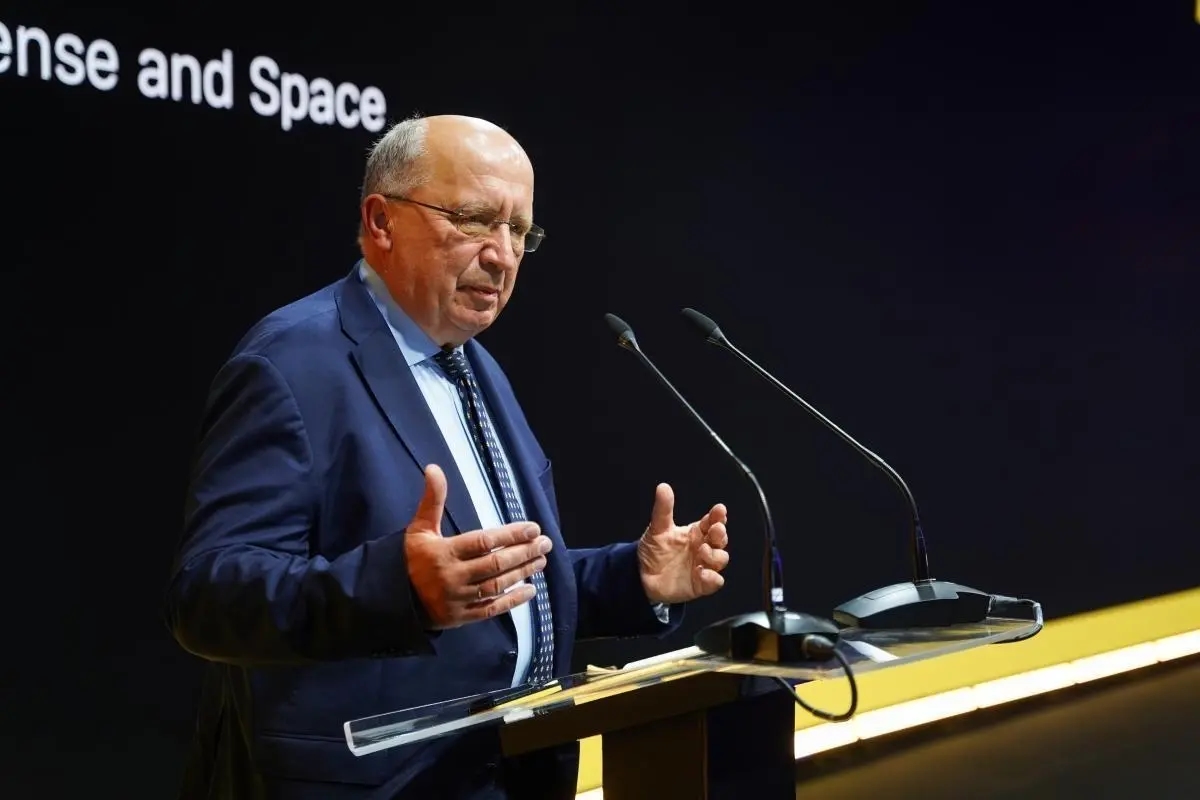
Europe is preparing to assume primary responsibility for its own conventional defense by developing the concept of a “third NATO.” By 2030, the combined defense budgets of EU member states will reach a staggering €1 trillion. Meanwhile, the EU's first-ever Commissioner for Defence and Space, Andrius Kubilius, has requested a fivefold increase in funding for defense and space programs. In an interview with The Insider, he discussed the outcome of NATO's historic summit, the development of a European equivalent of NATO's Article 5 on collective defense, how Russia's fuel crisis affects the threat it poses to the EU, as well as Europe's efforts to build its own satellite shield and expand military cooperation with Ukraine.
Q: In your view, what were the most important decisions made at the recent NATO summit? What is needed to implement them, given that the EU has to balance its own policies, NATO’s common strategy, and the position of the United States?
A: The summit was genuinely important. Above all, it demonstrated the unity of the Alliance’s leaders. Despite occasional disagreements — we all know President Trump’s emotional style — the strategy is clear, and there is little room for debate.
The United States wants Europe to assume primary responsibility for the continent’s conventional defense while leaving nuclear deterrence to the U.S. We are strengthening all other aspects of our defense, and over the past year we have made significant progress.
Defense spending is increasing, and the defense industry is expanding production. The summit adopted a relatively brief but very clear declaration. First, it reaffirmed that Article 5 remains one of NATO’s fundamental principles. Russia remains NATO's primary long-term threat, which is why Europe will invest substantially more in defense.
Incidentally, NATO released new statistics on defense spending growth just a few days ago. I studied physics many years ago and have always loved charts, so I looked at them right away. If the current trend continues, by 2030 the EU countries that are also NATO members will be investing around €1 trillion a year in defense. That represents a very substantial increase. By 2029, European NATO members will match current U.S. defense spending. (That is, of course, excluding spending by the United States itself and assuming Washington maintains its current level of defense expenditures, which is now the subject of active debate.)
The summit also embraced the concept of the “third NATO,” proposed by Elbridge Colby. Under this concept, Europe should assume responsibility for conventional defense — both its own and Ukraine’s. That will strengthen NATO as a whole. This is not about Europe competing with the United States; it is a shared strategy.
Europe must assume responsibility for conventional defense — both its own and Ukraine’s.
The summit also approved €140 billion in funding for Ukraine for 2026–2027. This refers to European financing with the participation of the United Kingdom and Canada. The program is already being implemented and has proven highly successful. This is critically important because over the past six months Ukraine has demonstrated that, with this level of support, it is capable not only of holding the front line but also of inflicting painful blows deep inside Russian territory — for example, by striking oil refineries.
The NATO declaration also states that Iran must not acquire nuclear weapons and that freedom of navigation through the Strait of Hormuz must be upheld.
The document also places considerable emphasis on expanding the defense industry. In this area, the European Union plays an even greater role than NATO because we have more tools at our disposal to secure funding and implement new defense initiatives.
Q: How quickly can we expect to see results? For example, experts estimate that the process of licensing Patriot systems for Ukraine could take between a year and a half and two years.
A: We’ll see, but I’m more optimistic. A great many projects are already underway. For example, the €60 billion being provided through the Ukraine Support Loan program allows Ukraine to purchase produced weapons, which has proved highly effective. My directorate is directly involved in this work. Once the EU’s next seven-year budget takes effect in 2028, funding will increase even further. We are also finalizing an association agreement that will allow Ukraine to participate in the European Defence Fund (EDF), opening the door for the country to take part in innovative defense projects.
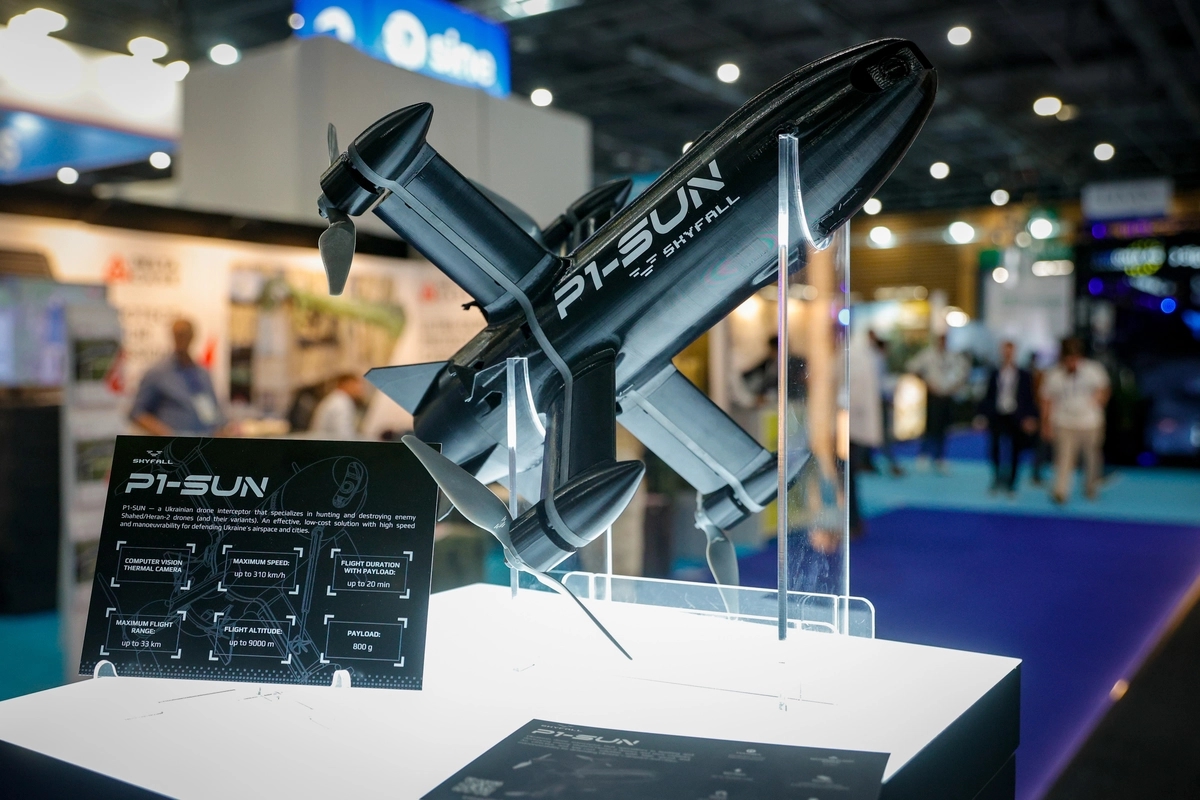
Ukraine is making rapid progress in joint projects, particularly in the development of air defense systems. I’m referring to the Freya project. Just a few days ago, major agreements were signed in Paris as part of this joint air defense development initiative. Ukraine is becoming an increasingly important contributor to Europe’s collective defense. Its industrial and military expertise is becoming ever more valuable to Europe. We are discussing ways to integrate Ukraine’s military achievements, as well as its military and industrial experience, with Europe’s capabilities even more quickly.
Q: As for accusations from some EU countries that corruption remains widespread in Ukraine – of course, the more actively and publicly corruption is fought, the more visible it becomes — but there have been rumors that it is nevertheless slowing cooperation, including on the Freya project…
A: There are always challenges. We should not ignore them. However, the European Union’s institutional experience in supporting Ukraine’s defense is still in its infancy. The €60 billion is being channeled through EU institutions, and all the necessary safeguards are in place. Oversight bodies review every contract, and the system is functioning as intended. I do not see any particular problem here.
There are occasional issues involving European funds and the way they are spent. But such problems arise not only in Ukraine — they also occur within EU member states. Whenever there are uncertainties, they are examined by the relevant oversight authorities. And if criminal offenses have been committed, those responsible are held accountable.
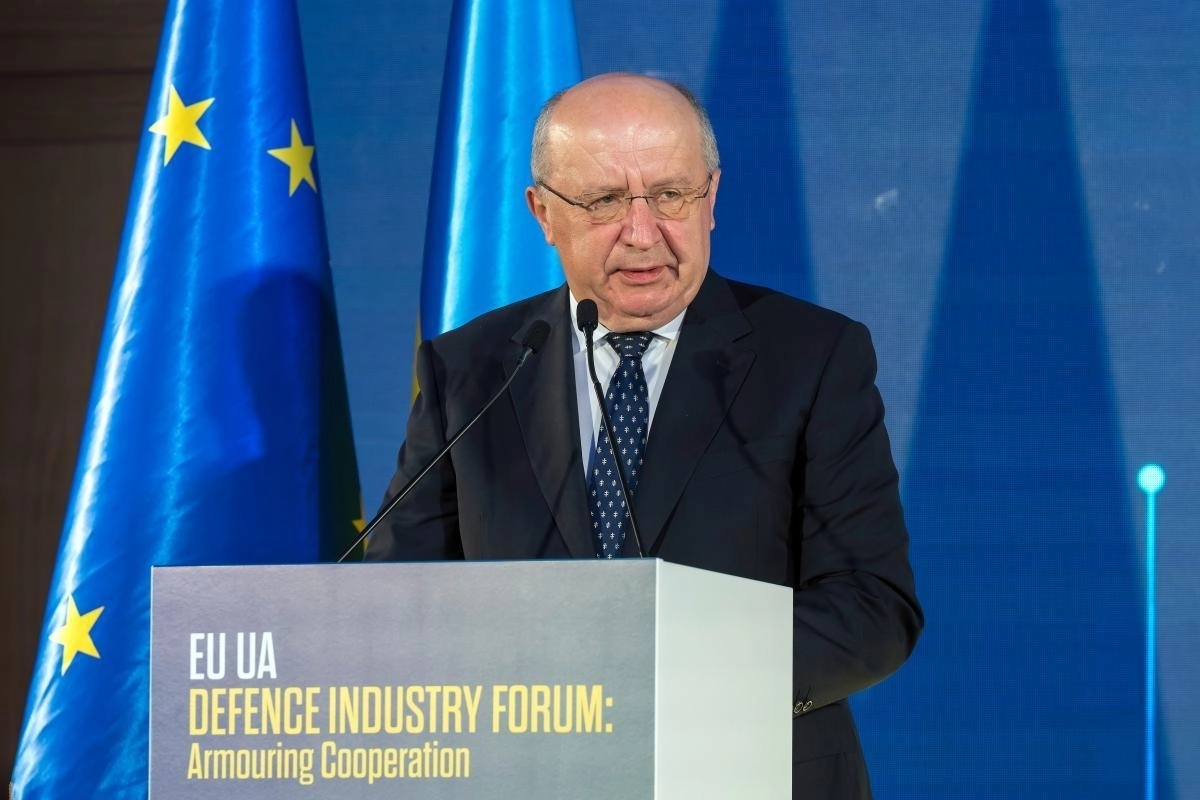
At the same time, we are seeing a sharp increase in interest from European industry in establishing joint ventures and adopting Ukrainian technologies. I would not say that European companies are particularly concerned about exceptionally high levels of corruption in Ukraine. On the contrary, businesses see that the country is taking active steps to combat corruption. For example, former Deputy Prime Minister and Minister of Digital Transformation Mykhailo Fedorov based his work on transparent data analysis, something that has also been confirmed by civil society organizations. We expect that approach to continue. The development and implementation of defense projects in Ukraine are becoming increasingly transparent.
Q: There have recently been reports of growing military cooperation between China and Russia. The Insider, for example, has reported on attempts to undermine Elon Musk’s satellite system. Can the European Union pressure China to limit its technological support for Russia?
A: Of course, we would like China to understand that its covert support for Russia will bring it no benefit. But it is difficult to assess how much influence we have. As General Zaluzhnyi has said, China is learning from this war and therefore has no interest in seeing it end.
Can we change that situation? There is no straightforward answer, although our position is perfectly clear. Sanctions may be one possible tool. However, I am not involved in shaping sanctions policy. That falls under the responsibility of EU High Representative Kaja Kallas and her team.
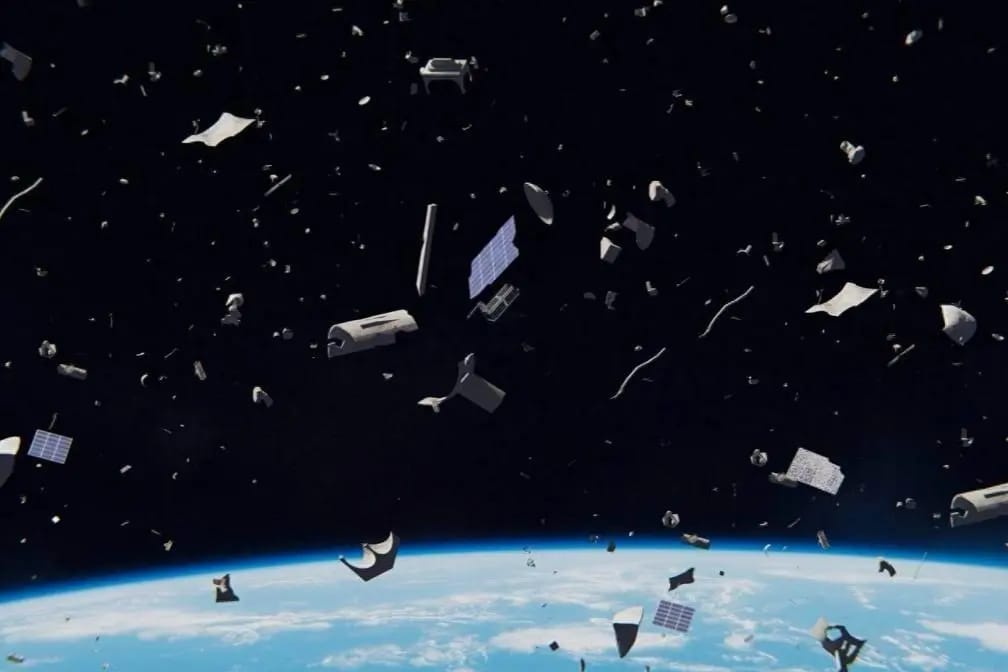
My own directorate is developing European space projects comparable to Starlink. Our Secure Satellite Communication system is expected to become operational by 2029. Our priority is to protect Europe's space assets. We must be prepared for the possibility that these ‘star wars’ will become more intense. Our adversaries may begin putting their offensive strategies against our space systems into practice.
Q: Can you estimate how much the European Union is currently spending on these efforts and how much it is prepared to invest in the future?
A: Under the EU’s 2021–2027 budget, around €25–26 billion has been allocated for these purposes. In the next seven-year budget, beginning in 2028, we have proposed increasing spending on defense and space fivefold, to €131 billion. The final decision, of course, rests with the European Council — that is, the leaders of the member states — but I believe we can expect that increase to be approved. Those €131 billion could be divided roughly equally between defense and space.
Under the EU's next budget, beginning in 2028, spending on defense and space could increase fivefold, reaching €131 billion
As I mentioned earlier, the 23 EU member states that also belong to NATO are on track to spend a combined €1 trillion a year on defense by 2030. That means they could invest roughly €7 trillion in defense over the course of seven years. Our task is to launch more joint projects so that these funds are used as efficiently as possible.
Q: How realistic is it that Article 42.7 of the Treaty on European Union could be revived to strengthen collective security? Could it become as robust as NATO’s Article 5 on collective defense?
A: This is an important issue. It is being actively discussed, though mostly behind closed doors rather than in public. I would also say that work is underway to develop more concrete plans for how this article could be put into practice.
I believe that by the end of the year we will have a clear understanding of how Article 42.7 could become the EU’s equivalent of NATO’s Article 5. In terms of decision-making, some politicians and experts believe Article 42.7 could even prove more effective. Unlike NATO, for example, it does not require consensus among all member states. It is based on the principle of mutual assistance: the country subjected to aggression initiates the process itself.
The question is how this should be organized. There are two main dimensions. One is purely military, primarily through NATO. But we must remember that in the event of aggression, military support alone is not enough. Our goal is therefore to harmonize our systems so that, if an attack occurs, the EU can respond quickly not only with military assistance but also with financial, logistical, and food assistance.
Q: How has the Russian threat to the European Union — the threat of invasion or war, even in its hybrid forms — changed in light of recent developments on the Ukrainian front, Ukraine’s strikes on Russian infrastructure, and the fuel shortages they have caused in Russia?
A: The Ankara summit confirmed that all NATO members — from the United States to Turkey — agree that Russia remains the Alliance’s primary security threat. To convince Putin to end this war and not launch another act of aggression against EU and NATO members, we must continuously demonstrate strength. Our military capabilities are genuinely growing, and any adventurism by the Kremlin will meet with a clear response.
Our military capabilities are genuinely growing, and any adventurism by the Kremlin will meet with a clear response
At the same time, we must take into account what leaders across Europe — especially those from frontline countries — are saying. When Ukraine achieves significant successes, for example by triggering a fuel crisis in Russia or taking the war to Moscow or St. Petersburg, it puts Putin and the Kremlin under considerable pressure. That could leave him feeling increasingly desperate. The question then becomes: what will Putin do next? Clearly, the danger is not limited to direct military aggression. Russia could also resort to large-scale provocations.
Our position is therefore straightforward. We are preparing for every possible scenario: rapidly strengthening our defense capabilities, investing in the defense industry, and integrating Ukraine’s military experience into Europe’s security architecture. That is our response to whatever scenario Putin comes up with.