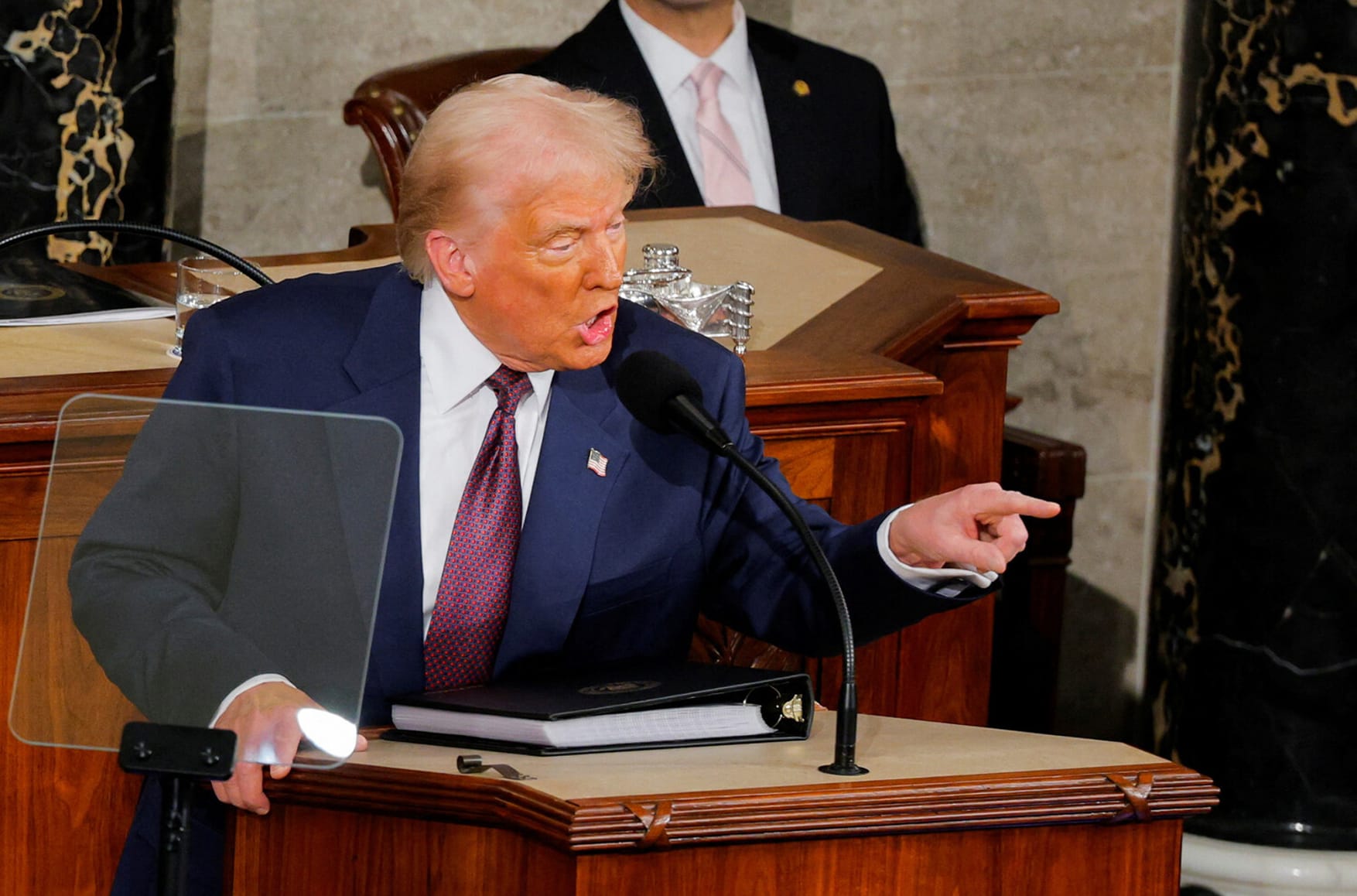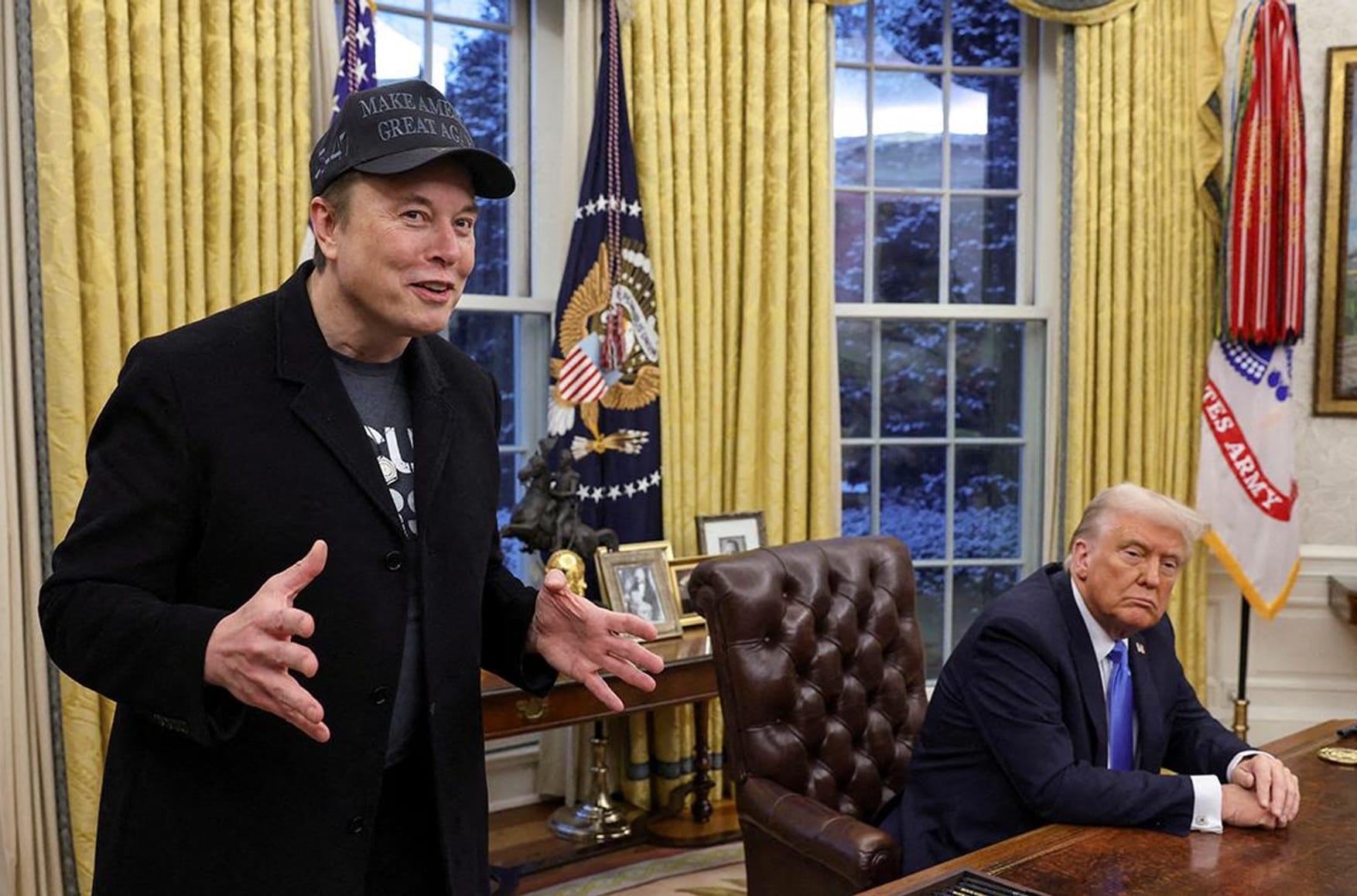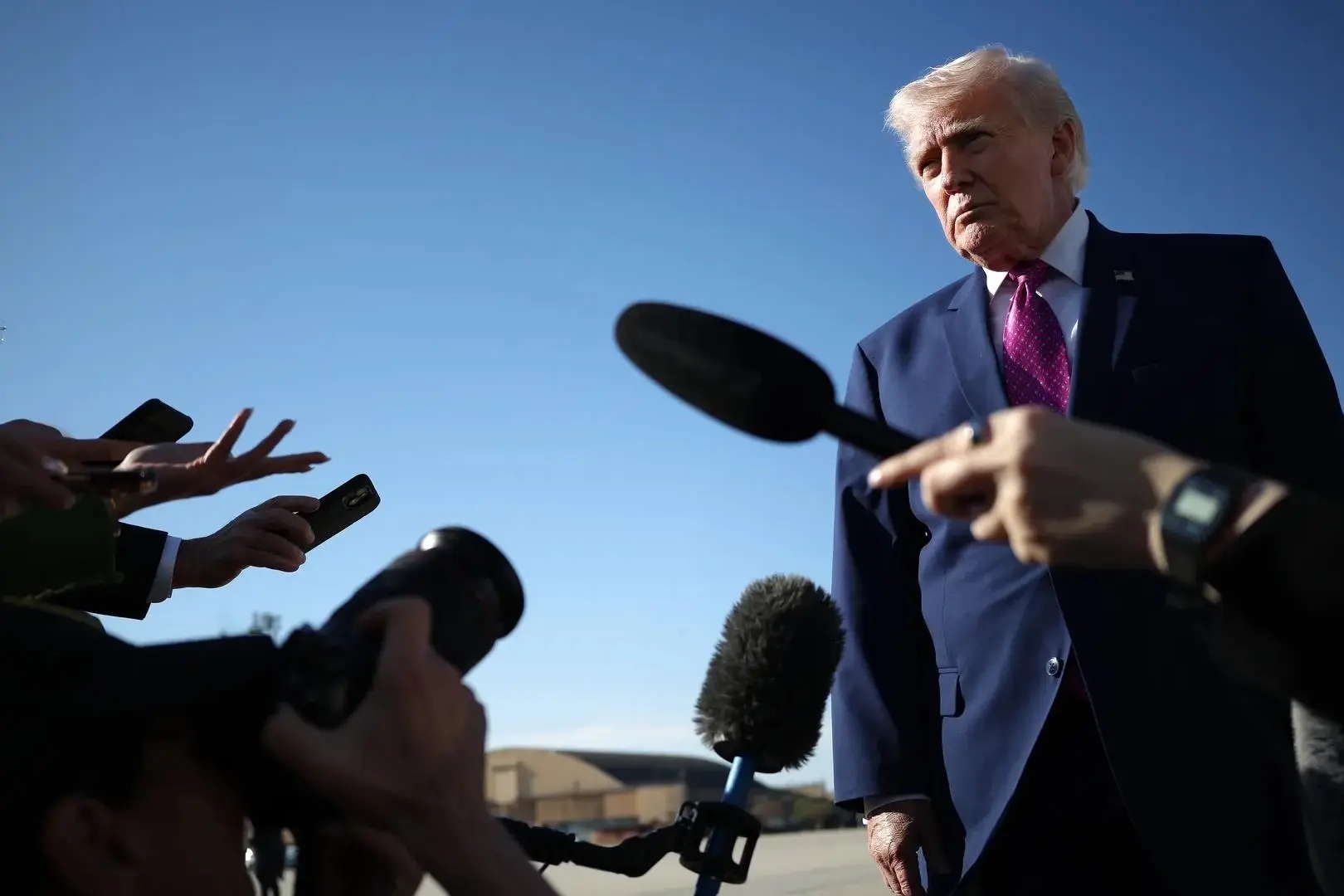
Earlier this month, Donald Trump threatened Iran with the death of its civilization, but then announced a ceasefire. The United States failed to achieve its goals through military means, and instead has effected a near total closure of the Strait of Hormuz. At the same time, Pentagon chief Pete Hegseth is conducting sweeping purges of the senior military command, while Democrats and even former Trump allies are demanding the removal from office of a president whose approval ratings have fallen to a historic low. American elites quite simply cannot decide how to respond to the new developments.
Donald Trump is urgently trying to bring the war with Iran to an end. After more than a month of fighting, during which the president demanded in profane terms that the Iranian authorities reopen the blocked Strait of Hormuz and threatened to destroy their entire civilization, he announced a ceasefire. The sides are now holding talks, the outcome of which is far from certain. At the same time, the United States, seeking to pressure Iran, began its own blockade of the Strait of Hormuz, and Trump said that the United States could charge ships for passage through the chokepoint — possibly even jointly with Iran.
Removal under the 25th Amendment
The war with Iran quickly became a heavy burden for the White House. The first month of military operations cost the U.S. budget $31 billion, not counting damage to military facilities and lost equipment. In the draft federal budget for 2027, the Trump administration proposed a 44% increase in defense spending, raising the total to $1.5 trillion. If adopted, defense expenditures would constitute 4.5% of GDP. On top of that, last year Congress approved a $150 billion increase in the Pentagon budget as part of the “Big Beautiful Bill.”
The first month of military operations alone cost the U.S. budget $31 billion
Because of the blockade of the Strait of Hormuz, oil prices surged sharply, followed by fuel price growth inside the United States. The average price of gasoline rose from $3.17 per gallon a year ago to over $4.00 today, while diesel climbed to nearly $5.70. This is driving up transportation costs for various goods and adding further inflationary pressure to the economy as a whole.
The White House has still failed to clearly explain to Americans the logic and objectives of the war, while public support from the outset was at a record low compared with other U.S. armed conflicts. According to polling, an average of 53% of Americans oppose the war, while only 38% support it.
Since commencing military action, Trump’s approval rating has fallen to their lowest levels since his return to the White House. Pollsters report that 56% of Americans disapprove of his policies, while in some surveys that figure already exceeds 60%.
After the publication of his statement about destroying Iranian civilization, more than 70 Democratic Congressmen called for the invocation of the 25th Amendment, which allows a president to be removed from office if he is unable to discharge the duties of the office. Most notably, those calls were joined by former Republican firebrand Marjorie Taylor Greene, far-right conspiracy theorist Alex Jones, and conservative activist Candace Owens, even if, among sitting Republican politicians and members of Congress, the idea found no support.
Notably, since its adoption in 1967, the 25th Amendment has indeed been used four times — always at the initiative of the presidents themselves, when they were about to undergo surgery or another medical procedure requiring anesthesia, after which they resumed their powers.The amendment does indeed allow the vice president, with the consent of the cabinet, to declare the president incapacitated and strip him of his powers, but the president can reclaim his authority by sending Congress a letter stating that he is fit for office. In that case, Congress would decide the dispute, and removing the president would require a two-thirds vote in both chambers — an even more onerous requirement than that for impeachment and removal, which requires a majority vote in Congress followed by support of 67 Senators.
It is extremely difficult to imagine such a scenario now. Vice President J. D. Vance and members of the administration remain loyal to Donald Trump and are unlikely to so much as attempt to initiate a palace coup, not even one carried out through constitutional means.
Equally unrealistic are calls for Trump’s removal from office via impeachment. Even if Democrats win the midterm congressional elections in November 2026, Republican senators remain loyal to the president, including on questions of war, as shown by the opposition’s unsuccessful attempts to pass one antiwar resolution after another. This means that impeachment proceedings against Trump would almost certainly fail to gain the necessary two-thirds majority in the Senate, just as attempts in 2019 and 2021 failed.
Still, although Trump is unlikely to face removal from office, it is clear that the war with Iran is causing obvious reputational damage to the president. According to polling, the war is supported by 77% of Republicans and 90% of those who identify with the MAGA movement, and Trump’s approval rating among them remains in the 80–90% range. But it is becoming increasingly difficult to win over ordinary voters who believed Trump’s 2024 promise not to start new wars. This reality is all the more important with midterm elections approaching in November.
Face of the war
Trump’s decision to move toward negotiations showed that the United States failed to achieve its war aims through military means. Even Fox News, known for its support of the president, has reluctantly acknowledged this.
Iran’s ruling regime withstood the strikes, while even more hardline politicians linked to the Islamic Revolutionary Guard Corps (IRGC) took leading positions within it. Nuclear facilities were damaged, but the country still possesses stockpiles of enriched uranium. Iran’s missile forces and other military units, despite significant losses, are still capable of inflicting substantial damage on the United States and its allies in the Middle East. And now there is the new problem of the blockade of the Strait of Hormuz, which Iran is now readily using to blackmail the entire global economy.
The limited nature of the president’s military options had been outlined by General Dan Caine, Chairman of the Joint Chiefs of Staff. However, Trump was persuaded otherwise by Benjamin Netanyahu. Several weeks before the war began, the Israeli prime minister flew to Washington, D.C.. In the White House Situation Room, Netanyahu presented a briefing that argued Israel and the United States together could quickly inflict a military defeat on Iran, triggering unrest inside the country and bringing down the ruling regime.
At the same time, the CIA director called such a scenario a “farce,” while Secretary of State Marco Rubio bluntly described it as “nonsense.” Vice President J. D. Vance also did not support the plan. After the war had already begun, Joe Kent, head of the National Counterterrorism Committee, resigned from the administration in protest, accusing Israel and its lobby in Washington of provoking the conflict.
The CIA director called the scenario of an attack on Iran a “farce,” while Secretary of State Marco Rubio bluntly described it as “nonsense”
In essence, the only major supporter of war with Iran among officials in the Trump administration turned out to be Pentagon head Pete Hegseth, who became the main public face of the war, regularly reporting at press conferences on the successes of the American military and the imminent capitulation of the Iranian regime. He also rebuked journalists for what he said was insufficiently patriotic coverage of the conflict, repeatedly claiming that Iran’s air defenses had been completely destroyed, even though in early April the Iranians shot down two American aircraft.
Some members of the administration reproached Hegseth for misleading not only Americans, but Trump himself with overly optimistic statements. “Pete is not speaking truth to the president,” journalists quoted one administration official as saying. “As a result, the president is out there repeating misleading information.”
Purge at the Pentagon
Hegseth now fears he could become the scapegoat for the failures of the military campaign. Ahead of the midterm congressional elections, Trump has begun gradually ridding himself of the most scandal-plagued and controversial members of his administration, such as former Homeland Security Secretary Kristi Noem and former Attorney General Pam Bondi. The press quickly began speculating over who might be next. Alongside FBI Director Kash Patel and Director of National Intelligence Tulsi Gabbard, Hegseth’s name has also been mentioned with notable frequency.
Hegseth fears that he could become the scapegoat for the failures of the military campaign
The secretary himself is obsessed with fighting leaks to the press. Even though the Pentagon’s information policies were ruled unlawful by a court, they effectively remain in practice today. After restrictive accreditation rules were introduced for journalists, nearly all outlets — from NPR and The New York Times to Fox News and The Daily Caller — left the Pentagon press pool.
Only fringe conservative media outlets agreed to work under the new conditions. Among them were Lindell TV, founded by pillow magnate and fierce 2020 election “truther” Mike Lindell; YouTuber Tim Pool, who received payments linked to RT; the websites Gateway Pundit, The Post Millennial, Human Events, The National Pulse, and RedState; the YouTube channel of conservative nonprofit Turning Point USA; and the blog Washington Reporter. Of these, only Gateway Pundit and RedState rank among America’s top 20 most visited conservative media outlets.
Hegseth’s persistent demands for absolute loyalty have also undermined trust in the secretary among his subordinates. Desperately trying to find the sources of Pentagon leaks, Hegseth and his lawyer Tim Parlatore began administering lie detector tests to military personnel and staff. After numerous complaints, the White House demanded that Hegseth stop the polygraph testing.
The defense secretary has also been far from consistent in his decisions, which has further hurt his standing within the military. Last summer, Hegseth initially refused to promote General Douglas Sims, then agreed after an inquiry showed Sims had no connection to the leaks, only to reverse himself again. Ultimately, Sims resigned after 34 years of military service.
Also last summer, Hegseth dismissed Lieutenant General Jeffrey Kruse, head of the Defense Intelligence Agency, over a “loss of confidence.” In June, Kruse’s agency had prepared a preliminary report on U.S. strikes against Iranian nuclear facilities. The document, which was soon leaked to the press, said the strikes had only delayed Iran’s nuclear program by several months, contradicting the White House’s official version that the sites had been completely destroyed.
Because of suspicions of disloyalty, Hegseth also began carrying out purges among the senior officer corps, with women and members of racial minorities often serving as the targets. The first to be dismissed was Charles Q. Brown Jr., the second Black general to become chairman of the Joint Chiefs of Staff after Colin Powell.
Others who lost their posts included Navy and Coast Guard chiefs Lisa Franchetti and Linda Fagan, as well as General Jennifer Short, Navy Reserve chief Nancy Lacore, and Vice Admiral Shoshana Chatfield — all of them women. Rear Admiral Michael Donnelly was denied appointment as commander of the United States Seventh Fleet after reports in conservative media that seven years earlier he had authorized a drag show aboard the aircraft carrier USS Ronald Reagan (CVN-76).
Even the outbreak of a new war did not halt the dismissals. In early April, Hegseth demanded that U.S. Army Chief of Staff General Randy George step down. He had been appointed by Joe Biden in 2023 and confirmed by the United States Senate. Before that, he served as senior military assistant to Biden-era Defense Secretary Lloyd Austin, and earlier commanded troops during the invasions of Iraq and Afghanistan. Dismissed alongside him were General David Hodne, who headed Army Futures and Transformation Command, and the Army’s chief chaplain, Major General William Green.
Since taking over at the Pentagon, Hegseth has dismissed more than two dozen generals and admirals. He reshaped almost the entire Joint Chiefs of Staff, which consists of the eight highest-ranking military officers, replacing six of them. By the secretary’s order, nine four- and five-star generals left the armed forces — equal to the number who had been dismissed over the previous 150 years.
Hegseth dismissed nine four- and five-star generals — the same number U.S. presidents dismissed over the past 150 years
Hegseth has grown wary of Army Secretary Dan Driscoll, whom he views as a potential successor. Last year, the defense secretary secured Driscoll’s removal from negotiations with Ukraine after he visited Kyiv together with General Randy George. He also sought Driscoll’s dismissal, attempting to replace him with his aide Sean Parnell. However, Vice President J. D. Vance came to Driscoll’s defense — after all, the relationship between the two goes all the way back to their days together at Yale Law School.
Last summer, Hegseth’s chief of staff Ricky Buria demanded that Driscoll reverse a decision to appoint Major General Antoinette Gant, who served in Iraq and Afghanistan, as commander of the Military District of Washington. Its commander often performs ceremonial duties, and Buria supposedly told Driscoll that Trump would not want to stand next to a “Black female officer” at official events. Driscoll was forced to complain to the White House, where he received support, forcing Hegseth to back down.
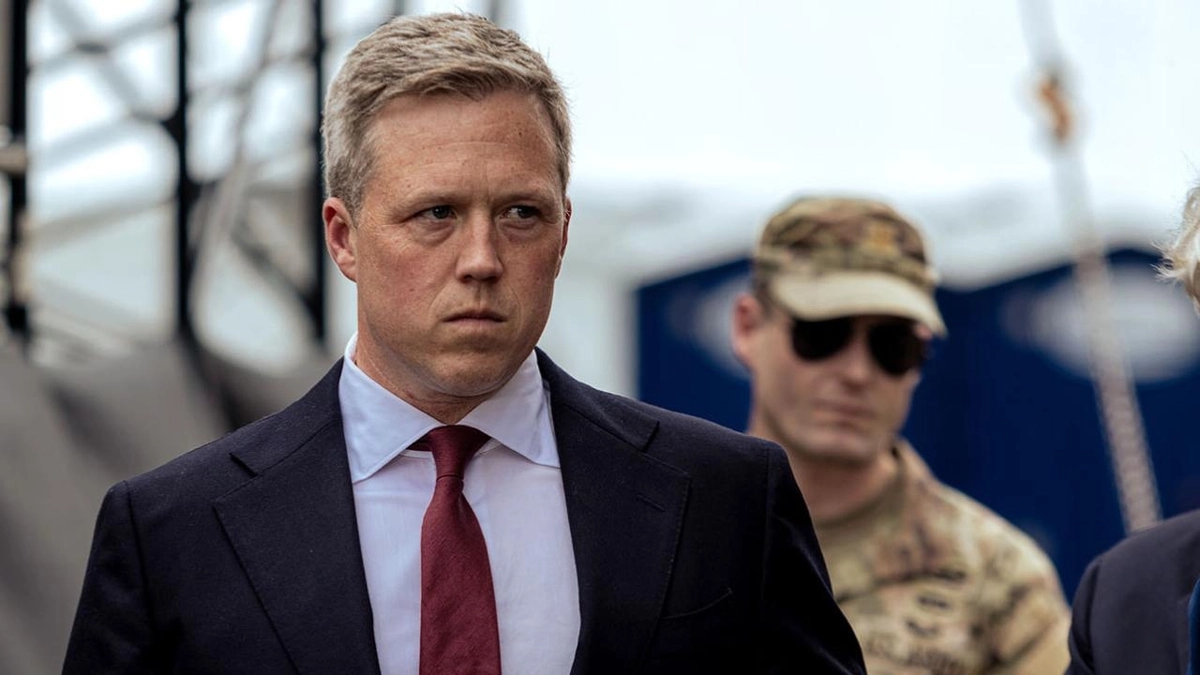
Hegseth has also launched a sweeping reform of the officer selection system, entrusting the process to retired Brigadier General Anthony Tata, who called President Barack Obama a “terrorist leader” and a Muslim who supports Iran. Because of those comments, Tata withdrew his name from consideration for a senior Pentagon post in 2020, with Senate hearings canceled half an hour before they were due to begin.
Soon after launching the personnel overhaul, Hegseth ordered the closure of a program designed to ensure that all officers, regardless of race or gender, had an equal opportunity to compete for senior posts. The Command Assessment Program was introduced on a pilot basis during Trump’s first term and became established under Joe Biden. It supplemented traditional personnel evaluations with expert assessments and double-blind interviews.
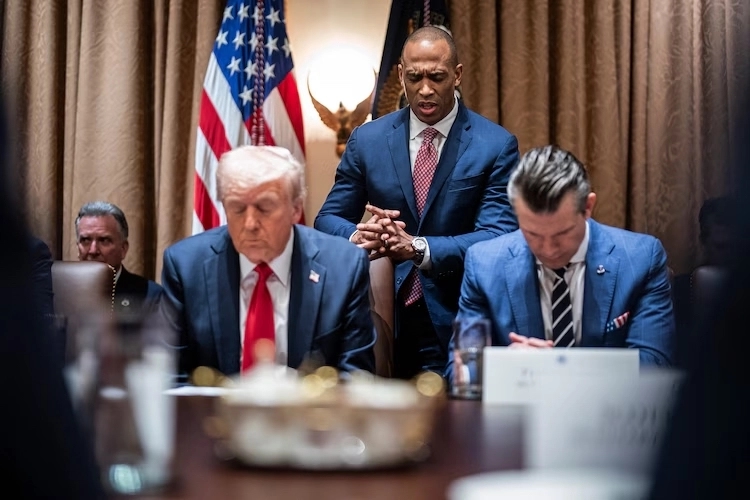
The secretary banned service members from taking courses at or cooperating with leading American universities and think tanks, which he denounced as breeding grounds of left-wing ideology. Under Hegseth’s leadership, regular prayers in support of the armed forces are now held inside the Pentagon. During one such prayer gathering, Hegseth, instead of quoting the Bible, recited a monologue by Samuel L. Jackson’s character from Pulp Fiction, in which he recites a fictional passage of scripture.
Experts and former military officers note that the new Pentagon leadership’s obsession with culture wars and politically motivated purges is negatively affecting the effectiveness of the armed forces and their ability to respond to new threats. The demand for loyalty at the expense of professionalism may also lead the country’s political leadership to receive an increasingly distorted picture of events, affecting its decisions.