
Mistakenly, Russia is often placed on the same level as leading world powers like the United States and China. In reality, it is no more than a regional player with ambitions that exceed its actual capabilities. Nevertheless, Moscow has mastered hybrid warfare techniques and skillfully exploits the errors of its opponents and partners alike in order to expand its influence. Notably, Russia’s alliances with other authoritarian regimes function only so long as they serve Moscow’s interests, and recent events have shown just how unreliable such partnerships can be. However, despite major setbacks in Syria, Venezuela, and Iran, Vladimir Putin has so far successfully managed to concentrate his forces against Ukraine, to maintain his power domestically, and to weaken the United States’ position on the global stage, writes Stefan Meister, head of the Eastern Europe, Russia, and Central Asia programs at the German Council on Foreign Relations (DGAP).
Russia is often discussed as a global power, one almost on the level of the U.S. and China. But Moscow’s never-ending war in Ukraine, along with its lack of action following the violent fall of allies in Syria, Venezuela, and Iran, clearly demonstrate the limits of Russian power. Russia simply does not have the capabilities to impose its will in other parts of the world, at least not with the speed and effect that its leadership desires. Instead, it can only act if others allow it to act.
Russia reacts first and foremost to U.S. policy, but Moscow also needs the support of China, North Korea, and Iran to continue its war in Ukraine. Today’s Russian Federation is not a global power in the model of the Soviet Union, but a regional power that is, in fact, playing above its actual weight. Because of its relative weakness, Russia is not a shaper of the global order, but a disrupter.
Vladimir Putin is the master of using the weaknesses of others in order to gain influence, which is why so many of his military operations are hidden, using hybrid warfare as the key tool of Russian influence. Needless to say, asymmetric warfare is typically the tool of weak states or non-state actors, yet Russia is using underhanded methods to create and exploit grey zones in Ukraine, Georgia, and even in Central African countries.
Vladimir Putin is the master of using the weaknesses of others in order to gain influence
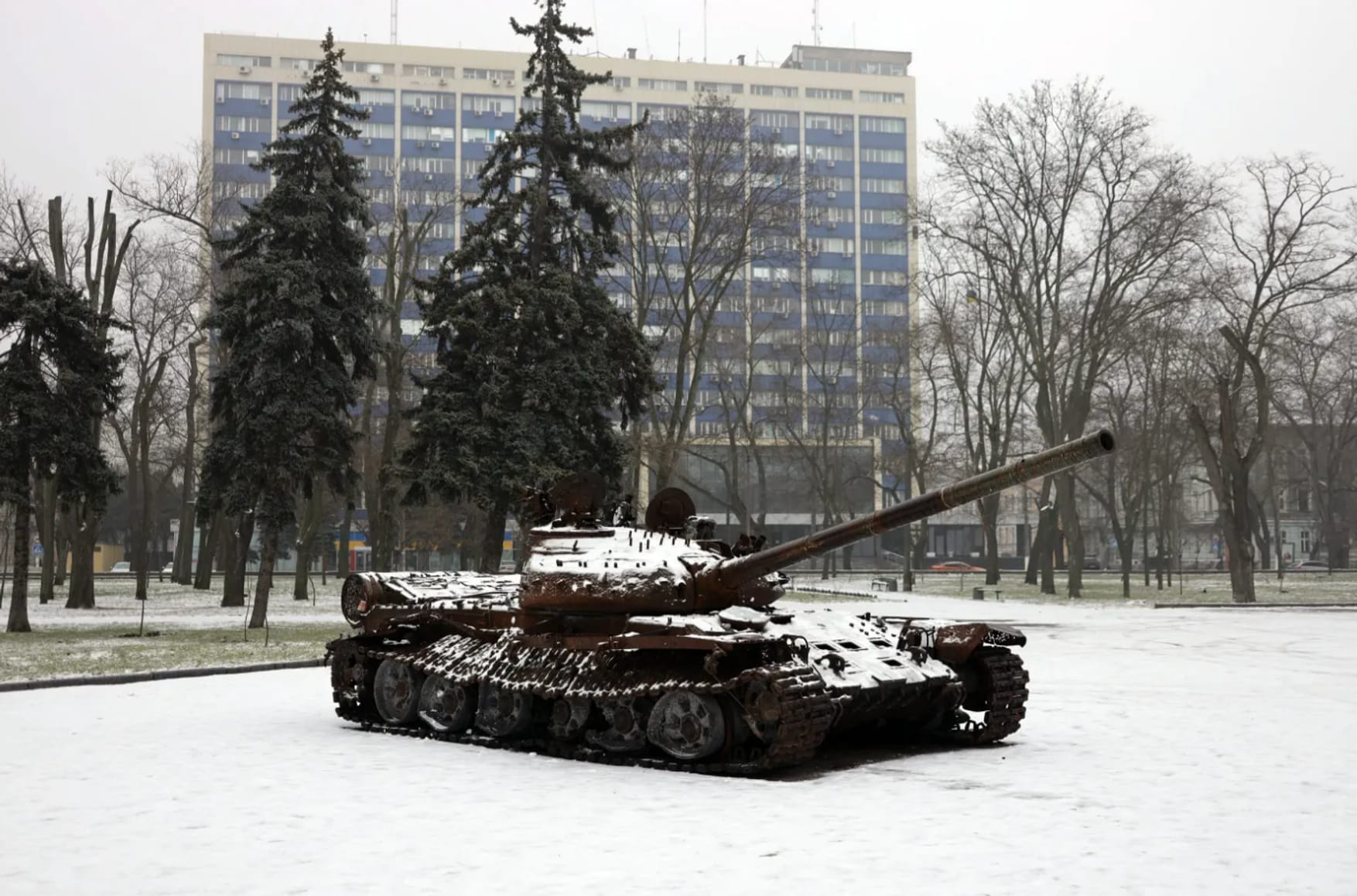
As a regional power in the post-Soviet region, Putin’s Russia aimed for regional hegemony, creating its own institutional framework through the Eurasian Economic Union (EEU) and the Collective Security Treaty Organization (CSTO). But the war in Ukraine demonstrates that Russia is not capable of imposing its interests — not even along its borders. It is still fighting in the Eastern parts of Ukraine despite investing substantial resources in its army and domestic mobilization.
The limits of Russian power are connected to its economic, technological, and demographic weakness, along with a lack of soft power and overreach in the deployment of hard power. The EEU has not become an alternative economic integration institution analogous to the EU (even if, since 2022, it has served as a tool for sanctions evasion). Moreover, the CSTO has not become an alternative military bloc analogous to NATO, but instead has seen no member state join Russia’s war in Ukraine. As a declining power, Russia will only become weaker in the global competition, a process that is being accelerated by the ongoing conflict.
In this context, the rise of Russia as an actor in the Middle East, Africa, and Latin America should be seen as a reaction to a decline in U.S. power. Putin used the opportunities presented by U.S. non-action (and even withdrawal) to intervene in these areas at relatively low cost. Syria is a prime example of how the Russian leadership used the indecisiveness of U.S. president Barack Obama to act, to keep former president Bashar al-Assad in power. Yet even for this successful military operation, Moscow’s forces needed the support of Iran and Tehran’s various proxies on the ground. Elsewhere, the Russian leadership also tried to build alliances with authoritarian leaders to push back against U.S. influences, but now, with the war in Ukraine well into its fifth year, Russia remains stuck in the Donbas.
As a result, Russia has needed to redeploy troops and military equipment from post-Soviet military bases in the South Caucasus and Central Asia, as well as from Syria and African countries. Because of its limited resources, it has to focus on its main priority, which is Ukraine and the post-Soviet region. But even here, its influence is crumbling: Moscow is no longer the key actor in the peace negotiations between Azerbaijan and Armenia, ceding that title to the U.S. and the belligerents themselves. Russia is not even capable of controlling the Black Sea militarily, evidenced by the fact that its ports are challenged by Ukrainian sea drones. Against this background, Central Asian countries are diversifying their economic relations towards Europe, the U.S., the Middle East, and Asia.
Different goals
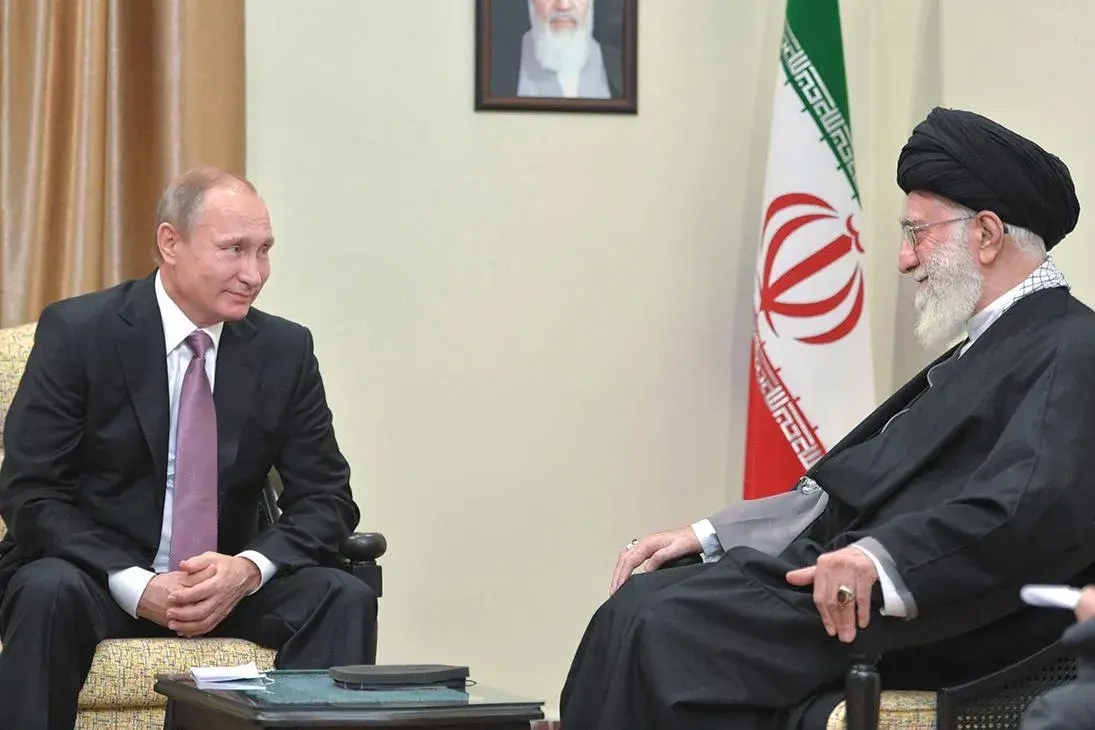
To be fair, Russian cooperation with countries like Syria, Iran, and Venezuela was never about alliances but rather about pragmatic interest-oriented policy. In addition to not being a great power, Russia is not a great patron. But it has nevertheless often used its limited resources in the pragmatic, opportunistic pursuit of its own objectives and interests. This involves selling the few Russian products that are still attractive on the global market — those like military equipment and services, energy cooperation, and nuclear power stations. Since 2022, Russia has undoubtedly benefited from its interactions with Iran, gaining drone technology, plus know-how in the spheres of sanctions circumvention and internet control. In return it supplied Iran with a few limited weapons systems — like Yak-130 trainer jets, Mi-28 attack helicopters, and Spartak armored vehicles — but never with advanced platforms such as the S-400 air defense system. Its main interest was never a close alliance with the Iranian regime, but rather the preservation of its own place in the balance of power in the Middle East — a fact that allowed Moscow to maintain good relations with Israel, along with various Arab countries that are important partners for sanctions circumvention and financial cooperation. Although Iran and Russia signed a partnership agreement at the beginning of 2025, it involved no security guarantees and no promises of support in the case of a military conflict. Both countries were very careful not to get dragged into the wars and conflicts of the other.
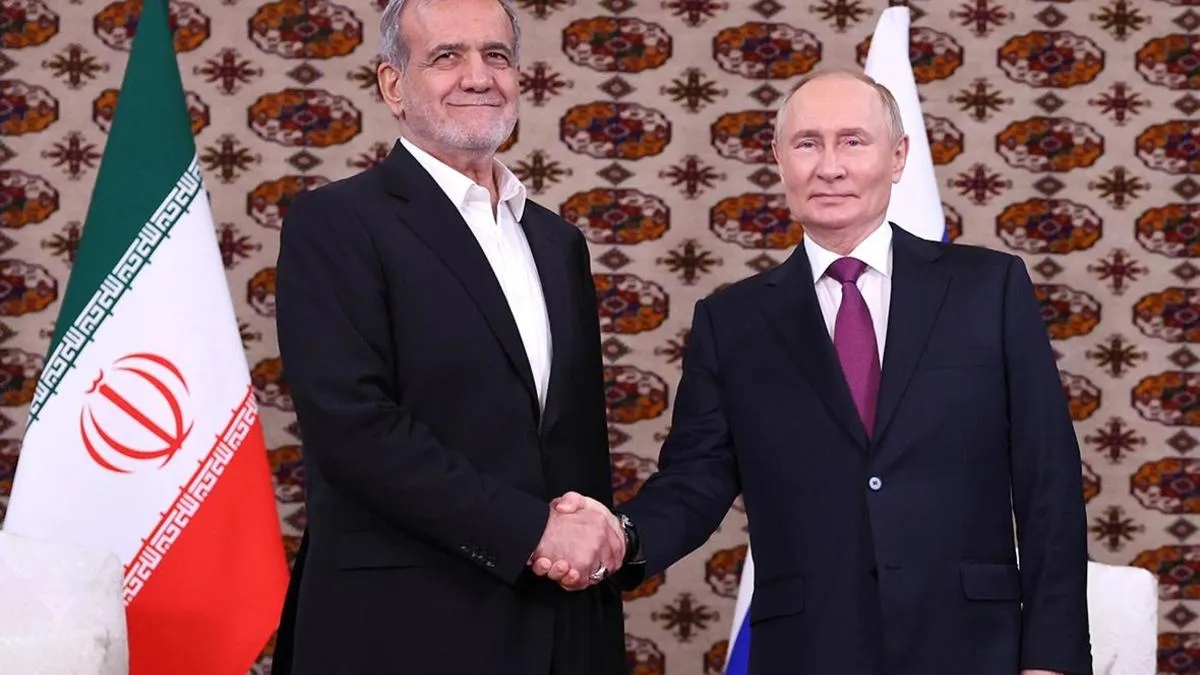
The key aim of Russia’s various cooperative arrangements with the world’s other autocracies is to weaken U.S. influence globally. Building an alliance system with the BRICS+ group and Shanghai Cooperation Organization is not about integration or mutual solidarity, but about regime survival and cooperation against the U.S. influence among other mid-level powers. China as a rising great power is the exception here, which is precisely why Beijing — not Moscow — is increasingly dominating these institutions. Russian dependency on China is only growing, as it is Beijing that has become the key technological enabler behind Russia’s drone campaign against Ukraine.
The key aim of Russia’s various cooperative arrangements with the world’s other autocracies is to weaken U.S. influence globally
Again, authoritarian regimes like the one in the Kremlin are primarily concerned with their own survival, but the military and economic support platforms they form with similarly minded dictatorships are still mutually beneficial for the participating parties, even if it should be clear by now that Russia is neither willing nor able to prop up its authoritarian allies in the event that they are faced with existential threats. Only the U.S. is capable of carrying out “special military operations” like the one that removed Nicolas Maduro from power in Venezuela, and for Putin, the ousting of Maduro and the killing of key leaders in Iran provides further confirmation that the main enemy is the U.S., regardless of who might be in the White House.
Russia’s attractiveness
Nevertheless, we should not ignore Russia's remaining capabilities. Moscow still can offer its partners in the Global South cheap resources like oil, gas, fertilizer, and grain, and Putin maintains good personal relations with many leaders — and populations — outside of the Western democratic world. In addition, the Kremlin is a trendsetter with regard to the control of domestic civil society, media, and internet access, and it remains a key player shaping global discourses on the topics of sovereignty and alleged Western malfeasance. Perhaps paradoxically, its relative weakness actually makes it a more attractive potential partner for countries in Africa, Latin America, and South Asia — after all, it can provide some resources, but it is not capable of dominating these regions the way first-rate powers like the U.S. and China can.
The Kremlin is a trendsetter with regard to the control of domestic civil society, media, and internet access, and a key player shaping global discourses on the topics of sovereignty and alleged Western malfeasance
For the Kremlin, the shift from U.S.-dominated multilateralism towards a status quo characterized by transactional negotiations and flexible coalitions is a positive development — after all, this is the modus operandi of the Russian regime. Putin, operating in survival mode, can react to new circumstances as he sees fit, taking advantage of others’ mistakes, much as he has done with the ongoing events around Iran. Because of the Iranian blockade of the Strait of Hormuz, the U.S. lifted sanctions on Russian oil and fertilizers right at the moment when the Russian government was moving into an economic crisis. In addition, Western military support for Ukraine — especially in the area of air defense — will decrease given that so many resources are suddenly needed in the Middle East. Although there is a growing understanding in Moscow that it might not win the war in Ukraine on the battlefield, it might yet succeed by dividing the U.S. and Europeans while undermining cohesion and resilience inside Ukraine itself — efforts that have benefited from the behavior of the U.S. president himself. Using Trump to force Ukraine into a dysfunctional ceasefire agreement might be the most efficient aim Russia can pursue if it is ultimately to achieve anything resembling success in its seemingly endless war.
Managing decline
Russia is a declining power led by a regime that is prepared to act without scruple and has no vision for the future of the country, but the U.S. and Europe, which are also in a decline, continue to cede their share of global influence, leading to questions about which actor is managing its decline the best. The war in Ukraine was a major mistake by President Putin, but Russia has adapted to the situation created by its full-scale invasion. Putin’s strength is that he still retains enough power to prioritize — Syria, Venezuela, Iran, and Cuba may be nice partners to have, but they are all clearly less important to Putin than Ukraine is.
The military operations ordered by Donald Trump over the past three months have demonstrated the limits of Russian power, yet if Trump fails to topple the regime in Iran, Russia and China will come back to resume their support for the Ayatollahs after the war. In this transactional world, influence and power are relative, alliances are temporary, time is of the essence, and adaptability is absolutely crucial. Unlike Assad, Maduro, and Khamenei, Putin is a survivor. Although the changes in Syria, Venezuela, and Iran might weaken Russia's prestige as a global actor, they do not prevent the Russian president from achieving his key goals: staying in power and weakening the U.S.