
Germany is preparing for the first state-level victory by the far-right AfD (Alternative for Germany) party, which could form a government in Saxony-Anhalt after upcoming elections. The party’s transition from “permanent opposition” into the ranks of what Germans call a Volkspartei — a “people’s party,” meaning a broad-based governing force — could even lead to changes in how German state institutions operate. Given the country’s economic stagnation — and the flawed responses of Germany’s traditional political parties — the far right is capitalizing on voter dissatisfaction to boost its support. The German authorities’ lack of a clear plan to counter such radical movements poses a threat to the entire state system, writes political analyst Dmitri Stratievski.
The far-right Alternative for Germany has long ceased to be seen as a mere troublemaker. Instead, it has become a significant feature of Germany’s political landscape. Other parliamentary forces — and much of society — have joined the fight against AfD not just because they find its views unpleasant, but because they see it as a danger to democracy.
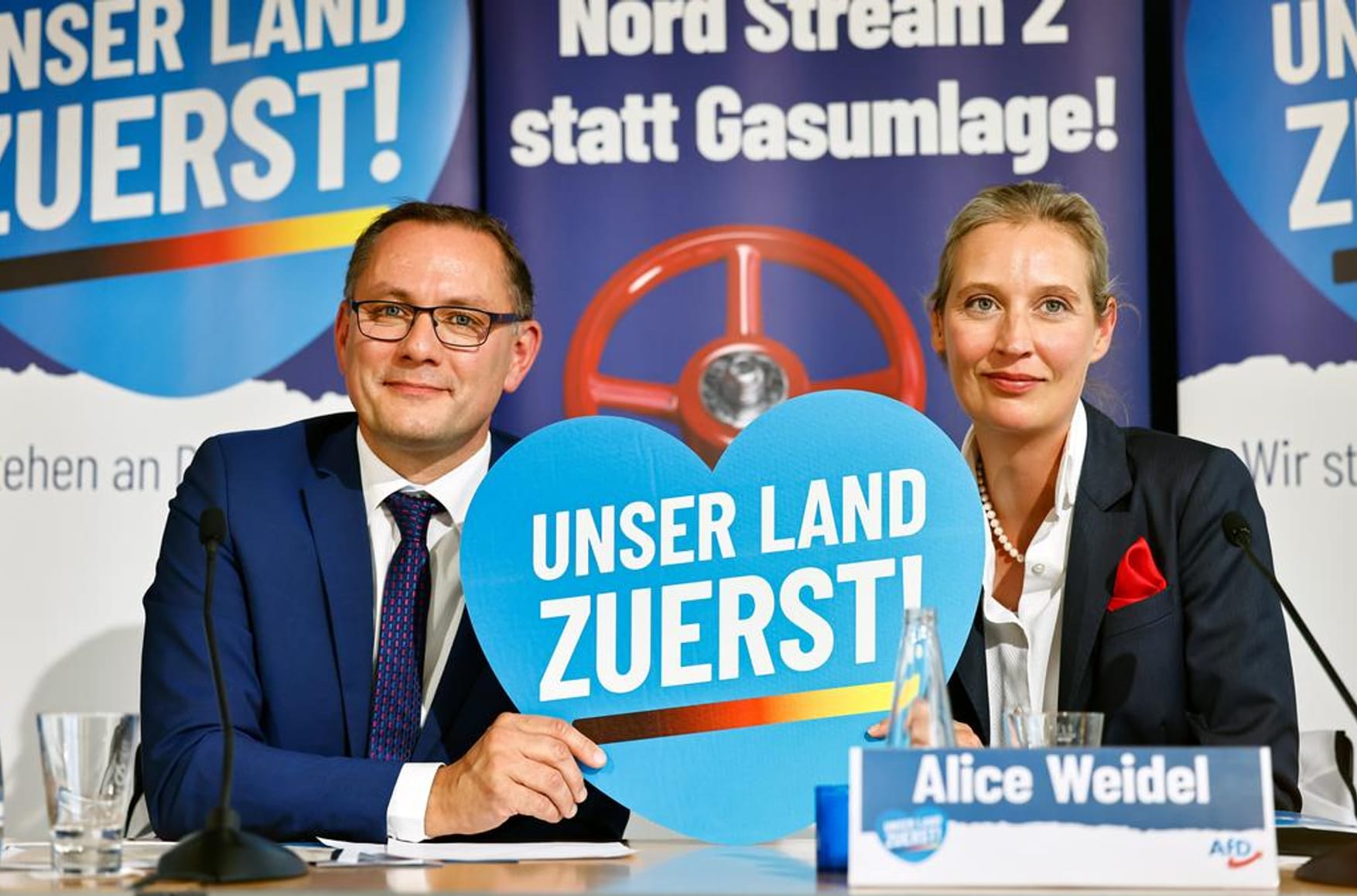
In the 13 years since its founding, the AfD has not only achieved significant electoral success but has also tried in every way to present itself as an “ordinary” German political force. The party says it merely offers “a different approach” to certain domestic and foreign policy issues — without radicalism and certainly without challenging Germany’s constitutional order. Alice Weidel, AfD’s co-chair, describes the party as “libertarian and conservative.” Nevertheless, ahead of elections in eastern Germany, the AfD continues to divide the country. And yet, its “normalization strategy” appears to be bearing fruit.
An “ordinary” party or radicals?
In early July, the quiet Thuringian town of Erfurt took on the look of a major capital hosting a G20 summit: tens of thousands of protesters were blocking streets and clashing with the police.The reason was simple: the city hosted the AfD’s party congress, where the movement elected its new leadership and set its future strategy. Coincidentally or not, exactly 100 years earlier to the day, the second congress of the Nazi Party took place in nearby Weimar, where, among other things, the Hitler Youth was created.
AfD, of course, categorically denied any parallels and insisted it was a coincidence, saying the necessary venue was available only during that period. Weidel denounced what she called attempts “to intimidate the AfD and disrupt its democratic work.”
At the congress itself, the party leadership carefully swept unwanted topics under the rug. One example was a proposal by the leader of the party’s far-right wing, Björn Höcke, to allow activists from groups officially recognized as extremist to hold AfD membership. The decision was left to the new presidium, which will discuss the idea “as part of its ongoing work” — away from television cameras.
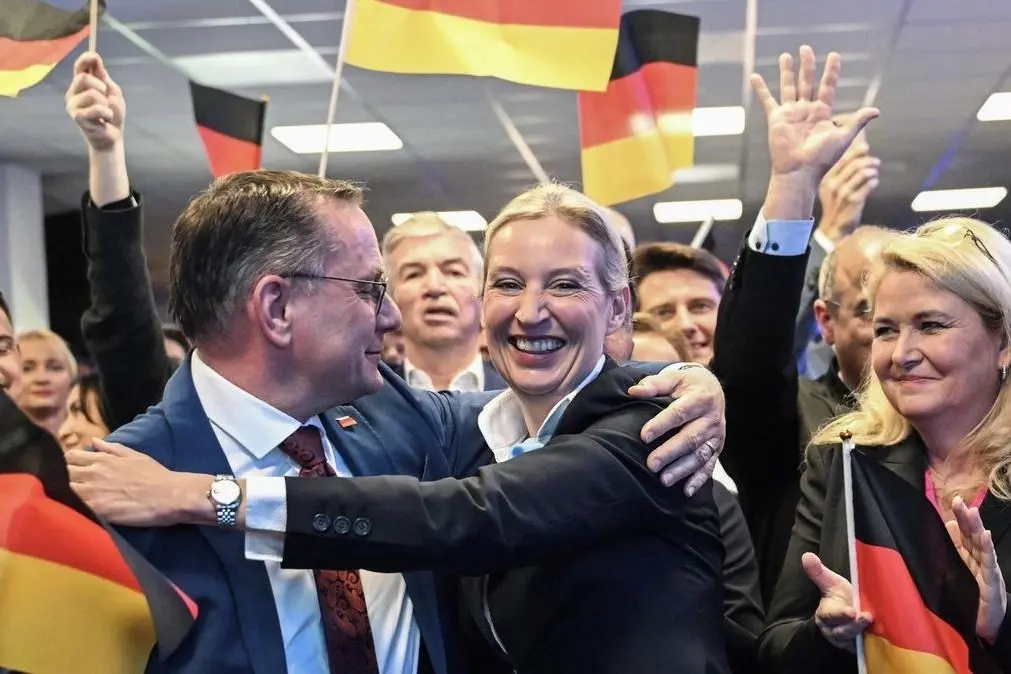
Delegates radiated optimism and openly said they were ready to take power at the first opportunity. AfD politicians are undoubtedly exaggerating their own potential. By speaking of a “road to victory” — a phrase repeated several times at the congress — they appear to be trying to consolidate their electorate and pressure wavering voters. The AfD has led nationwide polls for four months, but its current 26% to 28% clearly would not be enough to form a government on its own.
Germany’s “firewall” still exists, and none of the leaders of democratic parliamentary parties has allowed for the possibility of cooperation with the far right. The most dramatic state-level challenge for AfD’s opponents is in Saxony-Anhalt, where the party has consistently polled above 40% — putting it on the brink of taking power.
In the eastern German state of Saxony-Anhalt, the AfD has consistently polled above 40%
Despite the 50,000 people who protested in Erfurt against the far-right party’s congress, it is hard not to spot a new trend in German society. The AfD is no longer a party whose supporters avoid speaking openly for fear of disapproving looks from friends, neighbors, and colleagues. Rather, it has become a part of Germany’s everyday life.
In some eastern regions, it has even become a Volkspartei — the German term for a major political force enjoying broad electoral support, ties to different social groups, and a wide policy reach. Since the founding of the Federal Republic of Germany in 1949, that informal title has belonged only to two parties: the Christian Democratic Union, or CDU, and the Social Democratic Party, or SPD.
The AfD is no longer a party whose supporters avoid speaking openly for fear of disapproving looks from friends, neighbors, and colleagues. It has become part of German everyday life
The AfD’s “normalization” is accelerating, and five main factors are driving it.
First are the party’s electoral achievements and polling numbers. The AfD has repeatedly finished second in elections at different levels, won in Thuringia, and now leads in national polls. The argument that it is unacceptable to “ignore the will of a third of voters” is appearing more and more often in the media and in statements by politicians who previously did not countenance the AfD. The party’s successes are beginning to be recognized as an objective reality that must be taken into account in the name of “public calm” and “stability in the country.” This creates a temptation to “acknowledge the obvious” and to try to reach an agreement with “moderate” groups inside the party in exchange for dismantling the firewall.
Second is current data on the AfD’s electorate. A new Berlin study shows the party is no longer supported merely by “a group of radicals” and parts of the protest electorate that joined them. It now boasts a stable cohort of support consisting at least 20% of the electorate. Previously, these voters’ motivation was often negative — disfavoring the “ruling elites” more strongly than they actually cared for the AfD and its policy positions. Now, however, policy-driven AfD supporters account for two-thirds of the party’s current rating, and allegiance to the movement is no longer an eastern German phenomenon. A poll after the March elections in the western state of Rhineland-Palatinate, where the AfD’s position is among its weakest in Germany, showed that 32% of far-right voters supported the party because they backed its political demands. These data suggest that the AfD has built a political foundation capable of enduring for the long term.
Third is political expediency. The AfD’s opponents are finding it increasingly difficult to create coalitions without it, especially given that the CDU has also pledged not to cooperate with Die Linke (lit. “The Left”), which conservatives criticize for insufficiently distancing itself from the legacy of East Germany. The combined rating of the federal governing parties is now only 35%. In Saxony and Thuringia, minority governments are already in power — forced to seek much-needed votes from other party factions. In Thuringia, the Cabinet even includes allies of the far-left politician Sahra Wagenknecht.
Relatively new forms of cooperation within the democratic spectrum — such as alliances between former irreconcilable opponents like the conservatives and the Greens — are not enough to solve the problem. Such a government is operating in Schleswig-Holstein, a region where the AfD is relatively weak and the state premier is the charismatic Christian Democrat Daniel Günther (who also plays a notable role at the federal level). But despite his popularity, the CDU’s rating in the state has fallen from 43% to 27% over the past four years.
In Thuringia, the state-level ruling coalition is still only one vote shy of a majority, which makes it relatively easy to “find” sufficient support for passing policy measures. In Saxony, however, it lacks 10 votes, making the passage of bills noticeably more complicated. There are lessons here for Saxony-Anhalt, where after the September elections the winner may find itself dozens of lawmakers short of a majority. This trend is forcing many conservative politicians to consider altering the “firewall” strategy of containing the AfD. They are faced with a dilemma: form a potentially better-functioning state government while legitimizing the far right, or face constant turbulence in state-level legislatures (while cooperating with so-called “communists” of the left wing).
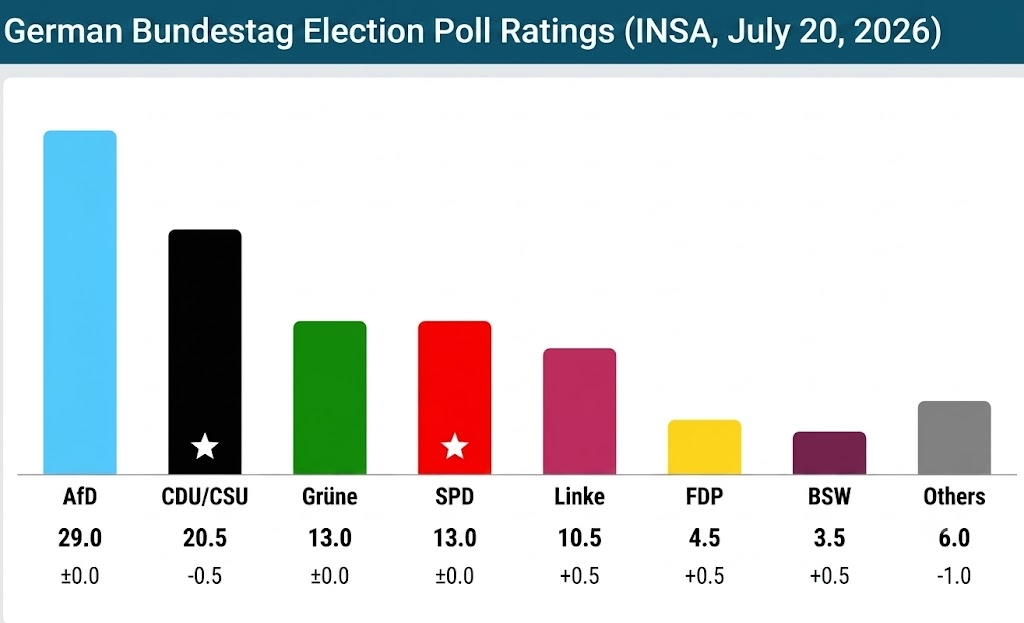
Fourth is the behavior of other political players. The SPD, the Greens, and The Left remain united in rejecting cooperation with the AfD, but signals from within the CDU are less clear. The party leadership — chairman Friedrich Merz, secretary-general Carsten Linnemann, and the federal executive board that supports them — has not changed its position, continuing to view the AfD as a threat to democracy, in addition to being its main political opponent. At lower levels, however, conservatives are divided. Until recently, voices calling for a “pragmatic approach” to the AfD were marginal. But lately they have gained strength.
CDU Bundestag member Saskia Ludwig openly proposed “selective cooperation” with the AfD, arguing that such a move reflected “the will of voters” who vote “right of center.” Andreas Bühl, head of the conservative faction in the Thuringian state parliament — where the AfD came first in elections two years ago — says debate over a “new relationship” with the AfD is “correct.” His brother Markus is, incidentally, a Bundestag lawmaker from the AfD. Former CDU secretary-general Peter Tauber (who has close ties to big business), parts of the party’s business wing in Brandenburg, and a number of municipal branches in the east have also demanded some form of revision to the CDU’s position regarding the AfD. Party leaders have so far managed to “put out the fire” — for example, in Brandenburg, higher-level politicians adopted a resolution affirming commitment to the firewall — but it is hard not to notice the growing momentum inside conservative and right-conservative segments of German politics.
Analysts are seriously discussing the possibility of a split in the CDU faction in the Saxony-Anhalt parliament immediately after elections in the event that the party leadership refuses to cooperate with the AfD. Some lawmakers could even leave the faction and support a situational majority with the far right.
A new threat has also come from the far-left flank. Until recently, Wagenknecht’s party opposed cooperation with the AfD. However, Wagenknecht’s recent direct offer of “situational cooperation” to Weidel could create an even more complicated political reality — one in which a government without the AfD becomes impossible in the east.
Fifth and finally, the broader public debate in Germany has been shifting noticeably to the right, effectively “normalizing” many of the AfD’s unchanged radical positions. National identity, patriotism, Germany’s right to have strong armed forces, and opposition to migration and refugees are all now openly discussed in a very different way than they were a decade ago.
The broader public debate in Germany has been shifting noticeably to the right, effectively “normalizing” many of the AfD’s positions
When visitors to the CDU website are greeted by the slogan “Stop illegal migration and effectively control borders,” and the government reports on deportations and supports narrowing the right to asylum, voters’ sensitivity to the AfD is noticeably reduced. After all, the party is essentially “talking about the same thing,” perhaps “only more radically.”
Strategy and reality
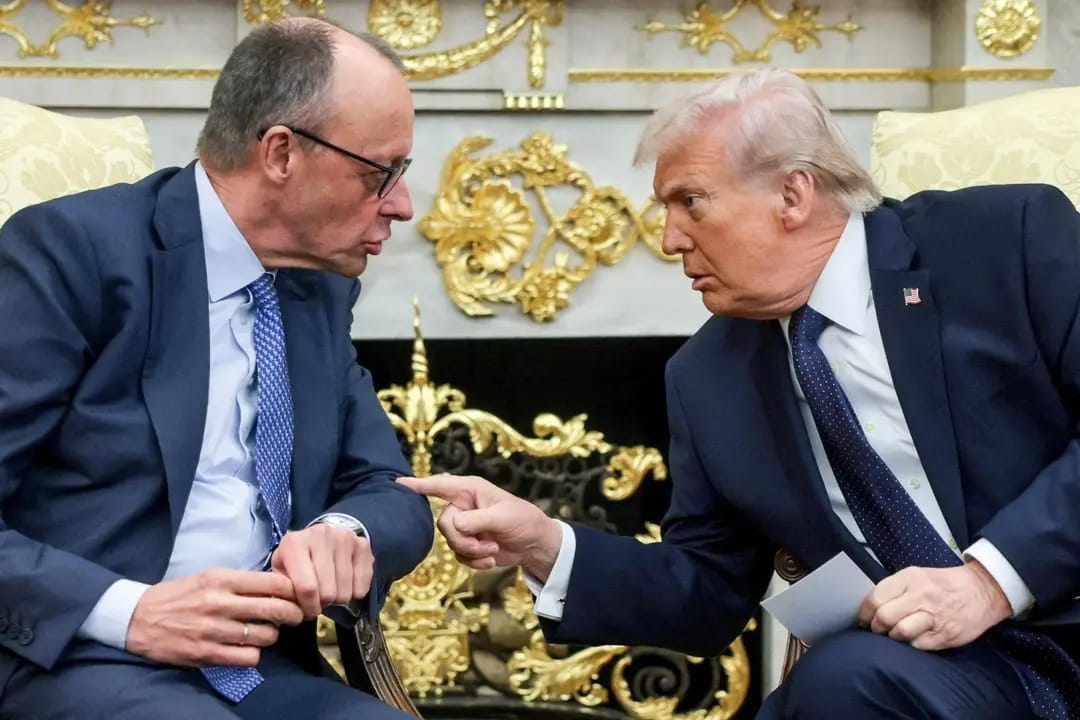
In 2018, when Merz was running for CDU chairman, he promised to “halve” the AfD’s rating. In 2024, as party leader, he repeated that pledge. After becoming chancellor, Merz named fighting the AfD among his top priorities.
The plan worked almost exactly in reverse. In 2018, the AfD was polling at upwards of 14%, which at the time seemed troublingly high. Six years later, polling institutes recorded support for the AfD at 20%. Now, in the second year of Merz’s chancellorship, the party is polling at 28%. In the 2017 Bundestag election, the far right won 5 million votes; in the 2025 election, it won 8.5 million. In 10 years, the number of party members has tripled. What went wrong?
After winning early parliamentary elections, in no small part thanks to right-conservative voters wavering between the CDU and AfD, Merz made systematic efforts to weaken his main opponent. For the chancellor, this appears to have become not only a matter of political expediency but also of personal conviction. Merz’s team used a mixed strategy that, by the standards of political science, seemed promising.
On the one hand, Merz signaled unconditional commitment to the firewall. When asked about the possibility of any cooperation with radicals, he answered briefly: “Forget it!” The chancellor’s principled position and his clear signals that AfD politicians are not patriotic conservatives but populists operating on the edge of constitutional norms were supposed to appeal to right-of-center voters. Merz was not afraid to talk about his own mistakes and acknowledged the success of the AfD’s public relations campaigns in certain political niches, such as criticism of Germany’s migration policy and economic agenda. At the same time, coalition party speakers, showing little diplomatic restraint, attacked the AfD across a full range of sensitive issues, including the closeness of many of its politicians to Russia. CDU lawmaker Mark Heinrichmann called the AfD a “pro-Russian sleeper cell,” while his SPD colleague Sonja Eichwede called its members “accomplices of Russian interests.”
CDU and SPD lawmakers called the AfD a “pro-Russian sleeper cell” and labeled them the “accomplices of Russian interests”
On the other hand, Merz worked hard to seize the initiative from his opponents in the two areas most sensitive to swing voters: migration and the economy. The government passed laws restricting the entry and stay of foreigners, strengthened border controls, and simplified deportation procedures. Conservatives and Social Democrats actively sent the message that they, not AfD, could overcome any current difficulties (the economic crisis, the shortage of highly qualified specialists, capital flight, and excessive bureaucracy) by deploying their extensive political experience and democratic procedures rather than by resorting to populism.
But none of these measures produced the desired effect, and neither did a whole range of challenges that had nothing to do with the Merz government’s efforts to weaken the party. AfD’s rating continued to grow despite the party being classified as right-wing extremist, despite allegations that the leaders of its 2024 party list misused funds and cooperated with Russian and Chinese intelligence services, and despite revelations of nepotism involving the hiring of close and distant relatives for highly paid jobs in parliamentary structures.
Merz failed to convince active and potential AfD supporters that he could respond to current challenges in the way voters would like. By trying to beat the AfD on its own playing field, the chancellor placed himself in a losing position. When passing laws, regulations, and directives, conservatives take many factors into account: their own values, the views of coalition partners, the feasibility of proposals, public opinion, and the legality of their desired moves at the national, European, and international levels.
The AfD operates without these constraints. When the chancellor spoke of changing the “appearance of cities” in the context of migration debates, he not only failed to score points with AfD voters (who are by now closely tied to the party and “choose the original,” as German political slang puts it) — he also came into conflict with his potential allies in the fight against the AfD. Centrists, center-left voters, and leftists saw Merz as an “AfD-lite,” while the SPD came under even heavier criticism for working with him in a coalition government.
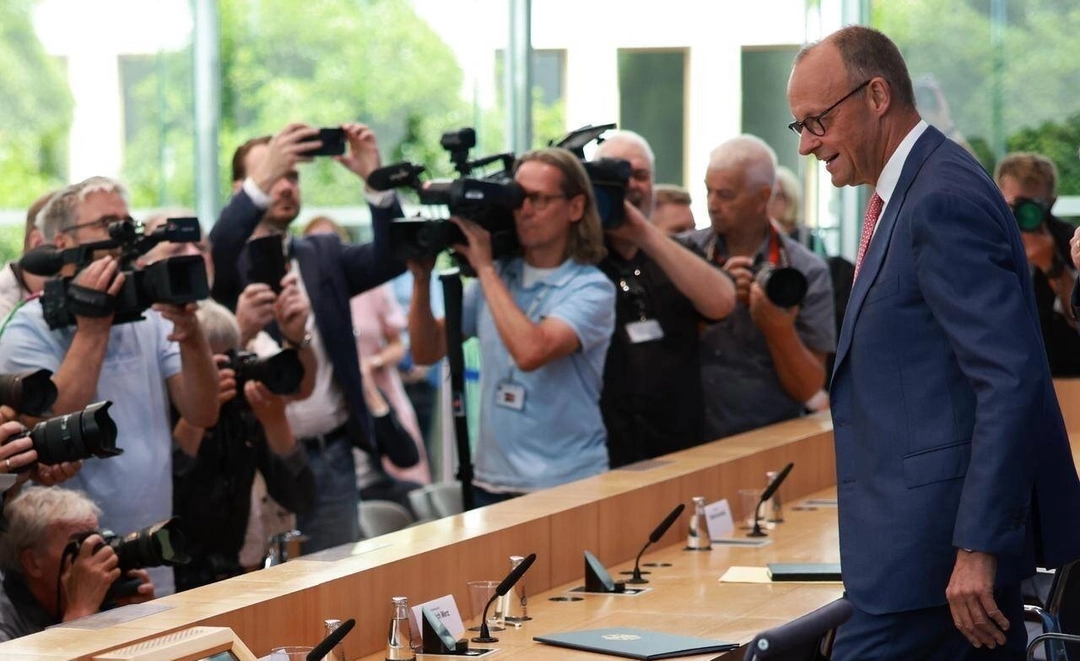
Paradoxically, Merz directly addressed AfD voters only at a news conference on July 15 of this year, urging them to look closely at the government’s work and assess it dispassionately, regardless of ideological preferences. In practice, such an approach is unlikely to work due to the fact that AfD supporters are highly ideological.
Merz also has not gained allies among determined AfD opponents in civil society, who are calling for the party to be banned — or at least for a petition to be filed with the Constitutional Court to examine whether AfD’s program and political actions comply with the foundations of Germany’s democratic order. Such a filing can be made by one of three institutions: the federal government, the Bundestag, or the Bundesrat (the upper house of Germany’s parliament). The conservatives and Social Democrats have enough votes to gather the required support, but this has still not happened.
The CDU is not even ready to support softer initiatives, such as stripping the AfD of state funding or imposing a partial, regional ban — for example, in Thuringia, where the local branch has been classified as being the most right-wing extremist. The conservatives’ motives are clear. They fear that an application to the Constitutional Court could fail due to insufficient evidence that the AfD poses a threat, and that such a failure would only further strengthen the far-right party. Conservative voters might also punish “banners,” a label usually associated with the left. But the government’s passivity is perceived by the AfD’s core electorate as weakness — even helplessness.
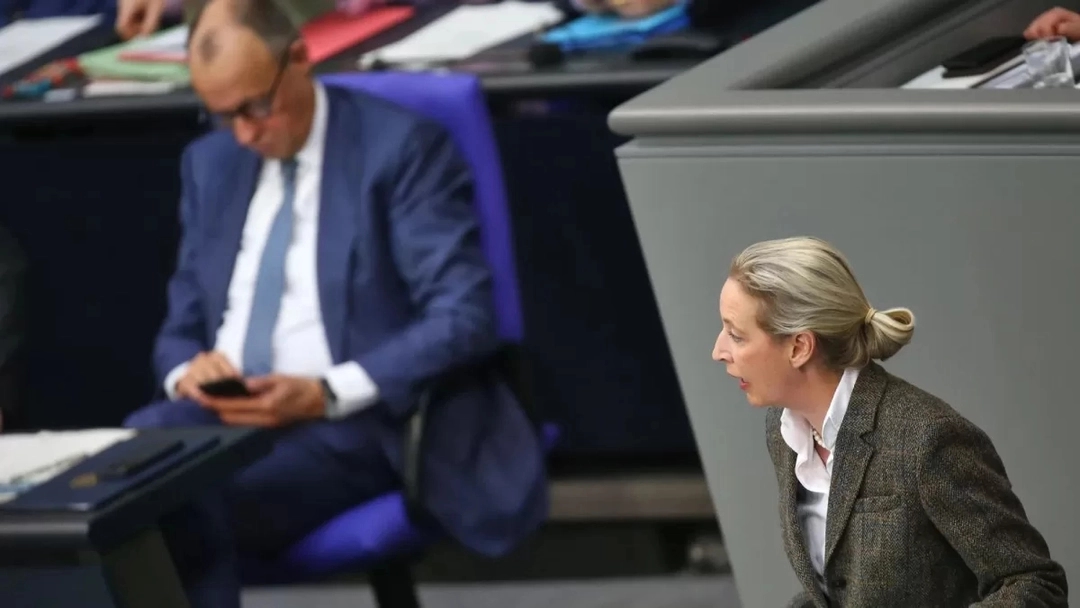
Finally, Merz has so far been unable to outplay Weidel emotionally or rhetorically. AfD is skillfully using the crisis, appealing to voters’ expansive reactions, dissatisfaction, and irritation with the situation in Germany and the world. A potential AfD sympathizer compares the party’s “colorful speakers” with the uncontroversially dry Merz, who is indeed fond of complex explanations. Weidel attacks the chancellor in parliament with deliberately simplistic charges: “Merz is fighting the opposition instead of fighting for Germany.”
“Merz is fighting the opposition instead of fighting for Germany,” says the AfD leader
Her faction colleague Bernd Baumann tries to instill in conservative voters the idea of Merz’s “pseudo-conservatism”: “During the election campaign, he promised us he would put an end to the left-wing dreamers. And what did he do after the election? The first thing he did was form a coalition with the left-wing dreamers.”
A historic crossroads
Germany’s current situation is not unique in Europe. Strong far-right parties have existed for decades in other countries on the continent. Their representatives govern regions, serve as mayors and have even entered national governments in six countries. Often, right-wing radicals have lost power, been forced to compromise in order to enter coalitions with conservatives and centrists, or simply transformed into more moderate political forces. But Germany has important distinguishing features.
The AfD began as a small movement of Euroskeptics, right-conservative university professors, and third-tier CDU politicians who no longer wanted to serve as a “right-wing lightning rod” inside their own party. A chain of events — from global crises to serious mistakes by Germany’s “classic” political players — turned the AfD into a significant political force. After a series of internal upheavals, the party moved ever farther to the right. Today, there is no longer any hope that Alice Weidel will turn into a new Giorgia Meloni. Neither her party colleagues nor the party’s voters, who have very specific expectations, would allow it.
Until recently, one common theory held that it benefited the AfD to remain in “permanent opposition” — criticizing the government, holding parliamentary seats but in essence taking responsibility for nothing. It is now clear, however, that the AfD is seriously seeking power. Its leaders are buoyed by success at a moment when public trust in the governing coalition has reached a historic low, the government has no clear plan to fight its main opponent, the economy is stagnating, a bloody war continues in eastern Europe, and a growing number of Germans are disillusioned not only with parties but with state institutions. A recent poll gave the AfD another advantage, showing that more than half of respondents support fully closing the borders to refugees — 62% believe those arriving in the country do not need asylum but are merely seeking social benefits.
The party leadership does not hide its intention to continue pursuing “normalization through elections.” Its most ambitious declared goal is to become the governing party after the 2029 parliamentary elections. In Saxony-Anhalt, the party will obtain power in one form or another — either through a single-party government, or through a situational majority in the event that no coalition can be formed. A party that leads a region, joins the Bundesrat, and sends state ministers to federal conferences can no longer be ignored: it automatically becomes acceptable to deal with.
There is no universal recipe for preventing such a development. But the government still has a chance if it recognizes the fundamental changes in German politics and can establish an open dialogue with society beyond comfortable offices, including with AfD voters and leftists. The AfD cannot be beaten with slogans alone.
Germany is the key state in the European Union — its political, economic, and now military backbone. A Germany with the AfD in power, standing on positions of national selfishness and isolationism, abandoning sanctions against Russia, threatening the cancellation of aid to Ukraine, and fighting against the creation of a common European security architecture, would cost the whole continent dearly.