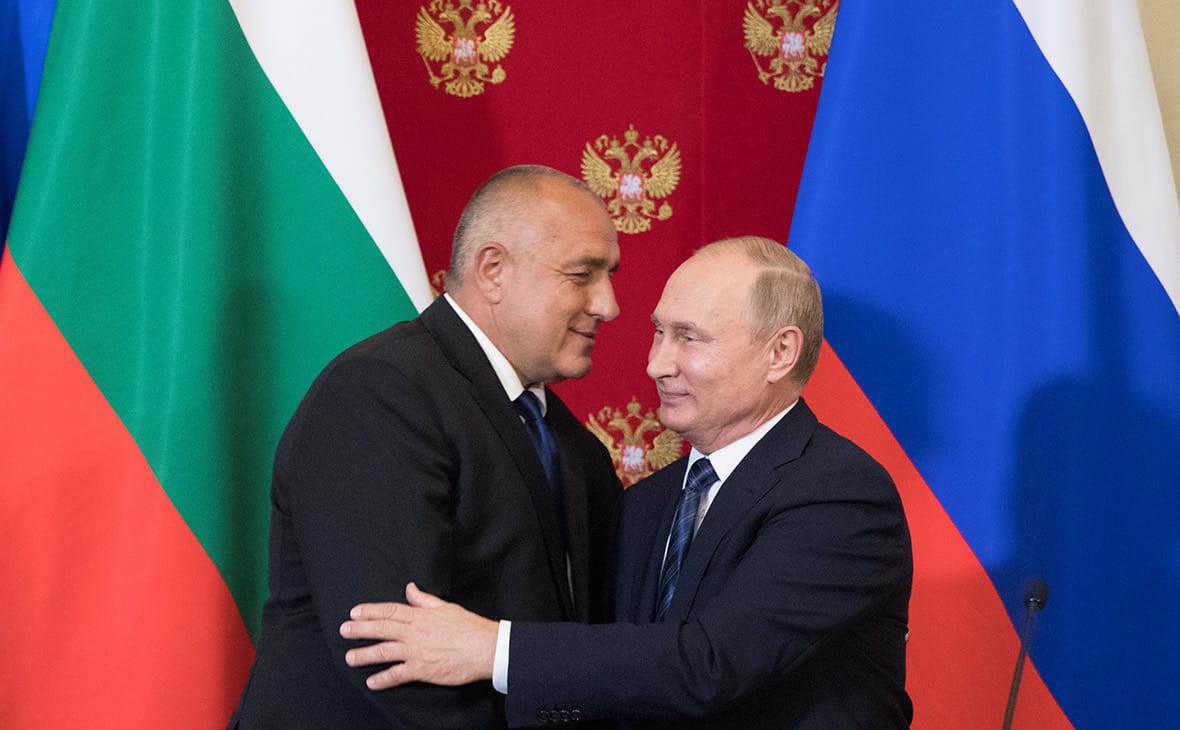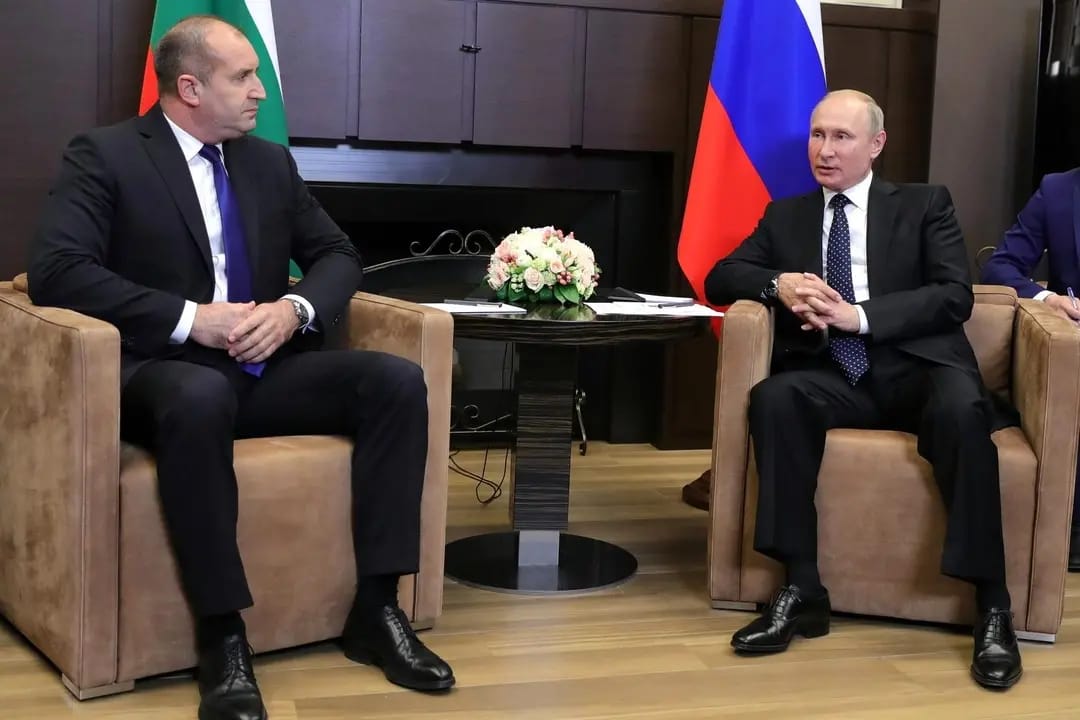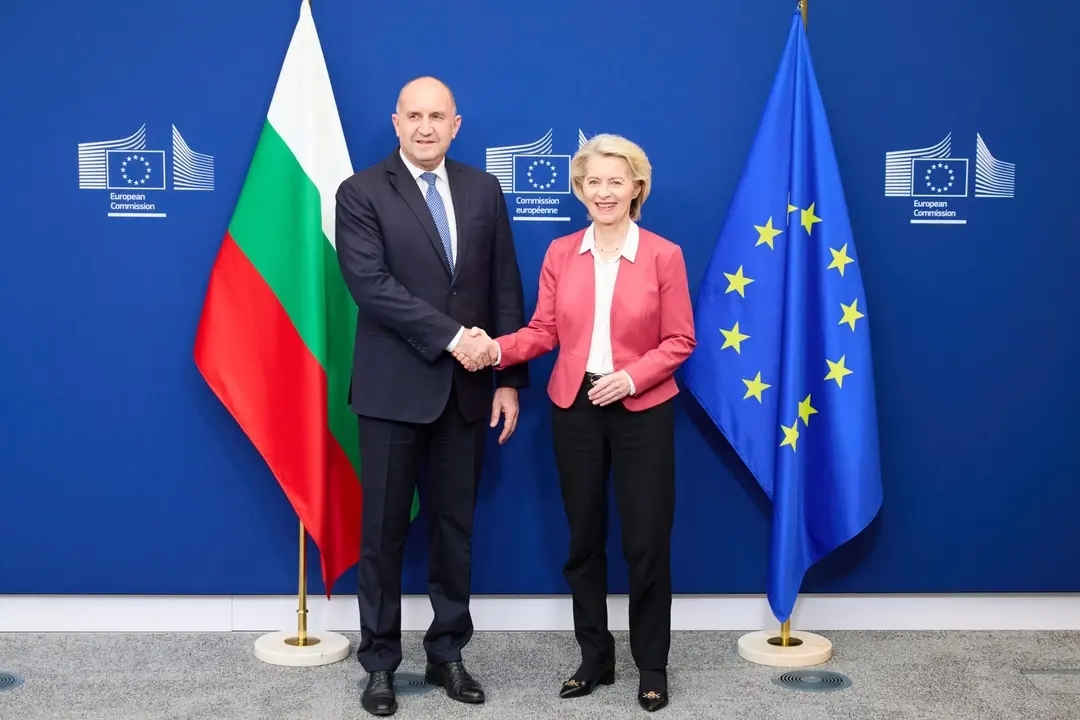
In mid-July, Bulgaria’s new prime minister, Rumen Radev, said the country was leaving the “coalition of the willing” — a group of European states helping Ukraine in its war against Russia. However, the next day Bulgarian Foreign Minister Velislava Petrova still signed a declaration at the Ukraine-Southeast Europe summit in Kyiv expressing readiness to expand work within the coalition. The episode is just one example of the gap between the rhetoric of Bulgaria’s new authorities and their actions. Pro-Kremlin statements by Radev and his allies currently help them retain support among voters at home — and also allow Sofia to benefit from business ties with major Russian companies like Lukoil and Transmashholding. In practice, however, Bulgaria remains committed to its status as a member of the EU and NATO, whose members in turn appear to be comfortable with such compromises as well, writes Dimitar Bechev, a senior fellow at Carnegie Europe.
Is Rumen Radev, Bulgaria’s prime minister, the Kremlin’s best friend among the ranks of EU leaders? Many of his voters — but also nearly all of detractors, in Bulgaria and beyond — think that is the case. Back in 2016, when the former airforce chief won the presidential race, he made his mark by saying, in essence, that Crimea is de facto Russian (and repeating it at a presidential debate in 2021).
Then, in February 2022, Radev predicted that it would only be a matter of days before Putin’s forces marched down Kyiv’s Khreschatyk boulevard. And after winning last April’s general election, one of his first moves was to veto EU sanctions against the Russian Orthodox Church’s Patriarch Kirill and Lukoil’s founder and largest shareholder Vagit Alikperov. In doing so, Bulgaria assumed the role formerly played by Hungary under Viktor Orban, who appears to have found a worthy successor in Sofia.
This is not necessarily how Radev and his entourage see things. “I’d rather draw a parallel with Peter Magyar,” said Slavi Vassilev, a former analyst turned prominent member of the governing Progressive Bulgaria (PB) party. Radev rose to power not because he promised a radical shift in foreign policy, but because he styled himself as a viable alternative to a corrupt mainstream personified by Boyko Borisov, the leader of the centre-right GERB party, and to Delyan Peevski, a shady tycoon who is in charge of the Movement for Rights and Freedoms (DPS) and has been sanctioned by the U.S. and the UK. Externally, PB’s official line stresses commitment to Bulgaria’s EU and NATO membership, albeit with caveats about national interest.
“Bulgaria won’t shoot itself in the leg”
“Bulgaria won’t shoot itself in the leg,” is how Radev justified protecting Alikperov. After all, the Lukoil-owned Neftochim refinery next to the Black Sea city of Burgas, the largest oil-processing facility in Southeast Europe outside of Greece and Turkey, is one of Bulgaria’s top companies. Sofia also bailed out Iskander Makhmutov, an Uzbek-born Russian billionaire, due to the fact that his Transmashholding turned out to be indispensable for the smooth running of the Bulgarian capital’s metro.
For the rest of the EU, trading a carve-out for Bulgarian acquiescence to the bloc’s 21st sanctions package, as well as the broader policy on Ukraine, is probably a deal worth taking. In contrast to Orban, Radev did not block the start of accession negotiations with Kyiv, and Bulgaria has gone along with the 90 billion euro aid package for Ukraine too (though in fairness, it was the caretaker cabinet of Andrey Gyurov, not Radev, voting “yes” in Brussels at the end of April). And Radev was prudent enough not to turn up in Moscow for the annual Victory Day parade on May 9, even if many of his dyed-in-the-wool Russophile fans would have applauded him had he done so.
The “pro-Russian” Radev was prudent enough not to turn up in Moscow for the annual Victory Day parade on May 9
Symbolic moves such as keeping Patriarch Kirill off the EU blacklist cater to the latter constituency, largely made up of defectors from the far-right Revival (Vazdrazdhane) and from the Bulgarian Socialist Party (BSP, heir to the pre-1989 communists). To play to the gallery, the government is giving full-throated support to calls for direct EU talks with Russia and to restoring at least some economic ties.
Between Moscow and Brussels
All in all, Radev has thus far pulled off a balancing act. He is not straying far from the Brussels consensus but is nevertheless creating an appearance that he is doing everything he can to reset relations with Moscow — all in the interest of peace in Ukraine and in Europe, of course.
Truth be told, PB is still learning how to manage the above balancing act. In both the campaign and the immediate aftermath of the April elections, they pumped up expectations that Bulgaria would revise its course on Ukraine. On 9 June, Defence Minister Dimitar Stoyanov declared that Sofia was halting arms deliveries to Kyiv, and the same message was repeated by Radev, who added that Bulgaria had been suffering economic losses because of the war. However, the day after, the government clarified that sales to Ukraine, as opposed to donations from army stocks, were to carry on as normal.
Thanks to its legacy defence-industrial complex, Bulgaria is a leading provider of artillery shells to the Ukrainian armed forces, supplying up to one-third their needs in the first months of the full-scale invasion. Its exports through third countries are booming in a similar way. In 2025, for instance, Bulgaria delivered 22 T-72 tanks, 40 MT-LB tracked transporters, two HMMWV armored vehicles, one BMP-1 infantry fighting vehicle, and 38 D-30 122mm howitzers to the Czech Republic. The UK received 18 self-propelled 2S1 Gvozdika howitzers, three MT-LB transporters, and three BS-3 100mm anti-tank guns.
Chances are these systems made their way to Ukraine as well. During his tenure as caretaker prime minister earlier this year, Gyurov traveled to Kyiv to sign a long delayed defence cooperation deal with Ukraine. It has not been cancelled by Radev’s team. In other words, the image of a U-turn presented in some headlines does not fully match reality.
Bulgaria is a leading provider of artillery shells to the Ukrainian armed forces, supplying up to one-third their needs in the first months of the full-scale invasion
Bulgaria’s attitude to the so-called Coalition of the Willing offers another case in point. During his trip to Paris to attend the July 14 Bastille Day parade, Radev declined to join the informal grouping’s meeting, dismissing the format as irrelevant to European security and saying that Bulgaria has no place in a coalition that is “insisting on continuous financial and military aid to Ukraine.”
But then, on July 15, Bulgarian Minister of Foreign Affairs Velislava Petrova took part in the annual Ukraine-Southeast Europe Summit in Kyiv, where participants hailed the Coalition of the Willing as “an effective mechanism for supporting Ukraine, including in terms of providing Ukraine with robust and legally binding security guarantees.”
All attendees bar Serbian President Aleksandar Vucic, who declined to sign the declaration, expressed their “readiness to enhance…participation in [the Coalition’s] work.” So Bulgaria is like Schroedinger’s proverbial cat: both outside the coalition and within it.
An “ally of Russia” without Russia
If Radev’s objective in all this diplomatic zig-zagging is to curry favor with Russia, he is demonstrably failing. Speaking to RIA Novosti, an unnamed diplomat from the Russian embassy in Sofia put it rather bluntly: “Bulgaria continues to be one of the sponsors of the Kyiv regime, supplying it with vast quantities of weapons and ammunition both directly and through third countries. It has also committed to providing logistical routes in the regime's interest, sustaining its resilience through supplies of energy resources and electricity, and expanding military-technical cooperation."
Despite all of Radev’s rhetoric in support of Russia, the Kremlin still sees Bulgaria as “one of the sponsors of the Kyiv regime”
Radev is currently the closest thing Russians have to an ally in the EU. But judging from the tone of Moscow’s officials, they certainly expect more.
Moscow’s scepticism is something Radev can live with. He has scored points with someone who matters more: Donald Trump. On July 22, the Bulgarian parliament endorsed the stationing of tanker refuelling aircraft at the Bezmer military base. Radev was previously vocally opposed to U.S. military access to Bulgarian infrastructure — indeed, in May, he stated that refuelling planes had to leave the Vasil Levsky airport in Sofia if the U.S. continued to refuse to grant Bulgarians visa-free travel — but as of now, Radev has agreed to move them to Bezmer, in eastern Bulgaria, winning praise by Trump himself on Truth Social (even if no commitment on visas appears to be forthcoming).
Importantly, Trump’s goodwill gives the Bulgarian government some wiggle room on Lukoil Neftochim. Since blacklisting Lukoil last October, the U.S. has repeatedly granted waivers to the Russian firm’s Bulgarian subsidiaries, meaning Lukoil (or, rather, its Switzerland-based subsidiary Litasco) can retain the valuable asset, as well as its network of storage facilities and filling stations. Bulgaria is no longer dependent on Russian natural gas, with Gazprom cutting deliveries in 2022, but it is still entangled into energy trading networks centred in Russia.
Radev’s prospects at home
Radev’s vision for Bulgarian foreign policy is based on the premise that juggling EU membership, ties with Trump, and pragmatism vis-à-vis Russia is a winning formula. He brands it as a defense of national sovereignty, alleging that previous administrations were run by “yes men.” But the substance is not all that different from what Borisov and Peevski stood for in their day, when the TurkStream pipeline was built in record time.
However, GERB and DPS changed their tune after the full-scale invasion — not least as a way to build a coalition with the staunchly pro-Western forces in the liberal camp around the Democratic Bulgaria coalition and Continuing the Change party. Currently, Radev and PB’s pro-Russian rhetoric, which blames Europe and Ukraine rather than Putin for fuelling the war, sets them apart from much of the opposition (Vazdrazhdane excepted).
For now, such talk is primarily for domestic consumption, and there will be more of it in the months to come. Bulgaria is heading into presidential elections, and the current head of state, Iliana Yotova, who served as Radev’s vice president in both his terms, champions the PB line. That opens space for the opposition — whether the kleptocrats or the liberals — to throw their weight behind hardline pro-Ukraine and pro-EU/NATO candidates such as Andrey Gyurov.
Radev and PB’s pro-Russian rhetoric is primarily for domestic consumption
With a solid parliamentary majority, Radev is strong but not unassailable. The recently passed state budget stoked fears of rising public debt and, in due course, a hard landing in the economy after a period of consumption-driven overheating that saw the EU Council open an excess deficit procedure against Bulgaria. Radev has not really delivered on promises to wage an uncompromising war on institutionalised corruption either. Yotova might still win, but she too could find reasons to distance herself from an unpopular government. There is only one direction Radev’s ratings are likely to move from now on: down. Not because of foreign policy, but due to bread and butter issues.