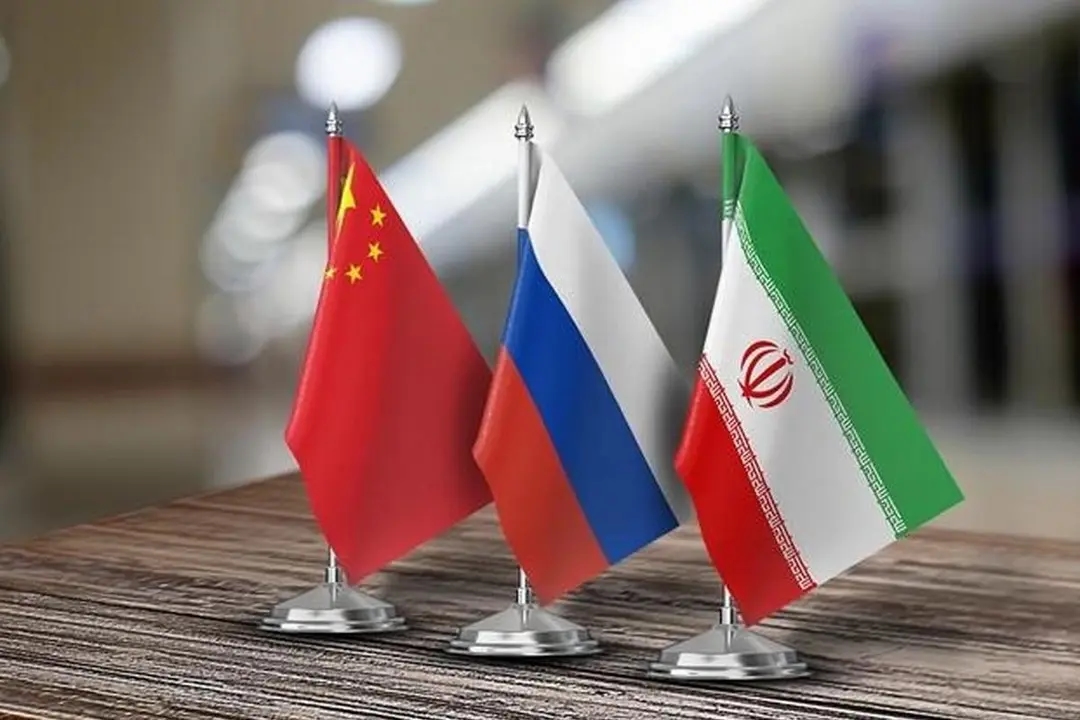

In late July, reports confirmed that China would supply Iran with up to 400 Chinese-made QW-12 and FN-16 man-portable air defense systems, with the first units expected to arrive in the coming weeks. Since the new war began in February, China and Russia have remained Tehran’s only partners — and even they initially limited their support to merely fulfilling existing weapons contracts. By summer, however, the situation had changed: Beijing took the unprecedented step of giving the Islamic Republic access to one of its military satellites, while Moscow transferred drone technology. That led to a dramatic increase in the effectiveness of Iranian forces. After assessing Iran’s resilience in the face of U.S. and Israeli attacks, China and Russia may have concluded that supporting Tehran offers real benefits, writes Antonio Giustozzi, a senior fellow at the Royal United Services Institute (RUSI). For example, Russia may now try to trade an end to its support for Iran in exchange for an end to U.S. aid to Ukraine.
After the Americans were unpleasantly surprised by the greatly improved precision and tactical awareness of the Iranians during the15 days of violent exchanges that followed the collapse of the MoU that had been signed on June 17. These commentaries are mostly intended to support lobbying for extended U.S. support for Ukraine, but they are worth investigating on their own — as we’ll see, there is some substance to them, even if they are not entirely accurate.
After the start of what the Iranians call the 40 Day War, only China and Russia were providing Tehran with any military equipment and technology. As far as it has been possible to establish, these were all military sales, not grants. Initially, to the chagrin of the Iranians, both Beijing and Moscow largely limited themselves to continuing to fulfil existing contracts, largely consisting of components for missiles and drones produced in Iran, along with spare parts for Russian and Chinese equipment already in service with the Iranian armed forces.
After the start of what the Iranians call the 40 Day War, only China and Russia were providing Tehran with any military equipment and technology
The main exception was China’s agreement to supply Iran with satellite intelligence, replacing Tehran’s reliance on GPS with a new dependence on the BeiDou guidance system. Various sources in the Iranian military establishment acknowledge that over the course of the 40 Day War, China appears to have provided Iran with intelligence on the location of U.S. assets in the Gulf. Russia too appears to have shared some intelligence. In addition, sometime after the initial American onslaught, the Russians started providing parts necessary for repairing damaged S-300 batteries — similar to what they had already done after the 12 Day War of June 2025 — while the Chinese started providing parts for their equivalent HQ-9B system, whose batteries were also hit hard in the first few days of the 40 Day War.
Faster missile deliveries
The Iranians repeatedly appealed to Russia and China for speeded-up deliveries of recently ordered equipment. IRGC sources indicate that the Russians agreed to accelerate the fulfilment of a contract signed before the start of the war for the delivery of Moscow’s most modern shoulder-fired anti-aircraft system, the Verba (SA-29), which was initially scheduled to be delivered from 2027 onwards. Around 50 launchers were delivered just before 28 February 2026, along with a supply of missiles. The Chinese, for their part, agreed to speed up deliveries of CM-302 anti-ship missiles at the beginning of March and delivered a first batch in mid-April — before the U.S. blockade had begun affecting Iranian ports facing the Indian Ocean. The Russians also delivered six Mi-28 attack helicopters in February, but it is not clear whether this delivery was accelerated relative to the initial schedule.
The Iranians also sought new contracts for additional supplies — not only weapons systems but in fact primarily more advanced spy satellite capabilities and components for missiles and drones. They also explored the possibility of sales of advanced anti-aircraft missiles, including Russian long-range anti-aircraft S-400 missiles. A source in Iran’s air defence says that Iran has approached China for HQ-9Cs, a more advanced version of the HQ-9Bs already used (very ineffectively) by Iran in the 40 Day War. Another air defence source had reported the sale of medium-range anti-aircraft systems HQ-16Bs to Iran — with quick delivery — but so far there is no confirmation from Iranian sources of any shipments having actually taken place. Negotiations over the purchase of J-10C fighters with China were reportedly still ongoing in June.
Iran sought to secure contracts for the supply of more advanced weapons
In any case, long-range systems and combat aircraft would take so long to acquire and integrate into Iran’s air defense network that they could not have an impact on the ongoing confrontation, even if it were to last several more months. As indicated by sources in Iran’s air force, while Russia recently informed Iran about being ready to deliver the first twenty of the Su-35s that Tehran ordered in 2023, the Iranians decided to delay the shipment due to the resumption of hostilities with the Americans. The new fighters would have been so vulnerable to U.S. airstrikes once in Iran that they simply could have been incinerated before even making it to the underground facilities that have so far sheltered the bulk of the Iranian air force. Even as the equipment necessary to maintain and operate the new planes started arriving in Iran, the Su-35s served Iran’s interest best by waiting in Russia.
Simple but effective solutions
Thus, the Iranians prioritised purchases of equipment that they could rush into service. Even though Tehran already had thousands of shoulder-fired portable short-range anti-aircraft missiles in its arsenal, they added even more thanks to the simple fact that they could be integrated in a matter of days. Having ordered the Russian Verba (as mentioned above), they also urgently sought Chinese equipment of the same class. An IRGC source indicated that the Chinese started delivering FN-6 shoulder-fired anti-aircraft systems in May, but it is not clear when the order was placed. Given that the FN-6s are now rather antiquated, it is possible that these were not new production stocks, but stored systems. Iran kept seeking more advanced models, and on July 29 Reuters reported that Iran and China had signed a contract for the delivery of FN-16 (an improvement of the FN-6) and of the modern QW-12 shoulder-fired anti-aircraft systems. An IRGC source confirmed that deliveries would start as soon as August.
Another example of resources that Iran was able to usher into service promptly is drone technology. Throughout the 40 Day War, IRGC sources frequently noted that the Iranians had approached the Russians multiple times regarding the technology Moscow employs on drones such as the Geran-2s and -3s. The Iranians have always privately acknowledged that they lagged seriously behind in terms of electronic countermeasures, hence their interest in Russian solutions. However, until mid-June, the Russians did not agree to share the technology, according to IRGC sources.
Unexpected support
During the 15 days of clashes that followed the collapse of the MoU that had been signed on 17 June, however, two important developments took place, according to IRGC sources. The Russians started providing advanced electronic components for drones and missiles, in particular countermeasures such as the Kometa-M anti-jamming system, which the Iranians integrated on their drones within days and resulted in much greater effectiveness in the strikes carried out during this period. And the Russians also provided electronic countermeasures for ballistic missiles that work to confuse enemy anti-aircraft systems.
Again according to IRGC sources, another important development involved the Chinese loaning one of their military satellites to Iran, thereby giving Tehran’s forces the capability to monitor developments in the region in real time and to deliver ballistic missiles on target at very short notice. The combined effect of these innovations was greater than anything else Russia or China had provided to Iran up to that point and resulted in greater Iranian effectiveness.
China loaned one of its military satellites to Iran in an unprecedented move
It was thus China and not Russia that provided satellite intelligence, according to Iranian accounts, although it was indeed Russia that supplied improved anti-jamming and other technologies. The most ground-breaking development among these was no doubt China’s satellite loan (given that transferring drone technology is by now a very well-established practice worldwide). Lending a military satellite to Iran is in fact certainly a first for China — and not only for China — signalling a rising degree of commitment from Beijing to prevent an undesired outcome to the conflict. It is possible, even likely, that Russia’s and China’s moves were coordinated, given that they occurred almost simultaneously.
Russia and China’s motives
It is not clear what exactly convinced Russia and China to take actions that they had avoided back when Iran was under much greater pressure in the middle of the 40 Day War. IRGC sources say that diplomatic contacts are ongoing between Beijing and Tehran. The Chinese are trying to convince the Iranians to accept Pakistani mediation to end the conflict with the U.S., they say, but the Iranians say they will never trust the Americans again after having been cheated multiple times already. The Iranians are asking the Chinese to become guarantors of a future agreement with the Americans, as a necessary precondition for the Iranians to sign anything. There is no indication as to what the Chinese are considering, but the satellite loan, plus the continuing deliveries of military parts and equipment, seem to suggest that China is gradually getting more involved.
In practice, however, it is hard to see how China could offer Iran any credible guarantee of enforcement for any deal struck with the Trump administration without establishing a direct military presence in the Gulf. That is probably the last thing the Trump administration would like to see, and it is not even clear that Iran itself would want Chinese military forces stationed on its territory, let alone that China would consider such an effort to be worth the cost.
A scenario in which China becomes Iran's security guarantor is the one the U.S. would most like to avoid
Two other possible reasons for Russia and China to get engaged more deeply on Iran’s side are the resilience shown by the Islamic Republic, which makes supporting it a more convincing proposition, and the desire to let Washington know that American attempts to coerce its way out of a difficult predicament will backfire. For Russia, an additional reason could be to send Washington the message that Moscow has plenty of room for retaliation if the U.S. were to extend the level of their support for Ukraine. These different rationales for supporting Iran are not mutually incompatible and could all apply in some measure.
The Russians consider the intelligence provided to Kyiv by the U.S. to be a key factor enabling Ukraine to evade Russian air defenses when carrying out strikes on a range of targets deep in the enemy’s rear. There have even been media reports claiming that back in March Putin offered Trump a trade: ending Russian support for Iran in exchange for the cessation of such U.S. help to Ukraine. Trump did not show much interest, so it might be that Putin decided to raise the stakes.