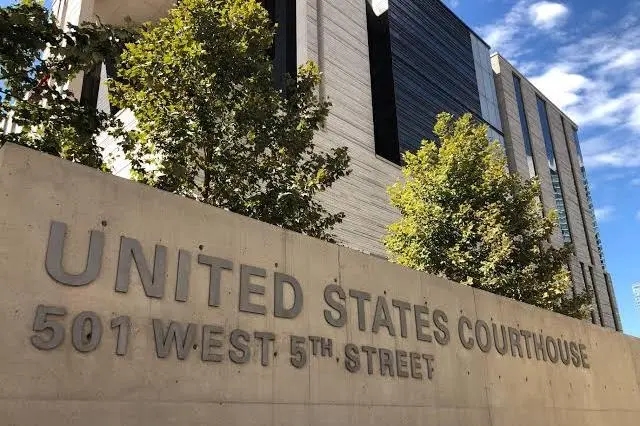
On Sept. 2, a federal court in Austin, Texas sentenced Armenian citizen Kamo Kirakosyan to two years and two months in prison for taking part in a criminal conspiracy to illegally export goods from the United States to Russia through Armenia. The sentence was announced by Justin Simmons, U.S. attorney for the Western District of Texas. In April, Kirakosyan pleaded guilty to one count of conspiracy to violate U.S. federal law.
According to the indictment, from February 2022 to August 2024, Kirakosyan acted on behalf of his accomplices in Russia as a front buyer for U.S.-origin goods, including components that can be used in semiconductor production. The investigative bureau TriTrace Investigations previously found that Kirakosyan was a supplier for the Russian company Vacuum.ru JSC.
The case involves three procurement episodes:
- In March 2022, the purchase of a Matrix switching module for $2,316, which was shipped to Russia at a price of $3,290.
- From March to September 2023 — that is, after Vacuum.ru was added to the U.S. Treasury Department’s Specially Designated Nationals (SDN) sanctions list on Feb. 23, 2023 — the purchase of sputtering targets for $1,870, which were resold to the customer for about $3,050.
- An unsuccessful attempt to buy an LSC-4000 cleaning system, which can be used in semiconductor production.
For the two successful shipments, Kirakosyan received just over $2,000.
Kirakosyan presented himself to U.S. companies as a buyer from Armenia, concealing the goods’ final recipients. According to the TriTrace Investigations report, the second defendant in the case is the de facto CEO of Vacuum.ru, believed to be Sergei Rozanov, who coordinated the purchases and sanctions-evasion scheme. Other company employees, Yelena Larionova and Konstantin Orlov, are also mentioned, though they have not been charged.
Kirakosyan was detained in Germany in July 2024 and extradited to the United States in August 2025 with assistance from the Justice Department’s Office of International Affairs and the FBI’s Berlin office. The investigation was carried out by the FBI counterintelligence task force in San Antonio together with the U.S. Commerce Department’s Bureau of Industry and Security.