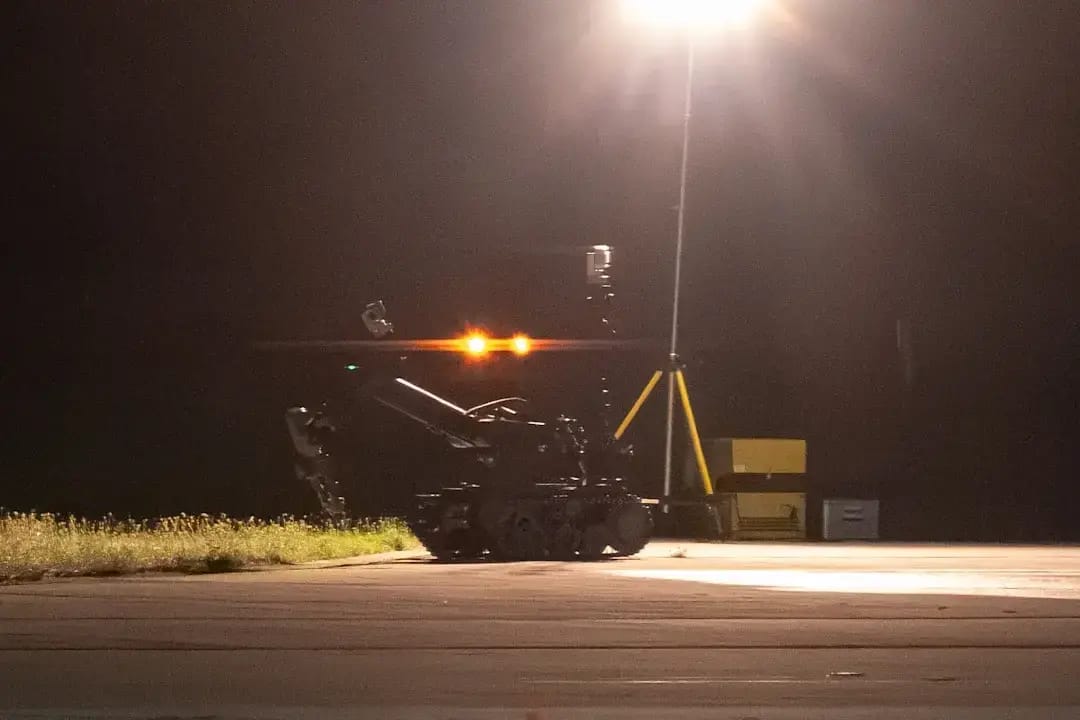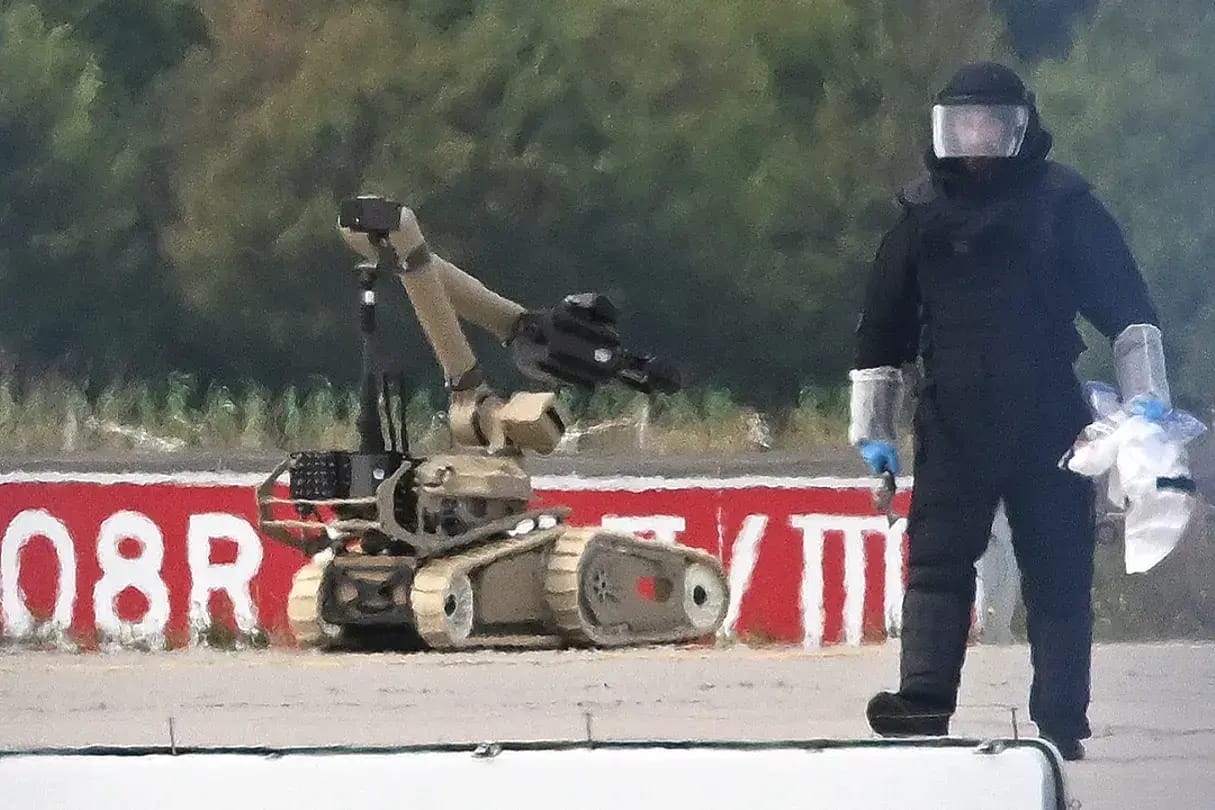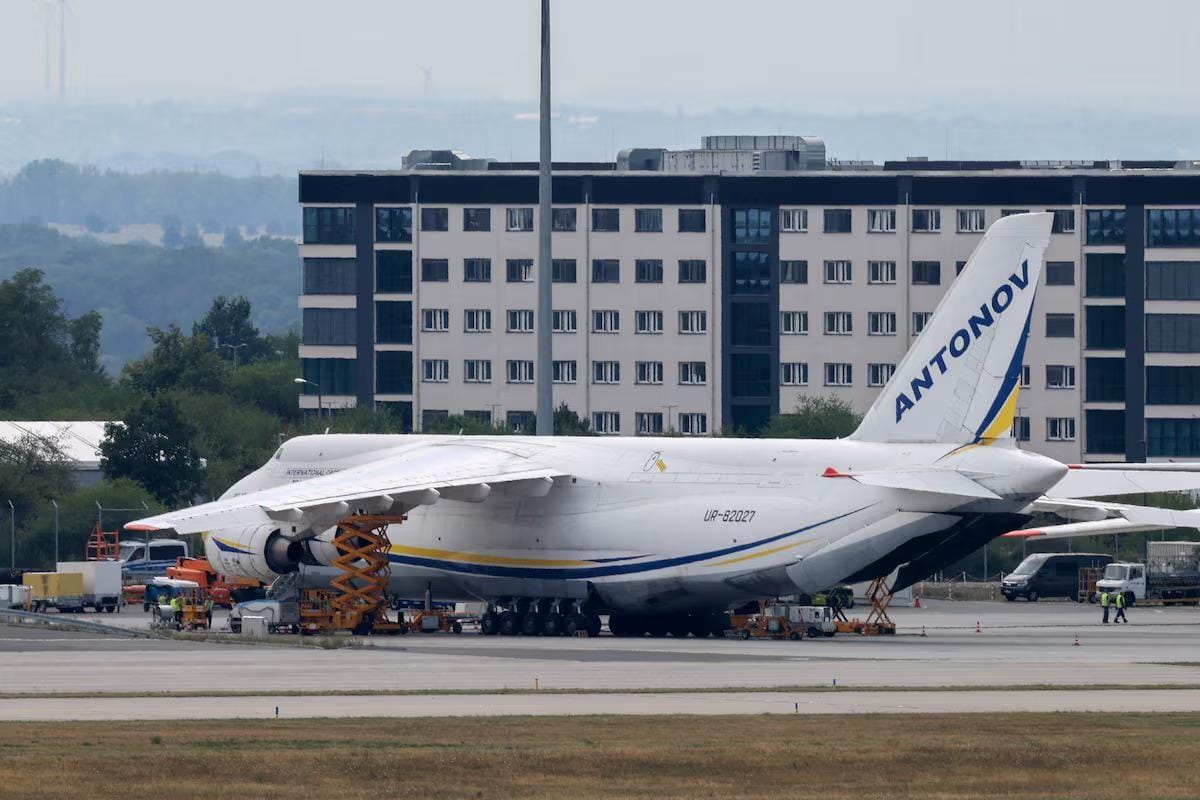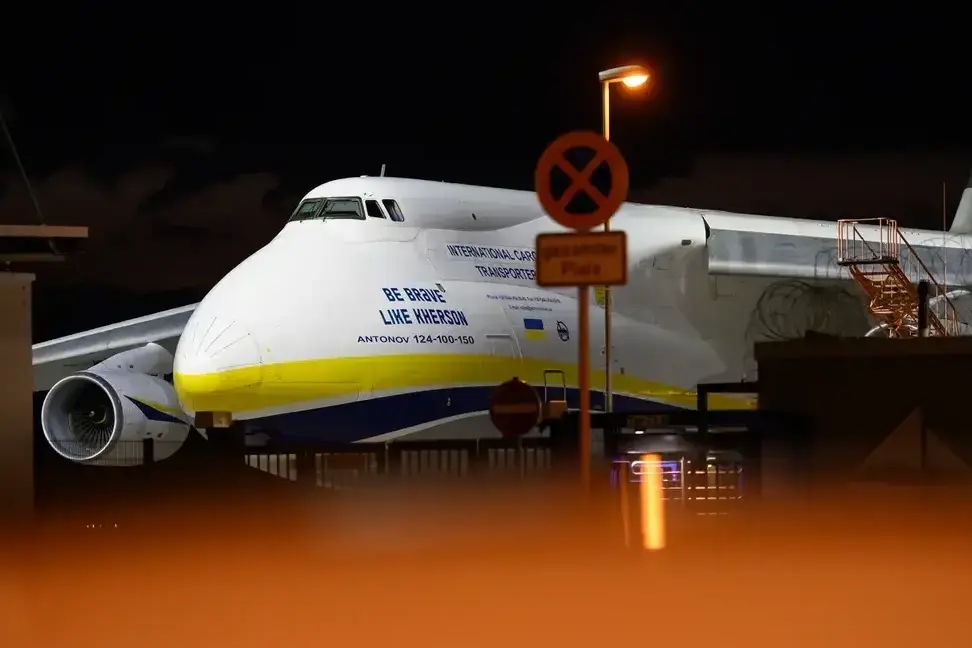
Investigators in Germany believe they have identified two likely perpetrators of a failed plot to blow up cargo aircraft at Leipzig/Halle Airport in early August, according to a report by Süddeutsche Zeitung, NDR, and WDR. One suspect was born in Russia and holds a Latvian passport; the other was born in Belarus, holds a Russian passport, and has previously faced legal proceedings in several countries. Investigators believe both are linked to the attempted bombing of a Ukrainian An-124 cargo transport plane on Aug. 4, which German authorities this week formally blamed on Russia.
At a news conference, German Interior Minister Alexander Dobrindt said the attempted terrorist attack had been planned and carried out professionally, adding that the attack involved “a high level of technical expertise and considerable organizational effort.”
Dobrindt added that the Aug. 4 incident bore the hallmarks of a “familiar pattern of Russian hybrid operations in Europe.” He said available information pointed to people acting “on behalf of Russian state authorities,” referring to them as “low-level agents.” Dobrindt did not name the suspects or explain why investigators linked the attack’s organizers to Russian intelligence services, saying that the probe was ongoing and required “the highest level of information protection.” Later that evening, Die Zeit reported that Germany’s federal prosecutor’s office was pursuing a case against two defendants.
German investigators believe the first suspect served as a logistics coordinator and instructor for the planned attack. According to Süddeutsche Zeitung, NDR, and WDR, he entered Germany in late July through Berlin’s Brandenburg Airport, then drove in a rental car toward Leipzig. Two days before the attempted attack, he departed Germany via the airport in Berlin.
The second suspect was identified through DNA found at the scene of the crime — on the inside of a tin can containing explosives, and on an antenna mounted on a tree near the airport. A check of the samples against European databases produced matches in Lithuania and Finland. Investigators determined that the suspect had entered Germany on an Italian tourist visa, which they believe was issued in late April by the Italian consulate in Minsk.
Investigators are reportedly skeptical about the chances of bringing the suspects to justice. In past instances, including after the 2015 hack of Bundestag servers, German authorities were unable to detain agents who did not return to Europe. Meanwhile, experts from the BKA, Germany’s federal criminal police office, say it is possible that drones in addition to the three found at the airport may have been used in the failed attack.
Meanwhile, the Russian Embassy in Berlin called the incident a “hastily concocted provocation,” claiming it was concerned about a “new wave of anti-Russian hysteria” in Germany.
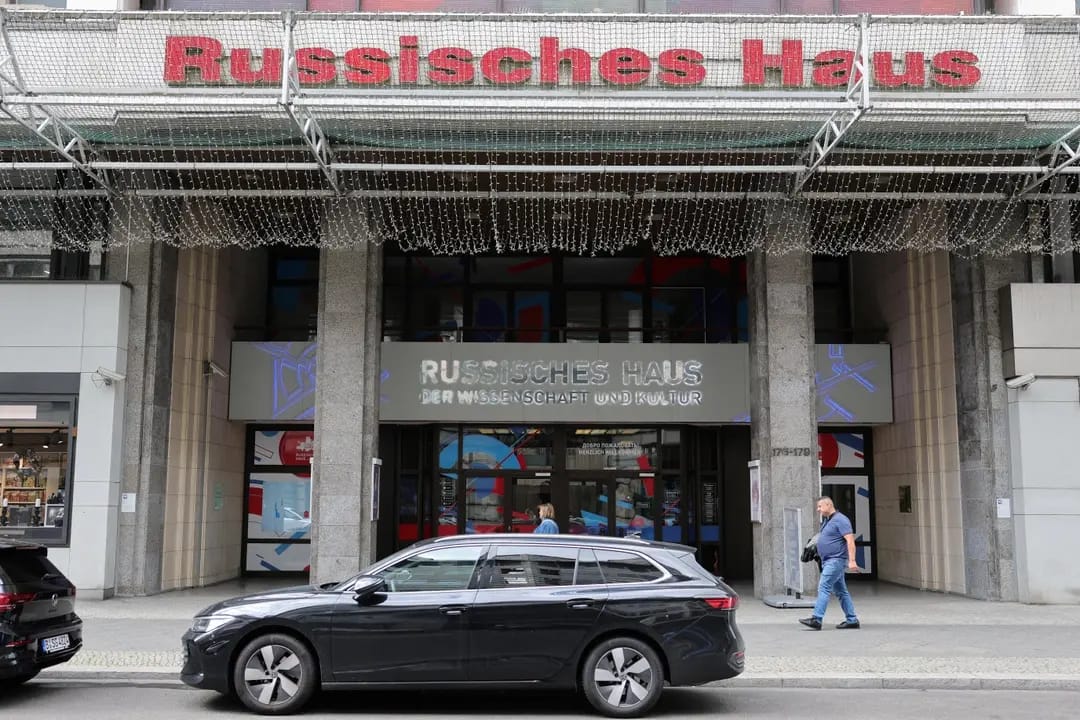
On Sept. 1, German authorities for the first time formally blamed Russia for the events in Leipzig while announcing the closure of Russia’s consulate general in Bonn and the Russian House in Berlin in response to the incident.