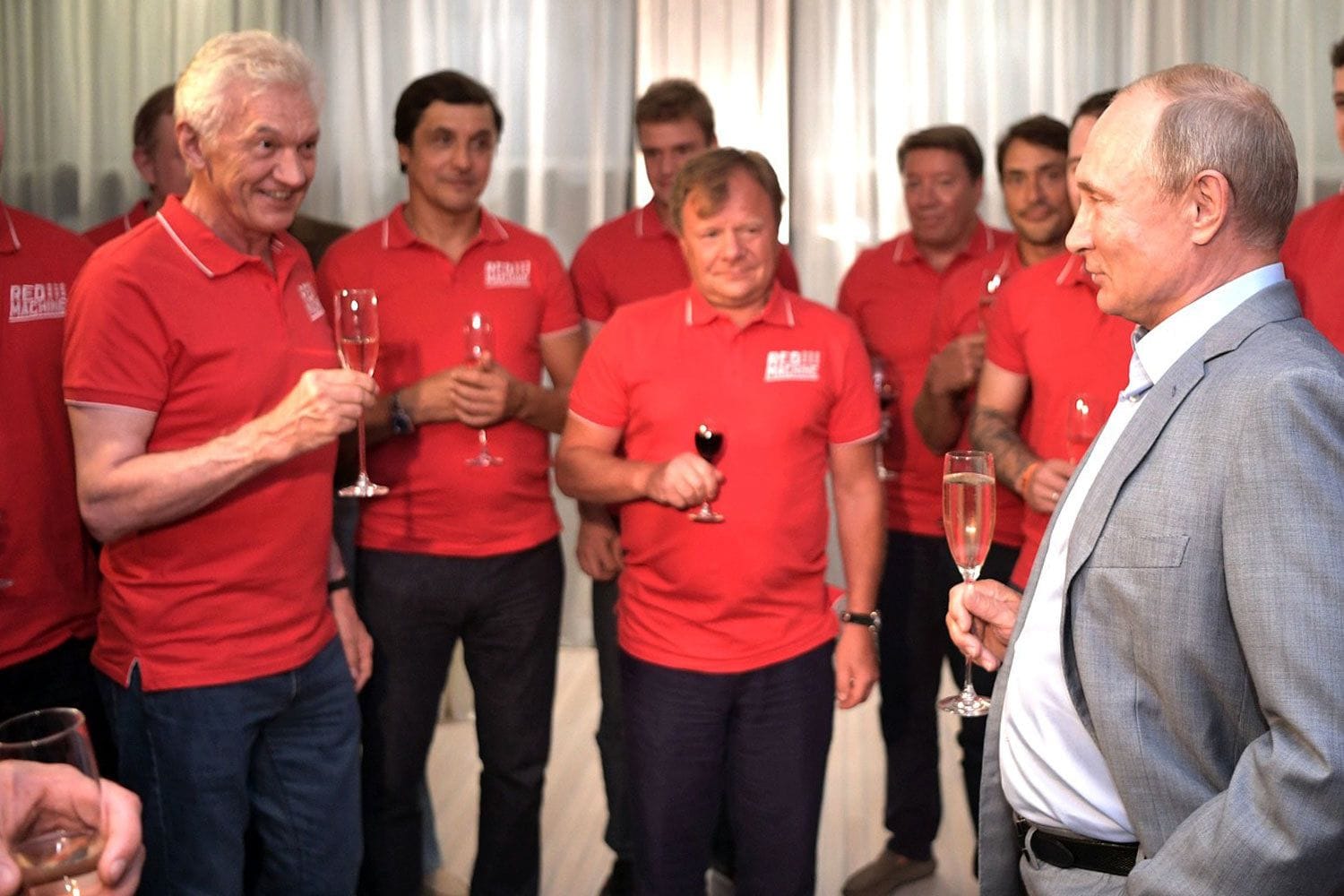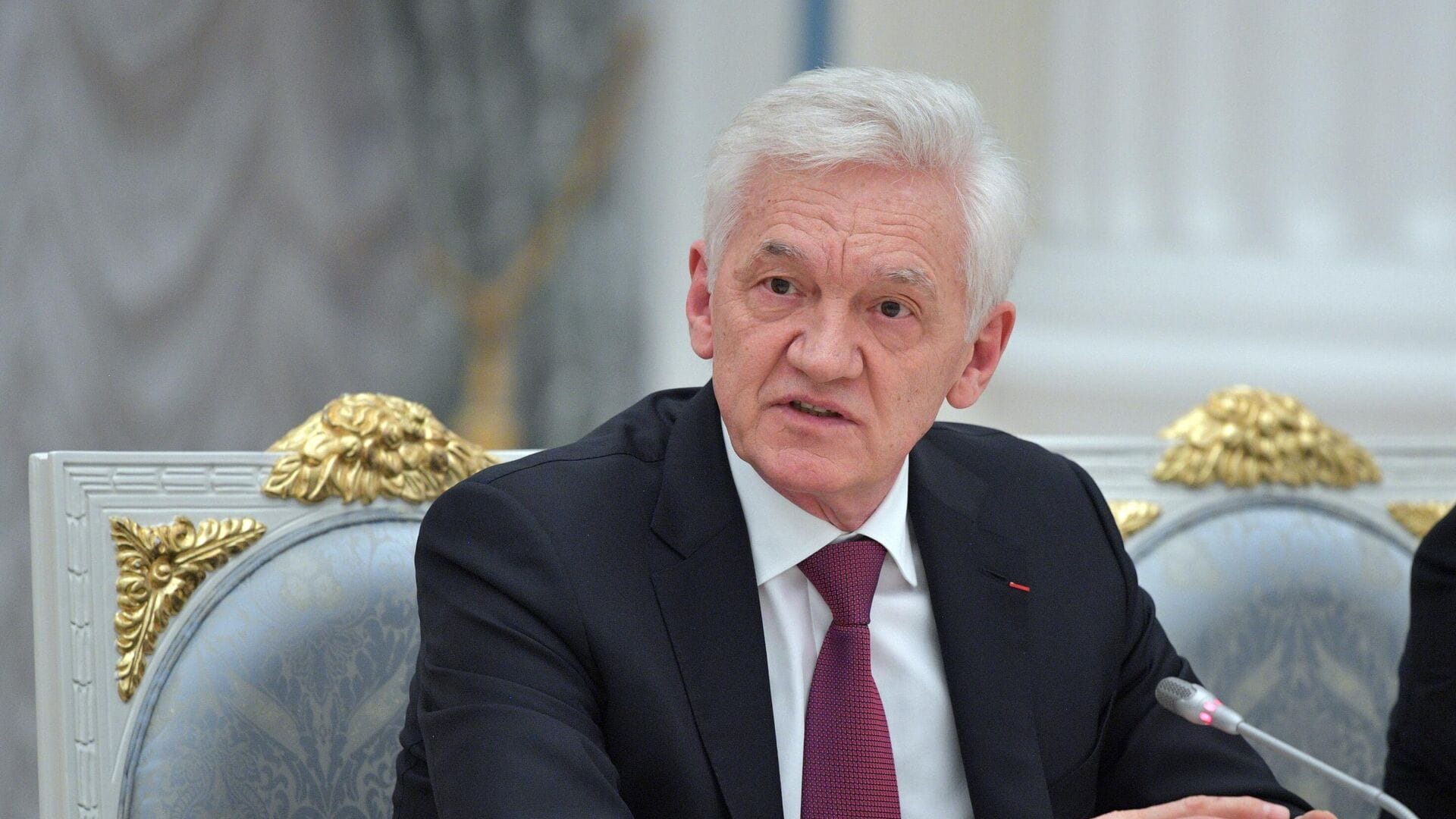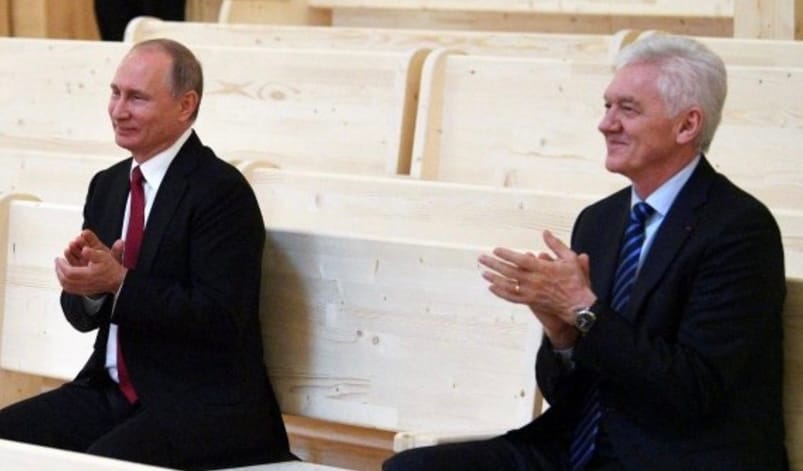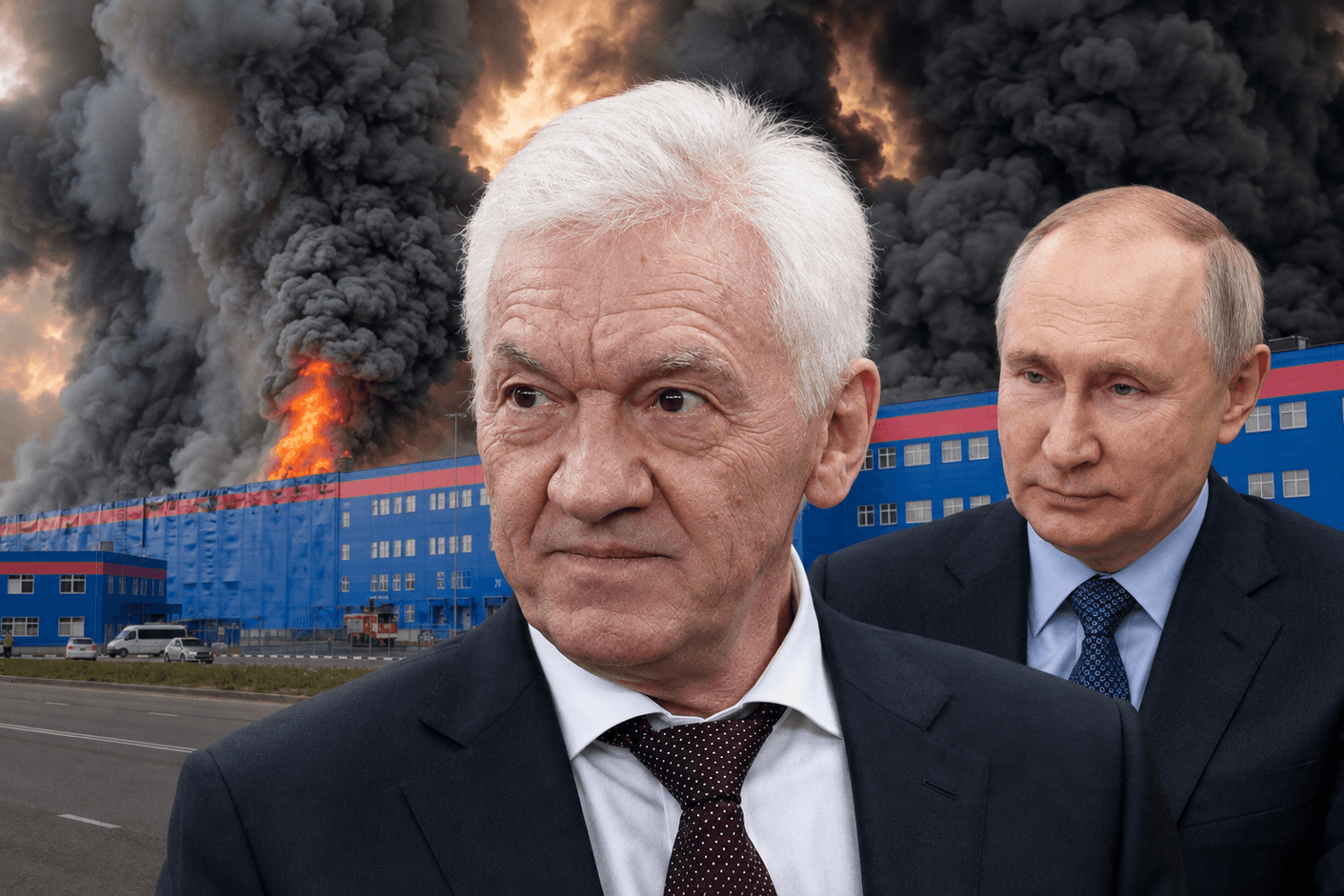
The late Alexei Navalny’s Anti-Corruption Foundation has found that the purchase of roughly 34% of the major online retailer Ozon, previously owned by investment fund Baring Vostok, was financed by a company belonging to Gennady Timchenko, a billionaire and close friend of Vladimir Putin whom investigators call one of his “wallets.”
After Baring Vostok exited Russia, its stake in Ozon ended up with O23, a company established shortly before the deal. Investor Alexander Chachava was named as the formal ultimate owner of the stake, and the deal was valued at roughly 38 billion rubles ($441.3 million). However, the ACF took note of O23’s filings: since August 2024, its owner has been listed as an unnamed joint-stock company, with Alexei Yegorov as director. By matching identical loans between companies headed by Yegorov, investigators concluded that O23 belongs to JSC Korporatsiya 42, which in turn belongs to the investment group Stratosfera.
Stratosfera, which the ACF links to Chachava, received loans and credits totaling 51,230,297,000 rubles ($594,765,305) in 2024. Investigators compared this amount to the financial filings of Russian companies and found an almost mirror-image transaction at JSC Optima, which the ACF identified as the company that provided the funds to Stratosfera. The ownership and financing chain went as follows: Optima → Stratosfera → Korporatsiya 42 → O23 → roughly 34% of Ozon.
The next link in the chain was established using Optima’s own filings. Optima received almost the same amount in the form of an interest-free loan from a company called Delta, which belongs to Gennady Timchenko, according to the investigation. The ACF also pointed to the ties between Optima’s staff and Putin’s inner circle: its current director, Darya Bryliakova, worked at organizations linked to the president’s nephew Mikhail Shelomov and to long-time Putin associate Yuri Kovalchuk; the previous director, Anastasia Yuldasheva, worked at Shelomov’s company Aktsept; and the chief accountant, Zhanna Tsapleva, previously worked at a company belonging to Svetlana Krivonogikh, the mother of Putin’s illegitimate daughter.
Based on these findings, the ACF concludes that the Ozon stake was acquired with Timchenko’s money.
Investigators describe Timchenko himself as one of the holders of Putin’s money. As the ACF has previously reported, structures linked to Timchenko financed the construction of Putin’s palace in Gelendzhik and covered his family’s expenses.
The investigation into Timchenko’s connection to Ozon was released after a series of Ukrainian attacks against the online retailer’s assets. Ukrainian drones first struck the marketplace’s logistics complex in Chapayevsk, Samara Region on Aug. 22. The following day, a strike hit a facility in Orenburg, and on the night of Aug. 24, drones struck Ozon warehouses in Dagestan, Adygea, Krasnodar Krai, and Stavropol Krai. Fires broke out at the facilities near Krasnodar and Makhachkala, and their operations were halted.
Then, on Aug. 24 Putin signed a decree allowing companies’ property to be placed under temporary state control if authorities determine that they are not adequately protecting critically important facilities, including against drones. The mechanism explicitly covers transport and logistics infrastructure facilities, among others. One of the stated grounds for imposing temporary control is “ineffective implementation of measures” to prevent drone attacks.
Three days later, the government set up a subcommission headed by First Deputy Prime Minister Denis Manturov to assess the security of important facilities, oversee their restoration, and prepare measures to ensure the uninterrupted operation of certain industries. The government will be able to place a company’s property under temporary control based on little more than Putin’s instructions.