Employees of St. Petersburg’s Kontakt social center and representatives of the Russian Interior Ministry’s Center for Countering Extremism (also known as Center “E”) are preparing to conduct raids at shopping malls and other places where teenagers and young people gather. The measures are expected to begin in August and September, according to an excerpt from a city juvenile affairs commission resolution published by the Telegram channel Ostorozhno, Peterburg. The local outlet 78.ru also reported on the document.
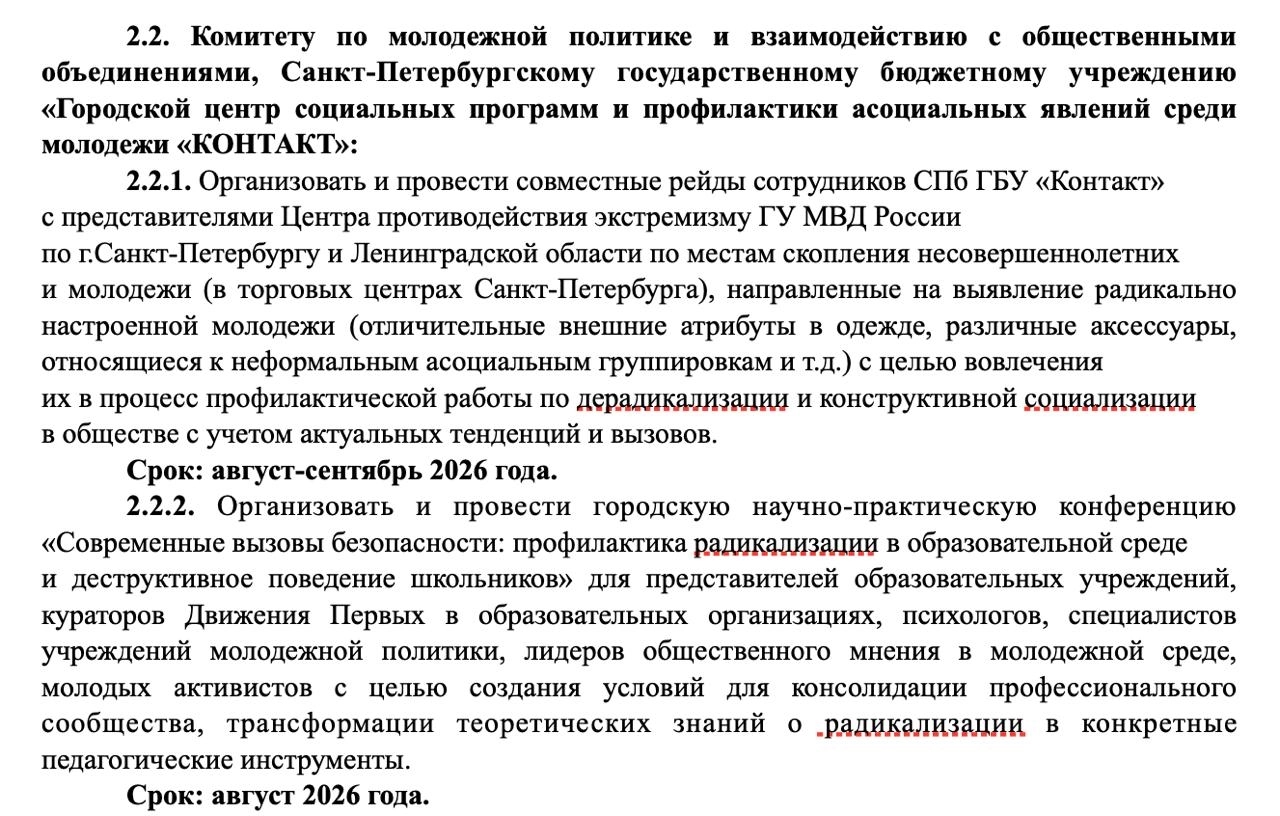
Law enforcement officers have been instructed to identify “radical-minded youth” by looking for “distinctive external attributes in clothing” and accessories that could indicate possible membership in “informal antisocial groups.” Such teenagers will be targeted for further “preventive” work aimed at “deradicalization and constructive socialization.”
The published materials do not explain which specific items of clothing or symbols the authorities consider to be signs of “radical” views. They also do not say whether the raids will involve document checks, questioning, or the collection of teenagers’ personal data.
The decision is being justified by reference to a rise in juvenile crime. According to data cited by the commission, 339 crimes committed with the participation of minors were registered in St. Petersburg in the first half of 2026, up 26% from a year earlier. About half were classified as serious or especially serious crimes.
The commission’s materials also mention the alleged disruption of a school attack in the Vasileostrovsky District that was supposedly prevented in January. The document claims that a 14-year-old native of Kyrgyzstan entered into correspondence with an unidentified person on Telegram and acquired weapons and equipment, but was detained before carrying out the plan. According to the report, the teenager was expelled from Russia, and a case involving charges of aiding terrorist activity was opened against the alleged handlers.
Another area of prevention for the upcoming campaign will be youth “cyber patrols,” 78.ru reported. By December, the Russian authorities plan to recruit active students to monitor social media for information about “roofers,” a subculture known for climbing onto roofs, bridges, and other high structures, then posting photos or videos of the feat.
In May, the Russian government instructed regions across the country to develop “cyber patrols” and “media patrols” focused on young people’s online activity. Rosmolodezh, Russia’s federal youth affairs agency, told the Kremlin-aligned news outlet RBC that “cyber patrols and media patrols” in their current form have operated since 2023. The agency described them as “volunteer youth associations” at schools, vocational schools, colleges, and universities that monitor online posts for “materials aimed at involving the younger generation in activities that threaten their life and health.”