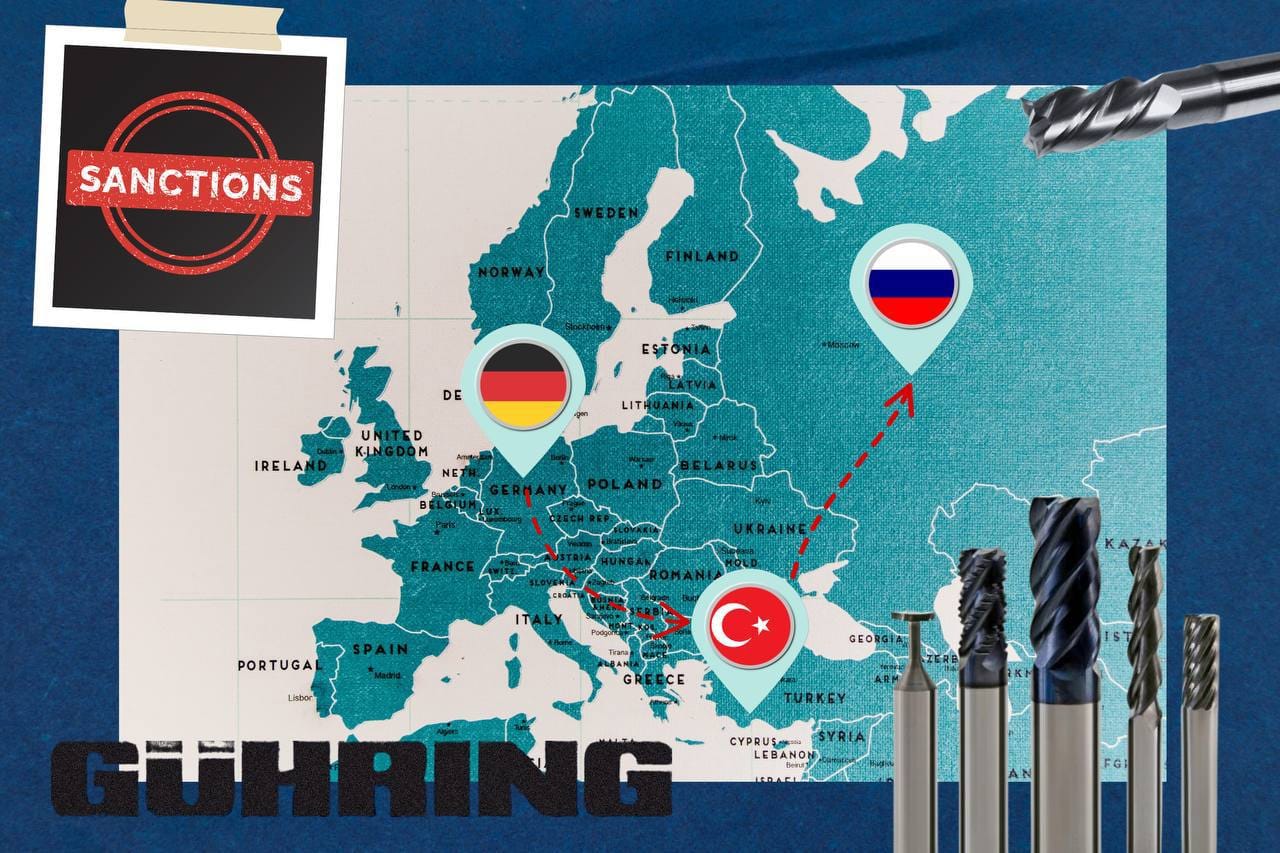
Metalworking tools made by the German company Gühring continue to be supplied to Russia despite their use by dozens of defense plants — from the Kalashnikov Concern to PO Mayak, which produces plutonium for nuclear weapons. The Insider found information on 280 contracts for the purchase of Gühring tools signed from 2015 to 2023. After the start of Russia’s full-scale invasion of Ukraine, Gühring KG said it had cut ties with Russia and deconsolidated its former subsidiary, Gühring LLC. However, the Russian company continued to receive German-made tools and supply Russian defense plants.
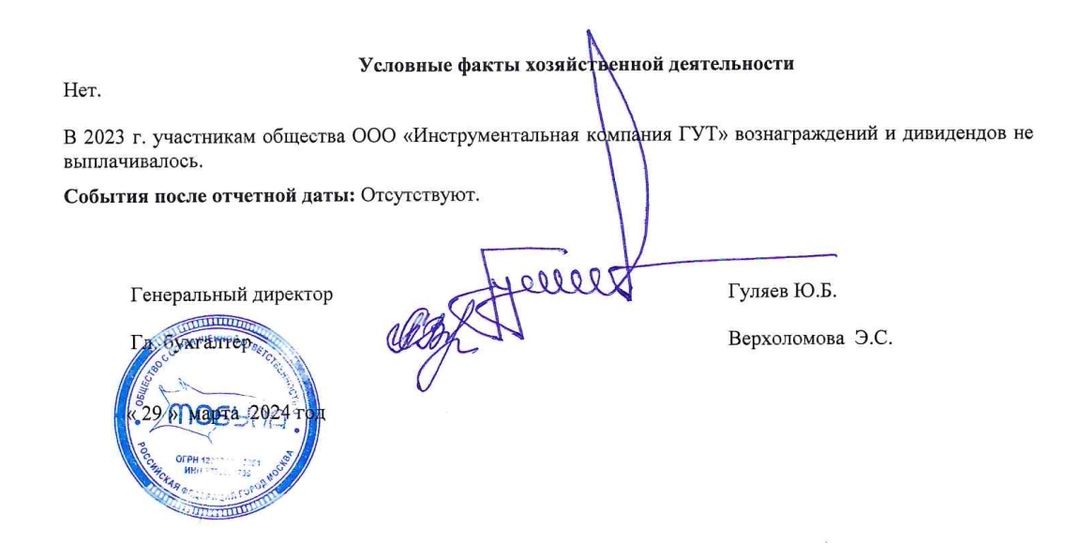
In 2023, a Nizhny Novgorod toolmaking plant opened by Gühring in 2016 came under the management of Mobula, a company owned by Yury Gulyayev, the director of Gühring’s former Russian branch. After the German company’s declared withdrawal, the former hired manager founded a company that immediately reached billion-ruble turnover. Despite claims that the two companies are independent of each other, Mobula’s catalog consists entirely of items from the Gühring KG catalog.
How Russian sellers of Gühring tools are linked to the German company
In February 2024, The Insider reported on the work in Russia of Gühring LLC (ООО «Гюринг»), a subsidiary of Germany’s Gühring KG that was later renamed Instrumentalnaya Kompaniya Gut LLC, or Tool Company Gut. Its parent company, Gühring KG, makes high-precision tools from hard alloys, cermet, and diamond for metalworking. The company’s annual revenue exceeds 1 billion euros, and it employs more than 8,000 people. Despite promises to wind down its Russian business, Gühring KG’s Russian subsidiary imported at least $20.98 million worth of goods into Russia after June 2022, the vast majority of them made by Gühring KG. They included drills, milling cutters, cermet, and threading tools. In October 2024, Tool Company Gut was placed under U.S. sanctions.
Representatives of the German office told The Insider that they had deconsolidated the Russian division. According to Gühring representatives, the term in German commercial law means that a company that had previously been part of a corporate group no longer appears on its balance sheet. They said the parent company had stopped influencing the former branch’s policies or receiving information about its activities, and that the connection between them remained purely formal. The company denied supplying any products to Russia, directly or indirectly.
But the way the deconsolidation was carried out raises questions. Russian court materials show that in February 2022, Gühring LLC had an active contract with the Chelyabinsk Forge-and-Press Plant, or ChKPZ, and later continued deliveries under that contract. ChKPZ produces Hartung heavy-duty semi-trailers with carrying capacities of 26 to 60 metric tons. Russia uses them in its war against Ukraine to move armored vehicles including tanks, infantry fighting vehicles, and self-propelled artillery systems, and to deliver heavy engineering or construction equipment to the combat zone. In response to The Insider’s inquiry, Gühring representatives said they had deconsolidated the Russian company on June 30, 2022, and that the German company had lost all rights of influence and control over the Russian company. But Gühring LLC continued supplying ChKPZ while it was still under the German company’s control. The court decision cited above lists an act worth 797,739 rubles and 60 kopecks ($10,300), as well as several specifications totaling more than 950,000 rubles ($12, 250).
Shortly before that, in December 2021, Gühring LLC went to court to recover debt under an earlier contract with the Beriev Taganrog Aviation Scientific and Technical Complex. The company later signed several more supply contracts with plants including Zvezda PJSC, the Dimitrovgrad Foundry Plant, and the M.I. Kalinin Machine-Building Plant PJSC.
If the German side’s claims about deconsolidation are accurate, it means Gühring effectively handed the new owner of the Russian division active contracts with Russian industrial companies along with the toolmaking plant at no cost. (More information on the plants using Gühring products is listed below.)
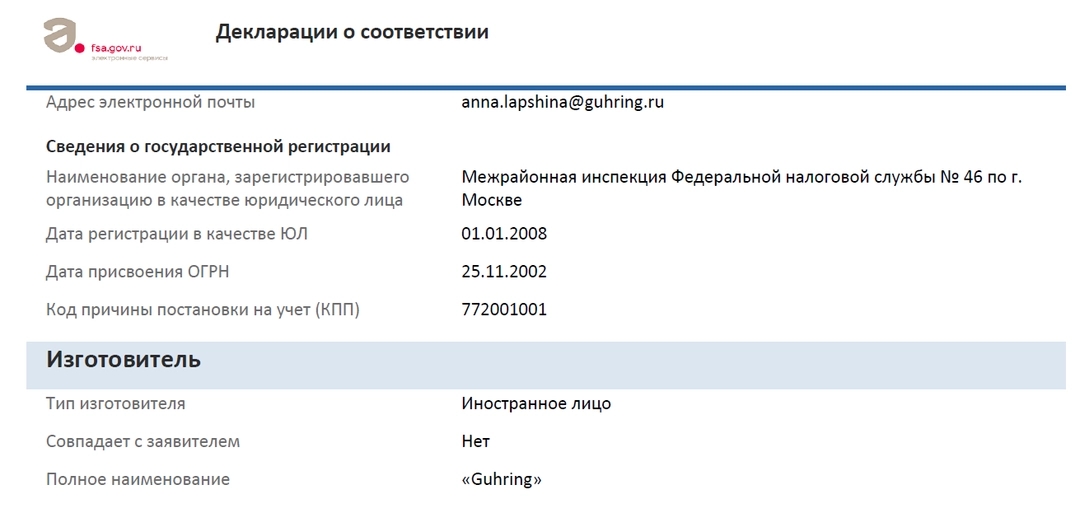
Despite the statement that ties had been severed, Tool Company Gut continued to receive products from the parent company, handling customs clearance itself. In April 2022, Tool Company Gut filed a declaration of conformity for milling cutters made by Gühring, and in August 2023 it filed two more declarations for metal cabinets with drawers for storing and automatically dispensing tools. The declarations show, among other things, that employees of the former Gühring company continued using email addresses on the Guhring.ru domain.
Independent companies of an independent director
The Insider found two more Russian companies linked to Gühring’s Russian branch. In 2016, Gühring Management GmbH created Yug Instrument LLC (ООО «Юг Инструмент»). The company was located in the same building as Tool Company Gut and used the same contact phone number. Yug Instrument’s revenue rose from 159 million rubles in 2021 to 254 million rubles in 2022, but that figure fell to 38 million rubles in 2023. The company was liquidated in 2024.
But it did not disappear entirely. The same phone number, as well as neighboring premises in the same business center on Zeleny Prospekt, are used by Mobula LLC. That company’s director and sole beneficiary is Gühring’s Russian branch chief Yury Gulyayev.
By its second year of operation, Mobula’s revenue was nearly double the peak figure recorded by Gühring LLC — 1.292 billion rubles, in 2020. Mobula’s revenue in 2023, its first year of operation, was 803 million rubles. In 2024, the company earned 2.374 billion rubles. And in 2025, it was 1.926 billion rubles. At least part of that revenue came from the sale of original Gühring products. On Dec. 4, 2023, Mobula received a declaration for carbide milling cutters made of high-speed steel with working parts made of artificial diamonds produced by Gühring KG. The suppliers of the German products were India’s Victools Inc. and China’s Shanghai Zhuangyu Mechanical and Electrical Equipment Co., which exported 690 kilograms of Gühring tools to Russia with an invoice value of more than 28 million rubles. In its financial statements, Mobula directly listed Gühring’s Russian subsidiary, Tool Company Gut, as a related party.
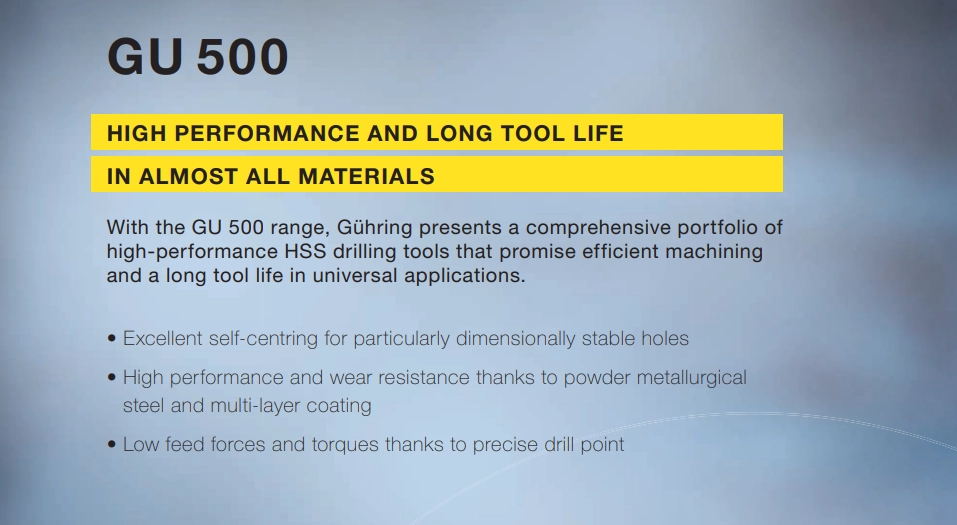
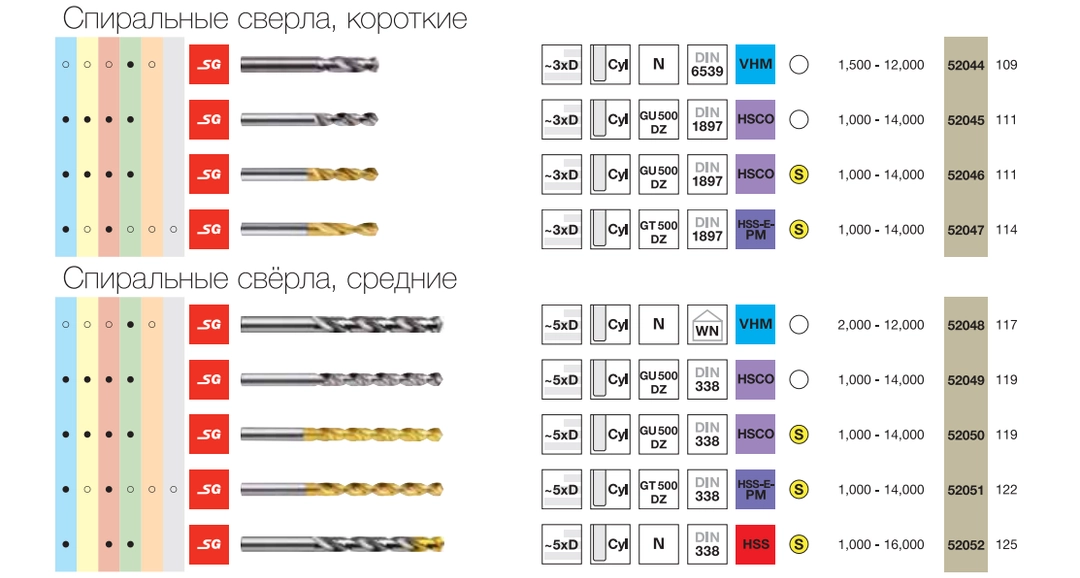
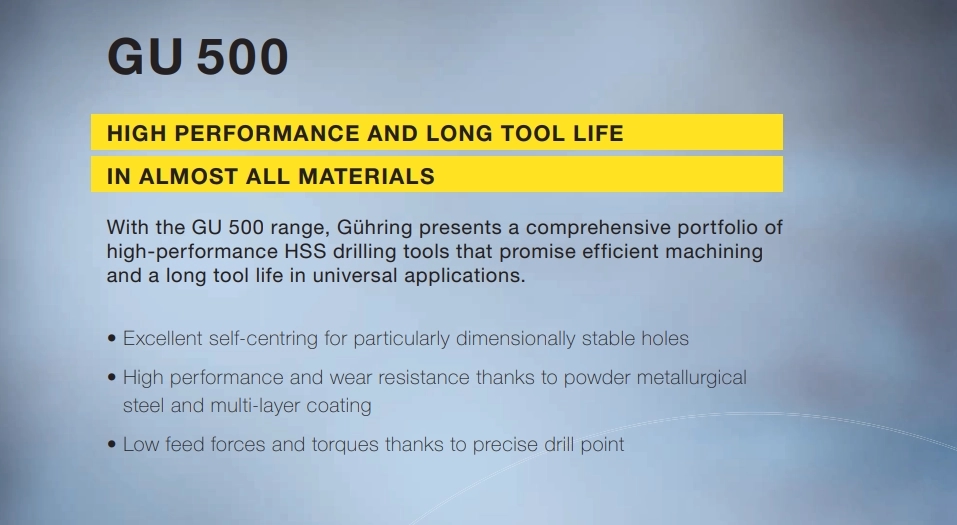
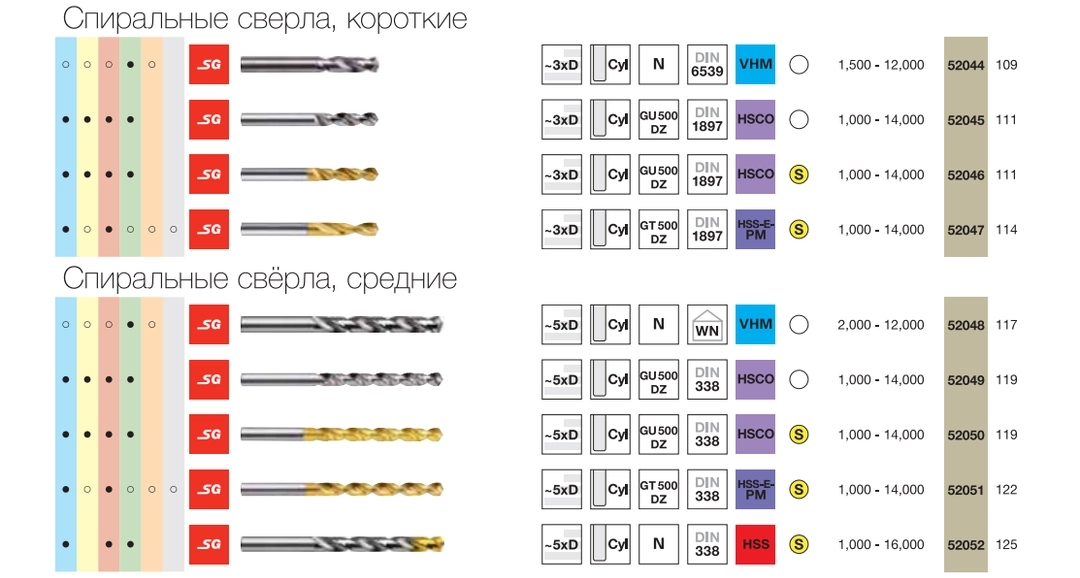
The extent of the connection between Gulyayev’s Mobula LLC and the Gühring business is clearest from the two companies’ product ranges. Mobula’s catalog includes the Gühring SuperLine range, sold in Russia under an alternative brand, SuperGut. The item numbers for all SuperGut products are identical to those of Gühring products, and each of the 25 product lines has a direct equivalent in the German company’s original catalog.
The speed of Mobula’s growth points to outside sources of financing far beyond the financial capacity of its sole owner. Yury Gulyayev spent his entire career as a hired employee and, despite an annual income of several million rubles, appeared in the Federal Bailiff Service’s anti-creditor database in 2017 and 2018. One year after Gühring left Russia, Gulyayev was able to create a large-scale business with billion-ruble turnover while relying only minimally on bank loans.
At the same time, Mobula’s main cash inflow came not from trade and business operations but from investment activity — 44.39 billion rubles ($571.6 million) in 2025 alone. The entire sum was recorded under the line “from repayment of loans granted, from sale of debt securities, or rights to claim funds from other persons.” Meanwhile, payments under the financial statement line “other payments,” which usually reflects insignificant payments made by a company, totaled 43.96 billion rubles.
Natalya Mukhina, head of monitoring and assessment at Transparency International Russia, said the most likely explanation for such a cash flow structure is the presence of a large settlement circuit for purchases and resale in wholesale trade, including under agency agreements or other intermediary models serving third parties. In that case, outgoing payments could reflect purchases for the company’s current operations, while corresponding inflows may have been classified as investment activity because of the legal form of the transaction, such as return of placement, repayment of a debt instrument, closure of a claim right, or another short-term financial mechanism.
How a “German” plant continues operating in Nizhny Novgorod
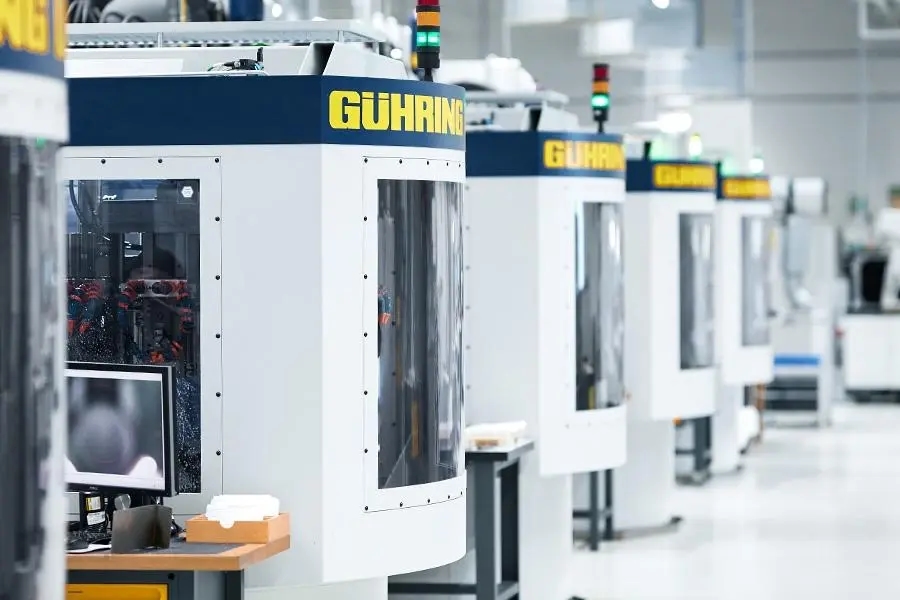
In 2016, two years after Russia’s annexation of Crimea, Gühring opened the first part of a plant producing metalworking tools in Nizhny Novgorod. Investment in the launch totaled 6 million euros. Gulyayev, the previously mentioned director of Gühring’s Russian branch, said the plant’s production capacity was 3,000 tools a month with diameters from 2.5 to 33 millimeters. The second and third stages of production were scheduled to launch by 2020.
The plant, built with German funds and German expertise, continues to operate — under the management of Gulyayev’s Mobula LLC. The facility is located at 1 Smirnova St., the same address listed as a service division on Mobula’s website and in the company’s financial statements. The company, founded in 2023, says it has “the largest fleet in Russia of seven-axis CNC grinding machines for producing precision axial metalworking tools.”
The ratio between imported products and tool production in Nizhny Novgorod can be assessed from Mobula’s accounting statements. The total value of the organization’s inventories as of Dec. 31, 2025, was 407 million rubles. Almost 260 million rubles of that was goods purchased for resale, meaning products made by other manufacturers. Finished products of Mobula’s own production were valued at 64 million rubles, while another 83 million rubles were materials for production.
Who uses Gühring products in Russia
Tool Company Gut’s Nizhny Novgorod division is located at 95 Lenin Prospekt, in the same building as the museum of the Gorky Automobile Plant and adjacent to the plant’s territory. Although most deliveries to Russian defense plants are classified, The Insider found more than 280 contracts for the purchase of Gühring products signed by Russian state enterprises, most of which belong to the country’s military-industrial complex.
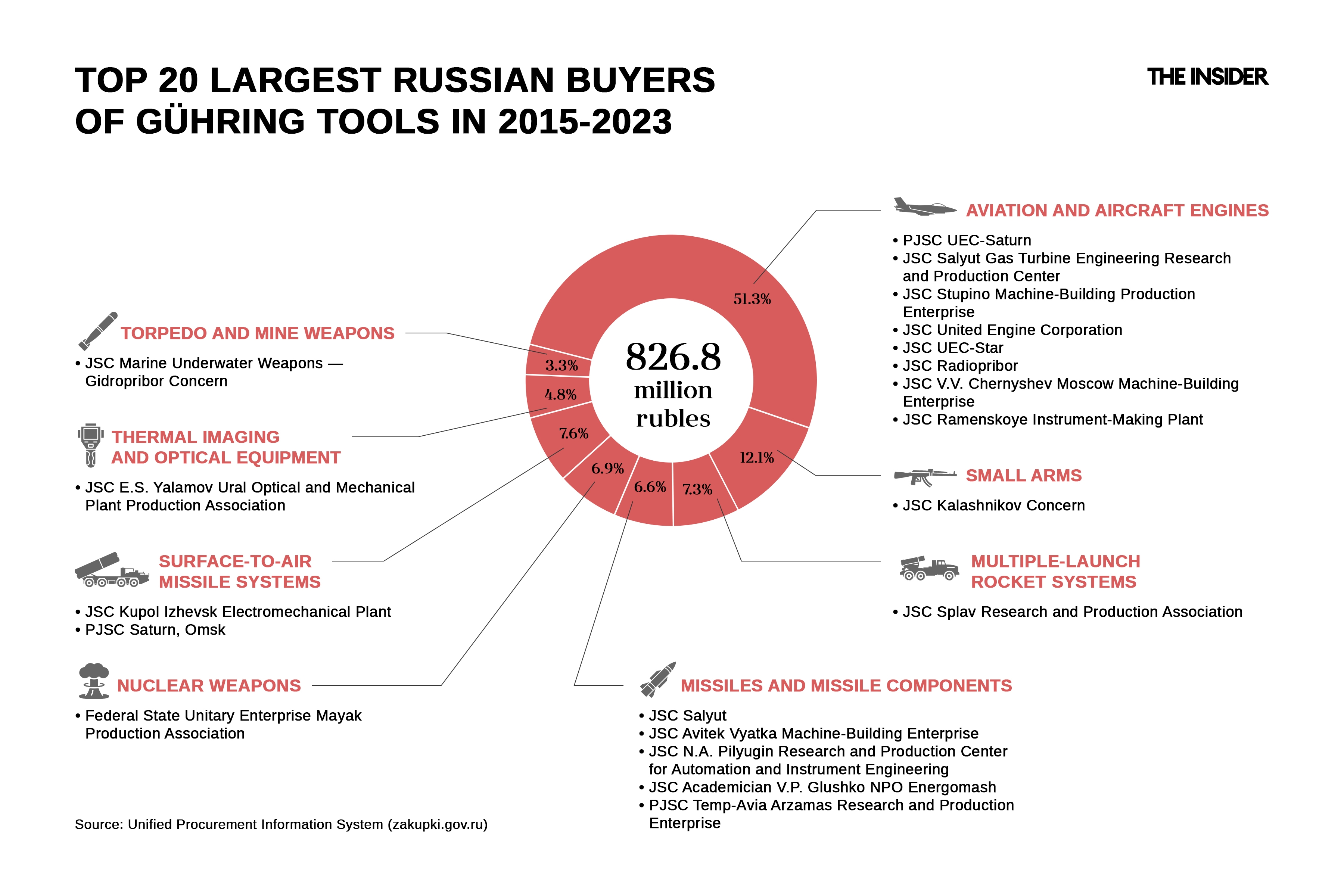
Although most of those deliveries were made through intermediary firms, their volume and consistency suggest that Gühring knew who the end users of its products were. For example, JSC Salyut Gas Turbine Engineering Research and Production Center first bought tools worth 1.5 million euros directly from Gühring’s branch, then switched to buying them through intermediaries, such as Production and Commercial Firm Tekhnologiya LLC. The plant produces gas turbine aircraft engines for Su-27, Su-30, and Su-33 fighter jets.
Tekhnologiya also replaced Gühring as a supplier for another defense plant, JSC Instrument Design Bureau named after Academician A.G. Shipunov. The Tula-based enterprise is part of the High Precision Systems holding and produces Pantsir-S1 air defense gun-missile systems, BMP-2M Berezhok infantry fighting vehicles, Kornet and Fagot anti-tank missile systems, and Krasnopol-M guided artillery munitions. On June 1, 2016, the Tula plant signed a 721,000-ruble contract with Gühring LLC for the supply of Gühring carbide rods. On Oct. 18, 2017, a 290,000-ruble contract for Gühring milling cutters was signed with Tekhnologiya. The old Gühring intermediary’s website lists products made by the German manufacturer as available.
At least some of the enterprises continued buying Gühring products after the start of the full-scale war. On June 29, 2023, JSC Academician N.A. Pilyugin Research and Production Center of Automation and Instrument Engineering purchased Gühring drills worth 1.3 million rubles. The company makes control systems for rocket and space technology, from Proton launch vehicles to the Topol-M missile system. The same plant signed three more contracts worth 2 million rubles for the purchase of “Gühring tools or equivalents.”
Gühring KG’s response
In response to The Insider’s inquiry, Gühring representatives said the company had deconsolidated its Russian entity on June 30, 2022, and that the German company had lost all rights of influence and control over the Russian firm. Asked about active contracts with defense plants that were transferred to the Russian company’s new owner, Gühring insisted that after deconsolidation it retained no legal or practical means of influencing the former subsidiary.
Gühring said it had checked the two companies that supplied German tools to Mobula. The review found that Gühring’s Indian branch did not supply products to the Indian exporter Victools Inc. The other supplier, China’s Shanghai Zhuangyu Mechanical and Electrical Equipment Co., has worked with Gühring since 2024, but “no violations were identified during the company’s review,” Gühring said.
Asked whether Gühring planned to sue the former head of its branch, who is selling billions of rubles’ worth of German tools, the German company said it could not bring claims against third parties in connection with the matter because it does not conduct commercial activity in Russia.
This article was prepared as part of the MOST project (Media Organizations for Stronger Transnational Journalism), a journalism partnership funded by the Creative Europe program, which supports independent media specializing in international journalism.