The investigative project Systema found that Russian Groza (“Thunderstorm”) and Groznye Ptitsy (“Fearsome Birds”) are developed and produced by a network of companies linked to sellers of power tools and gardening equipment under the Hüter, Resanta, and Vikhr brands. The investigation centers on the family of businessman Viktor Podchufarov.
According to the journalists, the central role in the network belongs to Moscow-based company Instratech (formerly known as “Vertical”), which is linked to the Hüter and Resanta brands. Through the firm Tekhnoinvest, Instratech is connected to Kreuss, which sells products under the Vikhr brand. The same network, according to Systema, is also linked to the production association Globus, which holds the trademark for Groza and a patent for a drone jamming system.
The investigation names businessman Viktor Podchufarov, his sons Ivan and Grigory Podchufarov, and his presumed daughter, Anna Sukhareva. Systema reported that members of the Podchufarov family have owned companies at various times that were linked to both tool sales and the production of drones and military software, including Vertical, Tekhnoinvest, Kreuss, Globus, Media Effect, Novotekh and Vysota.
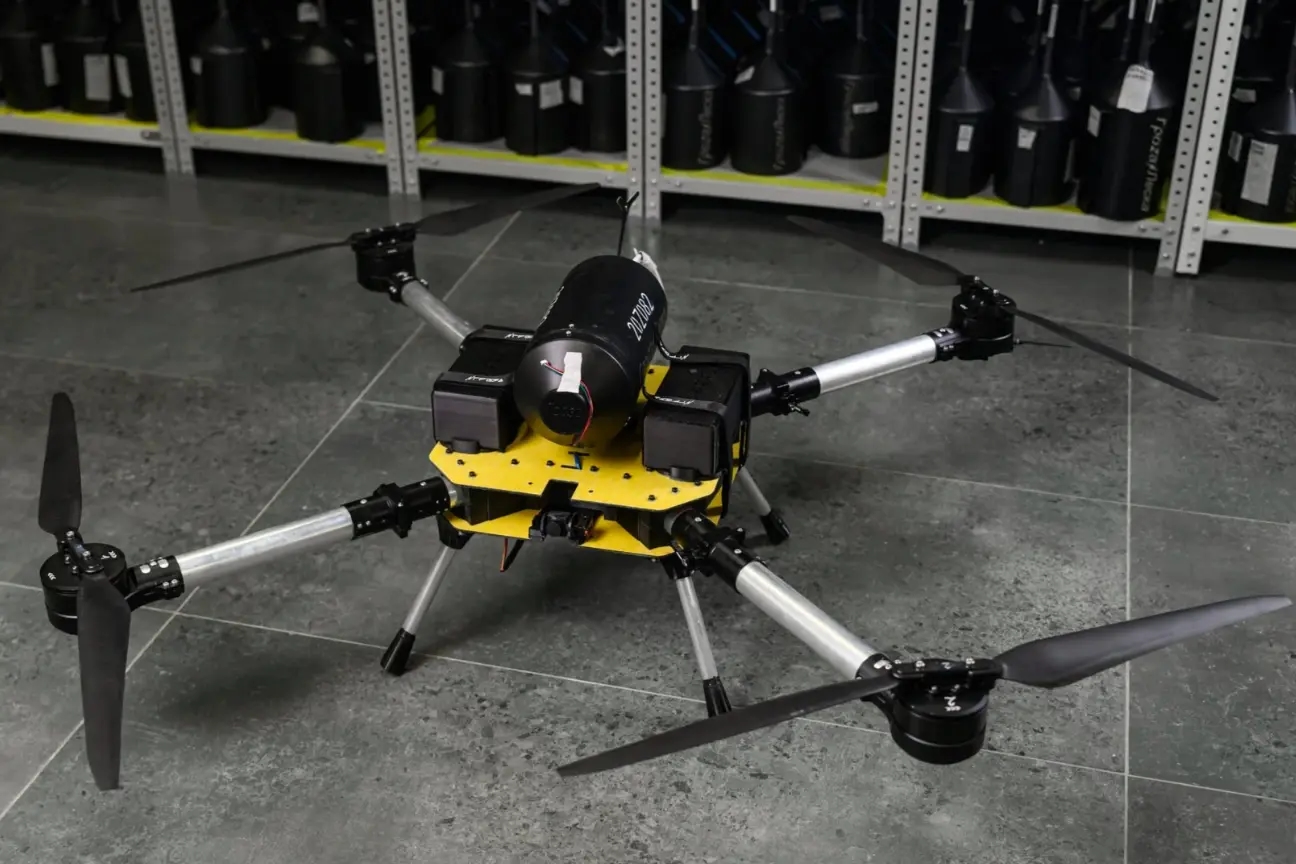
The Groza brand is used for FPV drones, the Zanoza heavy strike UAV, the Sova reconnaissance drone, the Slon cargo copter, and the Night Witch hexacopter. The latter is commonly described as a Russian analogue of the Ukrainian “Baba Yaga” drones. The Zanoza, according to its developers, can carry up to 10 kg of payload, while the Night Witch can carry up to four mines and is also equipped with a thermal imaging camera.
Two more companies linked to military development are also mentioned in the investigation: Media Effect holds patents for the Glaz and Groza software systems used for drone control and artillery targeting, while Vysota, owned by Ivan Podchufarov, has registered the Sova trademark — the name of a reconnaissance UAV which, according to Systema, is supplied to the Russian armed forces.
Russian pro-government media and Telegram channels regularly report the use of Groza systems in Ukraine, while Glaz/Groza software is taught at Russian military universities. Most companies in the network are now registered as non-public joint-stock companies, making their ultimate owners impossible to identify. Viktor Podchufarov and representatives of affiliated companies did not respond to Systema’s questions.