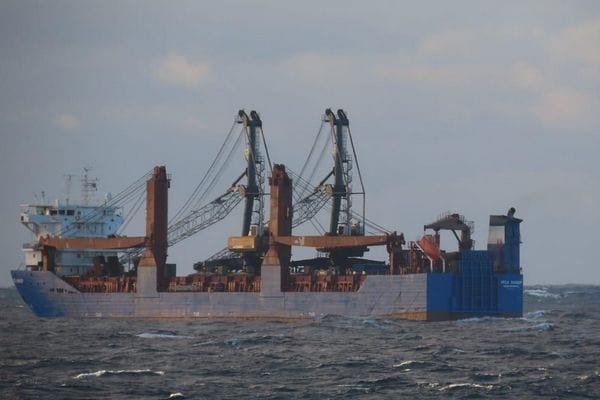
The Russian cargo vessel Ursa Major (IMO: 9538892), which sank in international waters off the coast of Spain in late 2024, may have been subjected to a risky intervention by Western military forces seeking to prevent the transfer of Russian nuclear technologies to North Korea, according to a CNN investigation.
This version is reportedly contained in the case files of the Spanish probe into the incident. Investigators suggested that the 50-by-50-centimeter breach in the cargo ship’s hull was likely caused by a Barracuda-type torpedo. Such torpedoes are possessed by Russia, Iran, the United States, and several NATO allies.
Meanwhile, analysts interviewed by the outlet suggested that the incident may have been caused by a magnetic mine planted on the ship’s hull.
Barracuda is a high-speed torpedo that generates an air bubble in front of itself, reducing drag resistance. According to CNN, it could have struck the vessel silently: the Russian captain reportedly told investigators that he heard neither an impact nor an explosion on Dec. 22, when the ship first began to slow down. Only a day later did the crew hear three explosions in the engine room, which killed two crew members. Their bodies were never recovered.
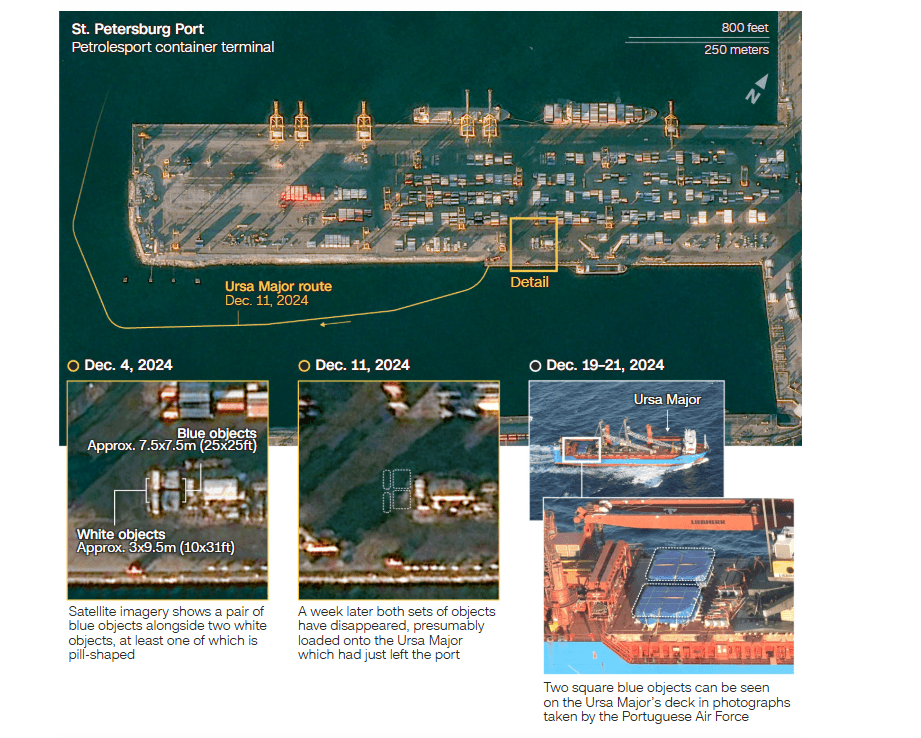
Ursa Major departed from the port of Ust-Luga on Dec. 11, 2024. On board were two large hatch covers, 129 empty containers, and two large Liebherr cranes. Shortly before the voyage, the vessel’s owner, state-owned transport operator Oboronlogistika, had obtained a license to transport nuclear materials.
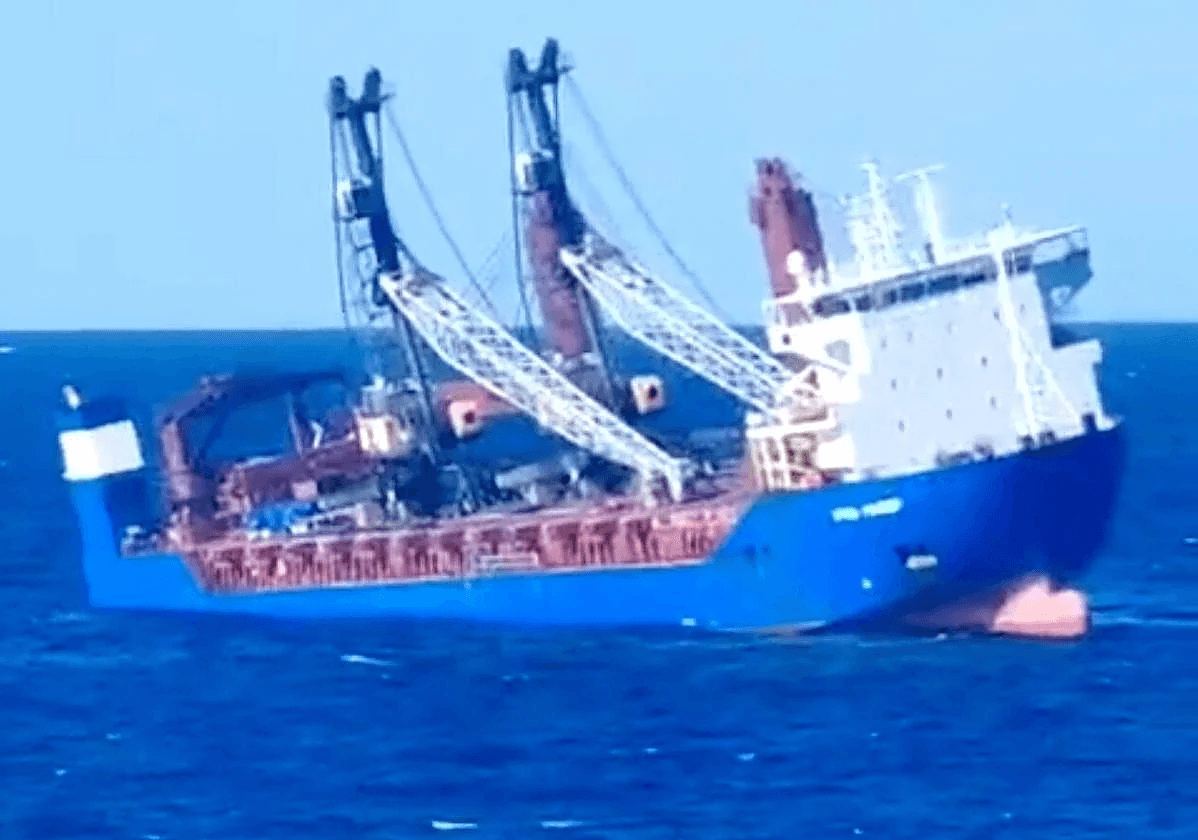
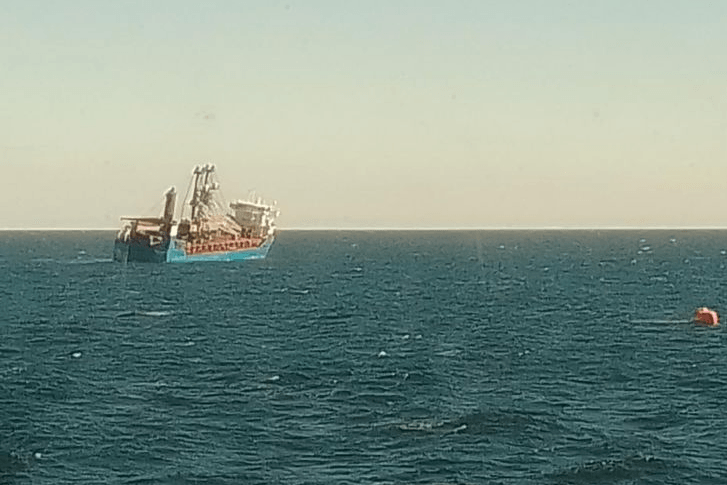
The vessel was sailing along the coasts of France and Spain. After sharply reducing the speed on Dec. 22, Ursa Major abruptly veered off course about 24 hours later and issued a distress signal. Three explosions occurred on its starboard side, causing the ship to list. Fourteen surviving crew members evacuated in a lifeboat and were rescued by a Spanish salvage vessel.
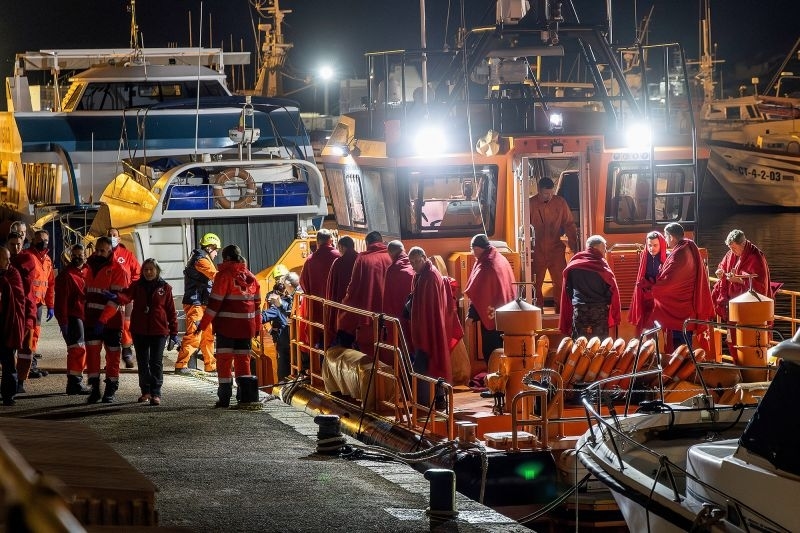
One of the accompanying Russian vessels, Ivan Gren, reportedly demanded that all ships keep their distance from Ursa Major and return the rescued crew members. Spanish rescue services, however, insisted on continuing the operation: at that point, the vessel appeared stable and was unlikely to sink anytime soon, a source familiar with the investigation told CNN.
However, by the evening of Dec. 23, Ursa Major had completely sunk beneath the water. Earlier that evening, Ivan Gren reportedly fired a series of red signal flares over the site of the incident, after which four explosions followed, and the vessel went down. Seismologists recorded seismic signals consistent with underwater mines or quarry-style explosions.
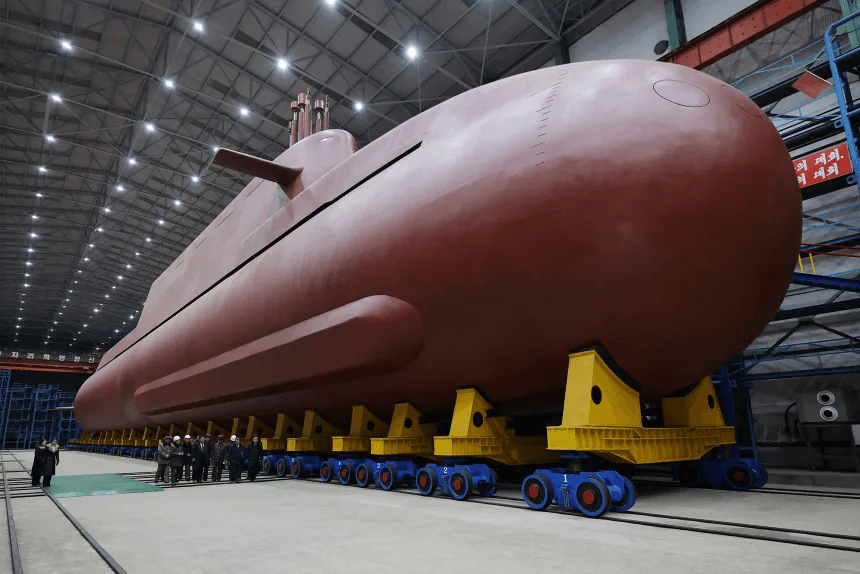
The crew members were questioned by Spanish police and investigators. The ship’s captain, Igor Anisimov, reportedly admitted that the vessel was carrying components for two nuclear reactors similar to nuclear naval propulsion units. He believed the ship was ultimately bound for the North Korean port of Rason, although Vladivostok had originally been declared as the destination.
Spanish investigators also pointed to North Korea’s status as the Kremlin’s strategic ally. One of the theories explored during the investigation was that the cargo may have included VM-4SG reactors, which are commonly used in Russian Project 667 nuclear submarines equipped with ballistic missiles. However, there is insufficient evidence to conclusively support this claim.
The Spanish investigation also suggested that a lengthy sea voyage would have been unlikely if the goal had simply been to deliver two cranes, hundreds of empty containers, and two large hatch covers to Vladivostok. Investigators speculated that the cranes may have been on board to assist in unloading a secret cargo upon arrival in Rason.
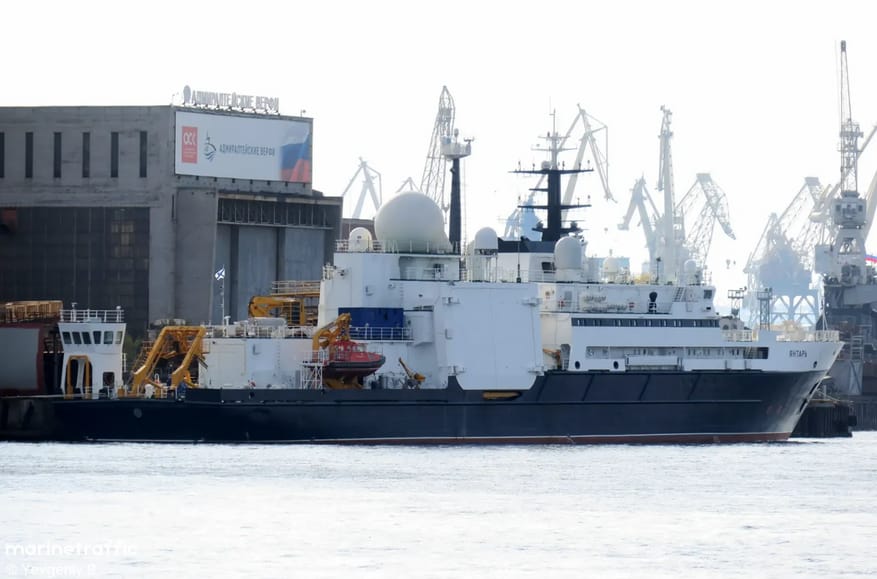
The ship’s crew returned to Russia a few days later. About a week afterward, Russian military vessels reportedly returned to the site of the incident: the research vessel Yantar, which has been accused of espionage activities, spent five days over the wreck of the cargo ship. During that same period, four more explosions were detected in the area, allegedly targeting the wreckage of the vessel on the seabed.