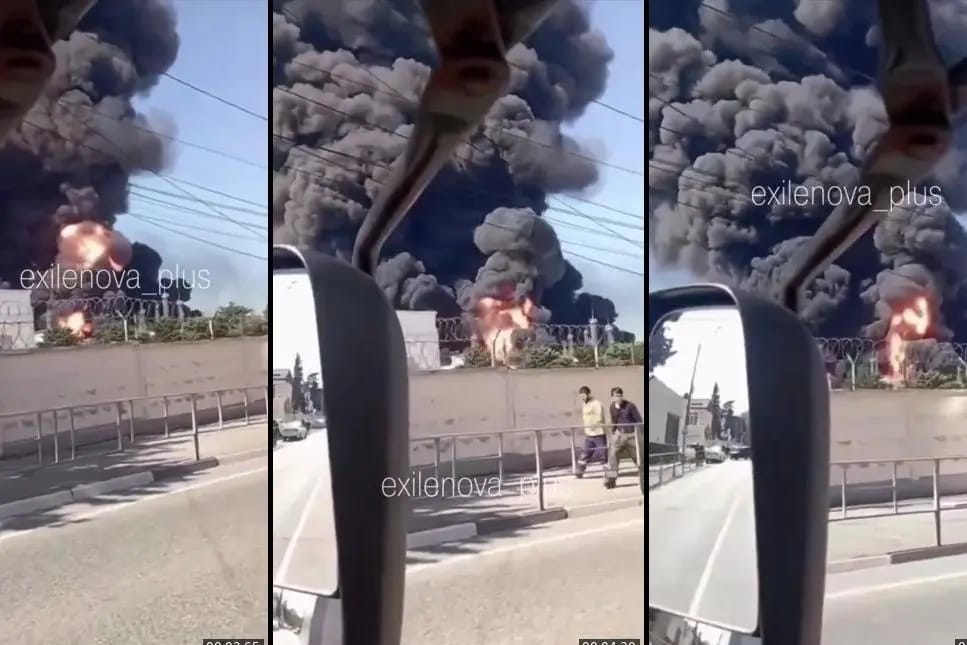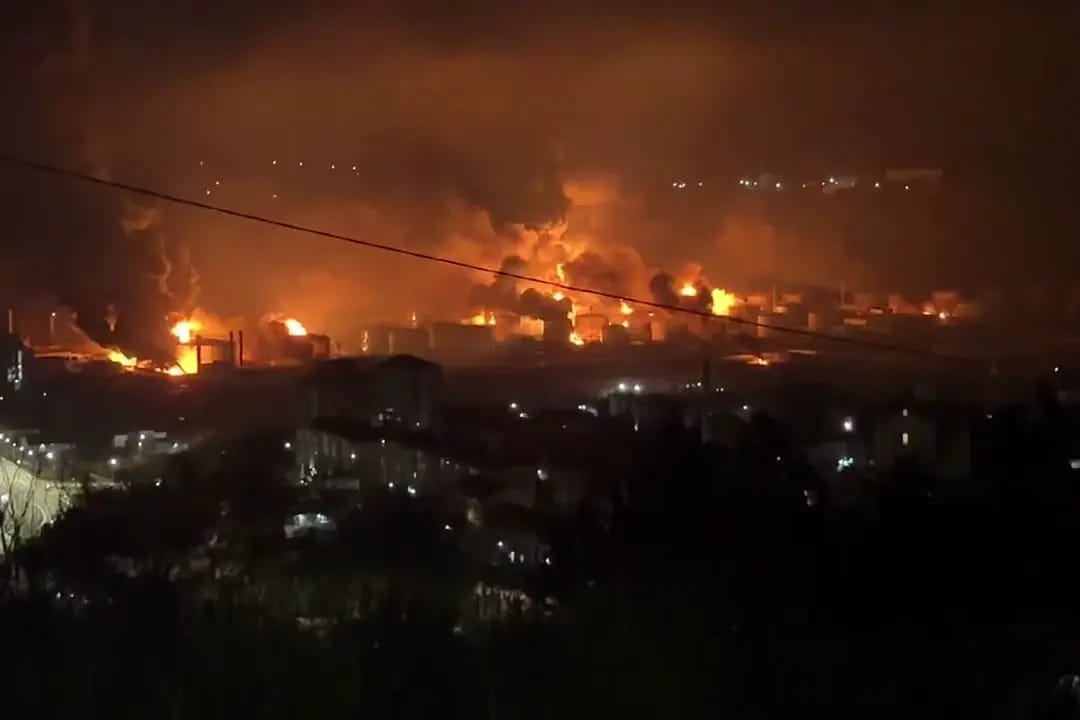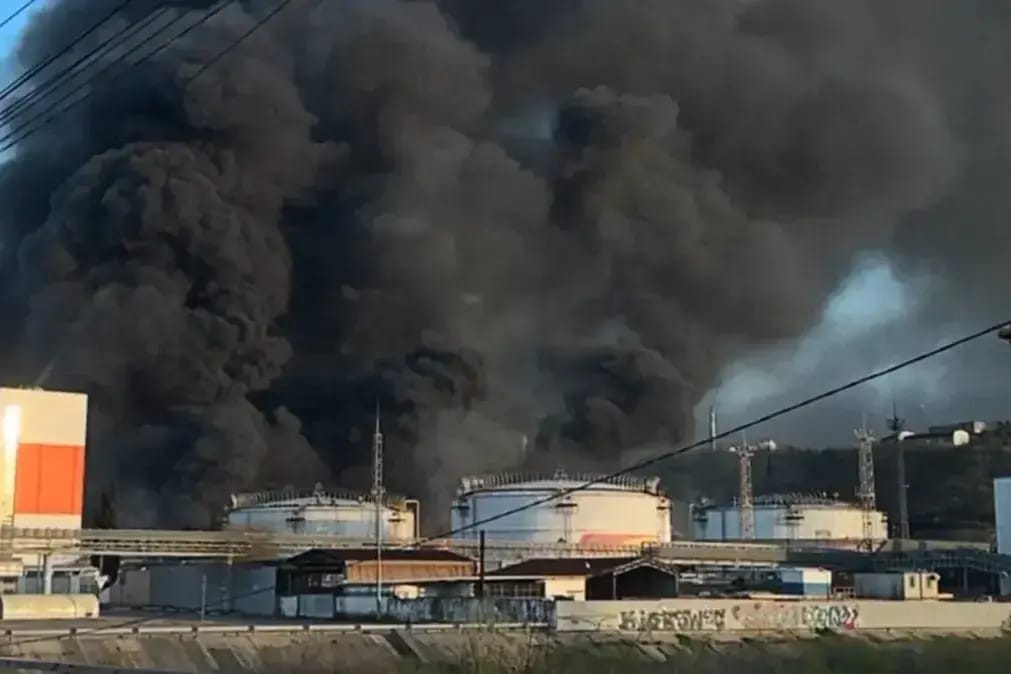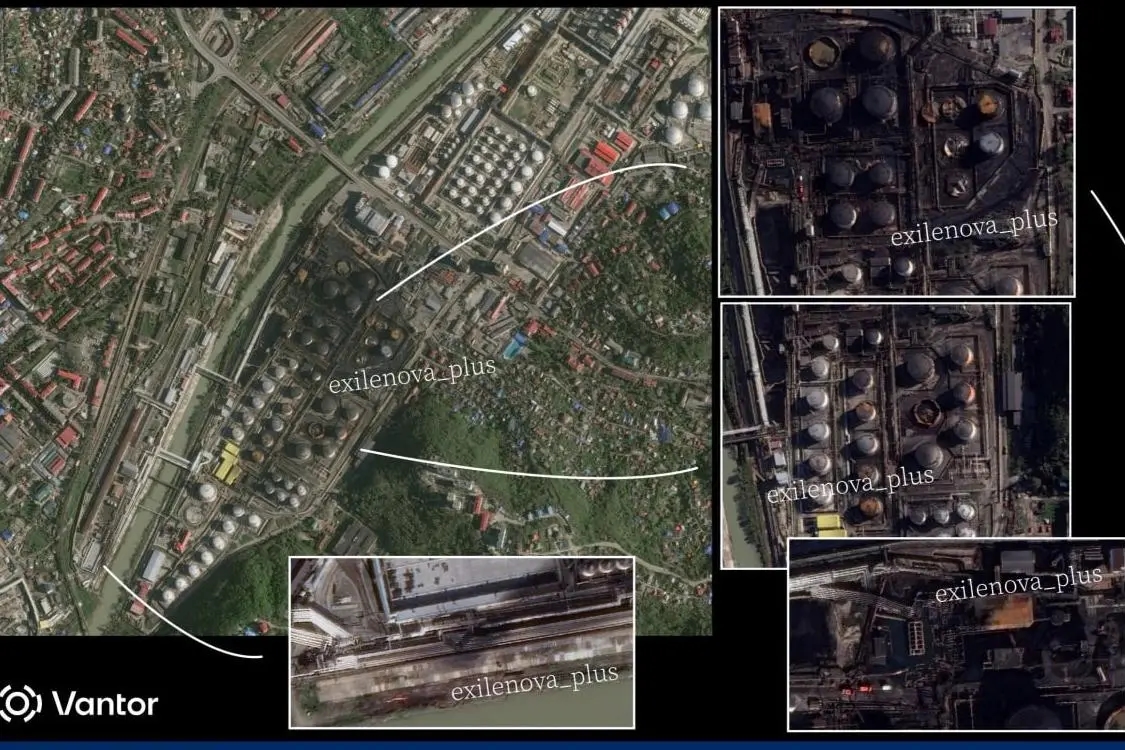
Satellite images show extensive damage at the oil accumulation hub adjacent to a refinery in the Russian Black Sea port city of Tuapse, which was hit by Ukrainian drones last week. Key storage facilities were damaged and destroyed, according to Ukrainian open source intelligence (OSINT) project Exilenova+, which published the images on April 26.
Visual evidence shows damage to pumping stations, the railway oil-loading rack, technological pipelines, and piping junctions. The refinery itself, however, showed no visible damage.
Exilenova+ noted that the tank farm serves as a buffer for the facility’s entire logistics system, and that striking it caused fires that damaged adjacent infrastructure. According to the Ukrainian OSINT project Oko Hora (“Eye of Horus”), which analyzed various satellite images, of the 46 total tanks at the site, 24 were destroyed, four were damaged, and 18 showed no visible signs of damage.
The fire at the marine terminal in Tuapse broke out overnight April 20 after a Ukrainian drone attack. The strikes hit the tank farm of a refinery operated by state-owned oil giant Rosneft, Russia’s largest petroleum producer. One person was killed and another was injured. A previous fire that broke out after a drone attack overnight April 16 was extinguished only in the afternoon of April 19. At that time, drone strikes set technological equipment on fire at the Rosneft refinery and marine terminal.
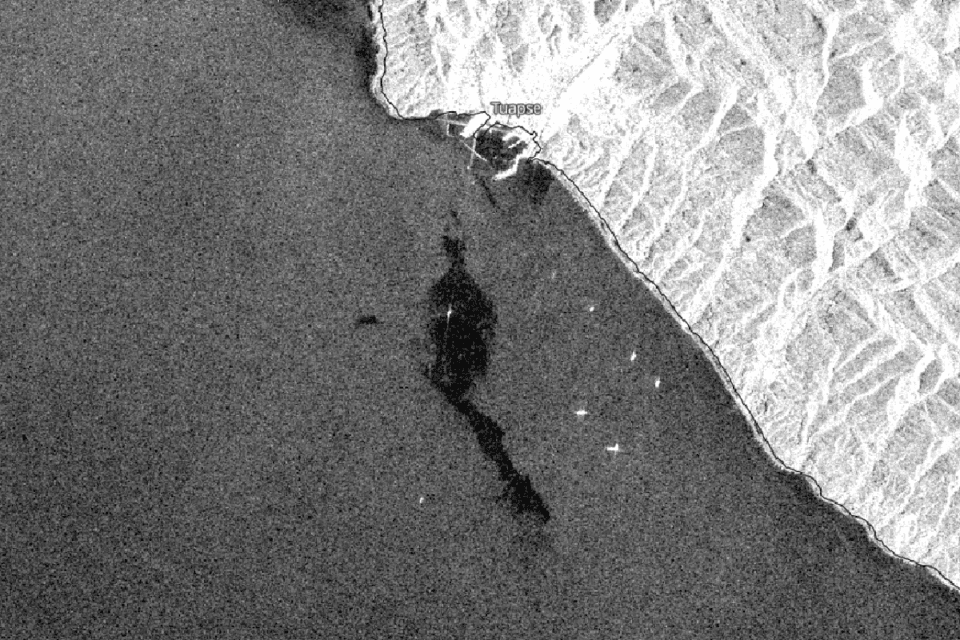
On April 19, an oil slick was spotted near the port of Tuapse, with the regional emergency headquarters saying the spill was caused by the April 16 drone attack. Regional authorities said specialists estimated the contaminated area at about 10,000 square meters. The emergency headquarters said oil products had entered the Tuapse River, but that the pollution there was contained.
After the latest attack, “black rain” began falling in Tuapse — precipitation mixed with combustion products from burning oil. Rospotrebnadzor measurements taken on the evening of April 21 registered benzene, xylene, and soot levels in the air at two to three times above permitted limits. Local residents said “everything around was covered with an oily film and black pellets.” Smog from the fire reached the cities of Anapa, Sochi, and Stavropol.
As The Insider previously reported, compounds formed during combustion pose a direct threat to human health, and benzene can cause cancer. For birds and stray dogs caught in the “oil rain,” the exposure can be deadly.